CivilNet is Mistaken: Ermenihaber Clarifies Regarding the Cathedral of Ani
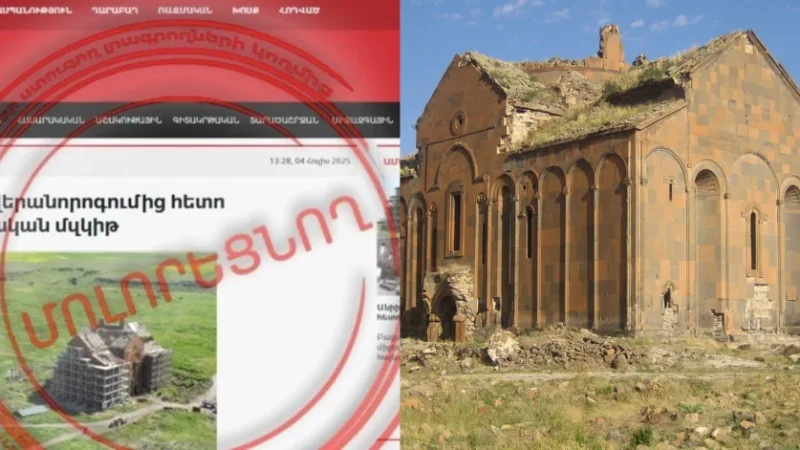
Recently, Ermenihaber.am published an article based on information from Turkey's state Anadolu news agency, drawing the attention of the Armenian audience to the topic of the Cathedral of Ani. The piece discussed the phased restoration construction taking place at the previously converted mosque of the Cathedral of Ani, after which it would be reopened.
Following this, CivilNet published an article titled 'Official Sources Do Not Confirm Claims on the Conversion of Ani Cathedral into a Mosque.' Through conducted research, the aforementioned media outlet determined that 'the restoration of the cathedral does not imply a change in religious function.' They also concluded that 'official documents deny claims of a conversion into a mosque.'
We certainly appreciate our colleague's research efforts and wish to share their rational optimism; however, the subject at hand is not solely this. Rather, it is about the discrepancies, or if you will, the misinterpretations encountered while reading and understanding the text from Anadolu.
We do not dispute the preliminary findings of CivilNet's research. We clarify that a research article is a different type of work, while the translated and presented material is entirely different. If the first seeks additional information, it should merely be to benefit the audience, rather than become a basis for opposing the media outlet that translated and conveyed information solely within the framework of the original text.
In this context, Ermenihaber.am addressed the errors made by CivilNet one by one.
Error #1
If Turkey's state number 1 media outlet reports through the head of excavations at the Ani site that the mosque will be reopened to visitors after renovation, this is not merely an assertion but a fact. At least within the context of the original text. Otherwise, the Turkish equivalent of the term 'assertion' is 'iddia,' which Turkish media has long history of using. If it were an assertion, Anadolu would definitely have written it that way themselves, rather than waiting for CivilNet to do this.
Here is an example of how Anadolu publishes news which it considers an assertion.
Error #2
CivilNet states that the primary source of the news is Ermenihaber.am, from which numerous Armenian media outlets have reprinted the information. However, that is not true. The day prior to our publication, on June 3, esteemed colleague Factor.am had already reported this information. Therefore, Ermenihaber could fundamentally not be the primary source. But we did not rush to label CivilNet's phrasing as 'misleading or disorienting.' We are content with viewing the chronological order of events through the lens of the international standard of time calculation—Gregorian calendar.
Error #3
CivilNet literally wrote the following: 'The Anadolu article does not mention that the cathedral will again function as a mosque. The material states clearly that the building will be reopened to visitors after renovations.' Not only literally but also explicitly, Anadolu stated twice that the mosque (cami) would be reopened after the renovation work. We reiterate—twice.
It was indeed impossible to overlook those two mentions, but it was possible to notice the last line of the last sentence of Anadolu's article, where the term mosque is absent, and it simply states that it will soon reopen for visits. Such a selective and discriminative approach to the text, to say the least, does not earn our approval.
Error #4
CivilNet writes that other notable Turkish media outlets, Daily Sabah and Turkiye Today, have also reported that the structure will be opened pure for visits post-renovation, without mentioning the term mosque. Without getting lost, one can open the respective pages of these two sites and see that both state that the mosque will be opened for cultural visits.
Error #5
CivilNet brings up the examples of the restoration of the Armenian churches of St. Krikor in Diyarbakir and St. Khach in Akhtamar to justify the thesis that restoration does not mean a change in religious function. Of course, not every restoration must end up as a mosque. But in the context of the Cathedral of Ani, such a comparison was fundamentally erroneous because the basis for the comparison is already flawed. The foundation of the comparison is the common characteristic; the main point allowing for a comparison of two or more objects. The churches of St. Krikor and St. Khach, on one hand, and the Cathedral of Ani, on the other hand, do not hold a common 'main point' for comparison, as the first two were never converted into mosques unlike the Cathedral of Ani. Failing to notice that enormous logical difference contradicts the principles of analytical thinking.
If an example had been presented where a previously converted mosque operated post-restoration not as an Islamic place of worship, we would gratefully accept that information.
Error #6
The author of the CivilNet article concludes: 'These pieces of information spread by Armenian media are actually based exclusively on the Turkish press calling the cathedral a mosque.' Here we must briefly delve into grammatical terminology. Nouns form part of speech. There are proper and common nouns. The Cathedral of Ani, Turks have referred to over the centuries as 'Fethiye Camii' (Conquest Mosque), which is a proper noun. And there is the word 'cami' (mosque), which is a common noun. And we know from school that the common name is the term given to all objects of the same type. For example, church, mosque, etc.
Thus, if the Turkish state media had written that after the renovation, the structure named Fethiye Camii would reopen for visitors, it could be understood in multiple ways—would it open as a mosque, a museum, or something else? But the original Turkish sources and other Turkish sites have literally written that after the renovation it will reopen as a mosque (meaning a common noun). The term mosque is certainly not ambiguous for us. There is reasonable ground to consider that the word 'mosque' read here should indeed be understood directly as a mosque. Especially since there is no definitive indication that after renovation, the mosque will operate in a different status.
For example, if one day we read that after renovation, a cultural house will reopen, it would never cross our minds that it would open not as a cultural house, but say, a casino or a cemetery. Nevertheless, if according to CivilNet, there are misleading elements in the existing formulations, the criticism should be directed towards the authors of the original text at Anadolu. Ermenihaber merely transmitted the information announced by Anadolu.
Նմանատիպ հոդվածներ



Ավելին Society բաժնից
Կառավարությունն անհատույց տարածք է տրամադրել Արման Բաբաջանյանին պատկանող լրատվամիջոցին

Իսպանիայում սաստիկ շոգի պատճառով «կարմիր» նախազգուշացում է հայտարարվել
ՔԿ-ն պարզաբանում է ներկայացրել «Առինջ» հասցեում կնիքված տարածքների վերաբերյալ