It is logical that any road passing through Armenia's territory should be under Armenia's control, Klaar
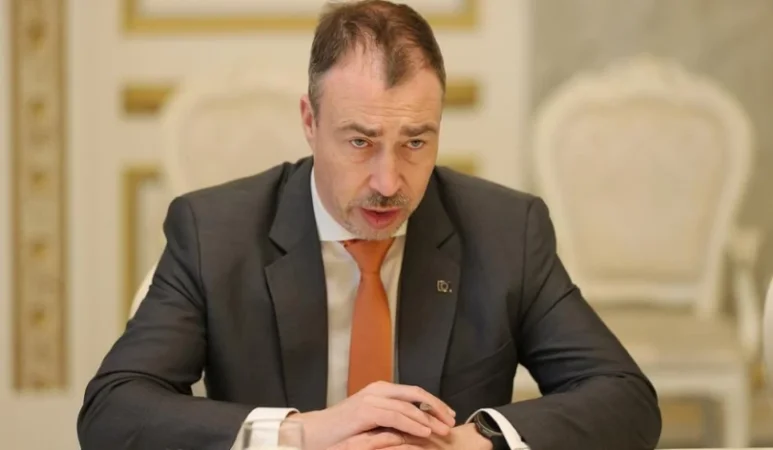
It is entirely logical that in the context of unblocking communications in the South Caucasus, any road or railway that passes through Armenia's territory must be controlled by Armenia. This was stated by Toivo Klaar, the EU Special Representative for the South Caucasus and the Georgia crisis, in an interview with an ARMENPRESS correspondent in Brussels.
Klaar referred to the Armenian authorities' proposed "Peace Intersection" project, a potential peace agreement between Armenia and Azerbaijan, and the guaranteed safe return of Armenians from Nagorno-Karabakh to their homes.
"Unlike Azerbaijan, which regularly speaks of the so-called Zangezur corridor in the context of unblocking regional communications, clearly implying the idea of having a transit corridor through Armenia's sovereign territory, the Armenian government proposes the 'Peace Intersection' project, which suggests unblocking regional communications based on the jurisdiction and sovereignty of the countries. This could make the region an internationally significant logistics and trade hub; this could also serve as a sort of guarantee for peace. How do you comment on this initiative from the Armenian government and what opportunities do you see here? Do you consider the implementation of this project possible, given Azerbaijan's destructive stance on unblocking communications?"
"First, I believe that a few months ago (in May 2023), President Aliyev very clearly stated during a televised meeting with Prime Minister Pashinyan in the presence of President Putin in Moscow that calling it a 'corridor' does not imply extraterritoriality. President Aliyev has also stated in more narrow environments that this does not imply extraterritoriality. Yes, by calling it a corridor, as you know, we refer to transport corridors, considering the various corridors that we have in Europe, which never imply extraterritoriality. Thus, clearly from our perspective, it is entirely logical that any road or railway that passes through Armenia's territory is controlled by Armenia. Or any road or railway that passes through Azerbaijan's territory or, I don't know, Germany's territory, is controlled by that country. Therefore, that is absolutely the only logical arrangement. For example, in this case, Azerbaijan wants the assurance that its citizens and goods passing through Armenian territory will be safe. That is entirely logical and normal. But how this will be done is the responsibility of the Armenian authorities."
I believe that Prime Minister Pashinyan's vision of road and rail connections uniting countries is something we absolutely share. We completely share the vision of an open South Caucasus, where rail and road links are open, and the countries reunite as they were at the end of the Soviet Union period and even more. The road and rail connections to Turkey and, of course, Iran, which are already so, must also be open. This is how we envision the future; absolutely peaceful South Caucasus is our vision that these transport links are open again, that there is trade, that people are traveling across different borders.
Since you mentioned the demand of the President of Azerbaijan that the transit of Azerbaijani citizens through this corridor should be very safe, here I want to ask a question related to the forcibly displaced Armenians from Nagorno-Karabakh. What is your approach to their right to return to their homes? But let me draw attention to one point: the Lachin corridor was closed, and Armenians were not able to pass safely, many of them were arrested on false charges. Azerbaijani forces were unable to guarantee the safety of those Armenians. Thus, Azerbaijan is demanding things that it has not done itself.
"I think you are raising many different issues, but I would focus on the possibility of the residents of Nagorno-Karabakh returning. We definitely believe that this is a very important matter, that first of all, their right to return should be guaranteed. Secondly, conditions should be created to ensure a sufficient sense of security and safety so that they wish to return. We have clearly stated this from the EU's perspective, that all displaced persons should be able to return safely and securely to their former places of residence if they wish to do so. And in this regard, this is a question that we have raised on various platforms. We think this is a very important issue that needs to be addressed. But, of course, no one can be forced to return if people do not want to. But if there are those who wish to return, then maximum efforts should be made to provide them with such conditions that will enable the majority of those people to make a decision to return."
As you spoke about peace in the region... Azerbaijan continues its expansionist rhetoric and wants to achieve a peace agreement only on its terms. How do you envision the peace treaty? What points should be included in it to make it fair, balanced, and ensure stability?"
"I think it is important that on one hand you have an agreement, you have a text, which can be very comprehensive or not, depending on how Armenia and Azerbaijan ultimately choose, how they formulate the text of that agreement. Equally important is the implementation of the final peace treaty, the fulfillment of the conditions that come after that. And here, of course, we need to talk about the opening of communications, we need to talk about the delimitation of the border. It is also very important for me to ensure the distance between forces along the border, a real feeling of security that will be provided to the residents along the border, but also on a broader scale. And then, of course, you have all the questions such as, you know, the opening of embassies, ensuring the opening of direct air links, the possibility for people to travel mutually. The rhetoric, of course, will also be important for all interested parties. After more than 30 years of conflict, the discourse is not just about the rhetoric from Azerbaijan but also from Armenia. There have been statements by various actors in various contexts. The whole context should change to genuinely provide a feeling for the populations of Armenia and Azerbaijan that, indeed, we are now in a different world, a situation where the South Caucasus could genuinely play its role as a hub, a hub for peace, in the north-south and east-west directions. For me, this is at least as important as signing the text of the peace treaty, which, as I said, is important, but what follows is at least equally important to have this real feeling of change in circumstances."
The EU wants to be the mediator of this peace treaty. However, the Azerbaijani side at the last moment refused to attend the meeting in Granada, then the meeting scheduled for the end of October in Brussels. How do you interpret Aliyev's evasiveness? To what extent does the EU consider these actions by Azerbaijan constructive?
"First, in this context, the EU does not have to be on either side. We, and specifically President Michel, have offered our friendly services. Our primary interest is to have an agreement between Armenia and Azerbaijan. And where it is ultimately signed is much less important to us than the fact that there is a real resolution of relations between Armenia and Azerbaijan. That is one point. As for President Aliyev's decision not to come to Granada, we were disappointed; we thought it was an important opportunity and quite an important forum to send strong messages. President Michel is still willing and wants to organize a meeting of the leaders in Brussels as soon as possible. Dates are, of course, important. But what is most important is really moving forward, and that is what we are focused on - trying to encourage progress towards a real resolution of relations."
Many political scientists tend to think that Azerbaijan is not actually interested in the European platform and that the 3+3 format is more advantageous for Aliyev. What is your assessment of this approach?
"I have no particular opinion; from our perspective, we view both the last meeting and the previous meetings in the 3+3 format as a format where the countries of the region, which certainly have issues, can discuss them as neighbors. At the same time, I also understand that at least initially there was an understanding that especially the conflict, the peace treaty, the settlement, should really not be discussed in that format. So again, for us, the most important is progress, and which platform it is on is much less important. But we believe that actually, in our opinion, there is really no reason why we cannot achieve serious progress in the resolution process, as the issues on the table for us are very few, and we think they have been discussed many times. Therefore, we do not really see a reason why we cannot move forward and why Azerbaijan and Armenia cannot move quickly towards a resolution of relations."
Azerbaijan criticizes Armenia's militarization while it has a military budget three times larger and military supplies continue to land at Baku's airport. How do you interpret Azerbaijan's rhetoric on this?
"I think every country has the right to defend itself and to purchase any weapons it sees necessary for the defense of its territory. That is my simple answer. Most countries in the world buy weapons from outside for the purpose of protecting their territory. So in that sense, there is nothing particularly impressive or wrong with that."
Azerbaijan's Ministry of Foreign Affairs criticized the statements made by Josep Borrell during the press conference after the EU Foreign Affairs Council meeting. Azerbaijan stated that "the EU contributes to Armenia's militarization policy by supplying weapons, which undermines peace and stability in the region." Azerbaijan also stated that the EU will receive a proportional response, effectively threatening not only Armenia but also the European Union. What is your position on this?
"We very much welcome the interest of the Armenian government in expanding its relations with the European Union. Regarding supporting Armenia within the framework of the European Peace Facility, from our perspective, this relates to potential assistance in certain areas where Armenia sees itself as vulnerable, for example, cybersecurity has been mentioned as one of these. And again, if this moves forward, as it is still in the planning phase, we do not see this as a step directed against anyone. This is rather aimed at strengthening Armenia's sovereignty, which I think is beneficial for everyone - not just Armenia, but also Armenia’s neighbors and the broader international community. We want to have a strong, self-confident Armenia which is a good partner for the European Union and equally a good partner for its neighbors, including Azerbaijan."
Նմանատիպ հոդվածներ

Ավելին Politics բաժնից
Մոսկվայից կոչով դիմել են ԱՄՆ-ին
Կոլումբիան փակում է իր դեսպանատներն Ադրբեջանում և մի քանի երկրներում
Բրիտանիայի նոր վարչապետը շանը չի տեղափոխի ռեզիդենցիա՝ Լարրի կատվի պատճառով