“We are informed about the systematic destruction of Armenian historical sites in Jughay, Nakhichevan, and other places in Azerbaijan”: Mother See
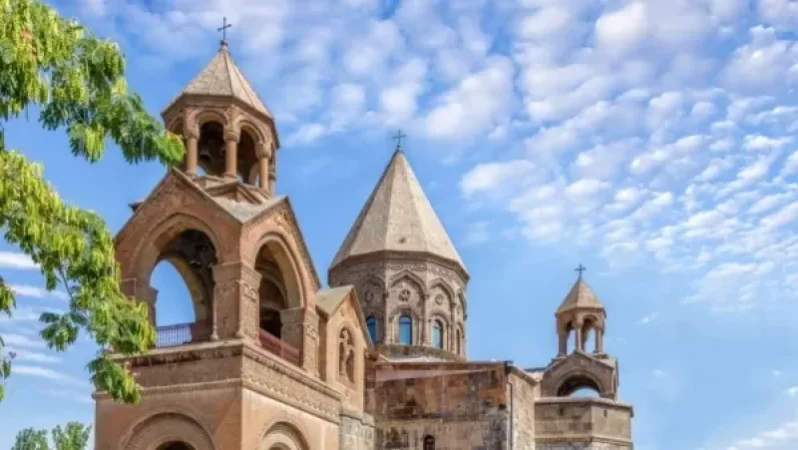
The Mother See has released a communiqué following the conference on "International Religious Freedom and Peace" held at the Mother See. This was reported by the Mother See’s informational system.
The conference on international religious freedom and peace, which was held at the Mother See of Holy Etchmiadzin on September 9-10, 2021, paid special attention to promoting freedom of religion and preserving spiritual, cultural, and historical heritage.
Gathering at Holy Etchmiadzin, under the patronage of His Holiness Karekin II, Supreme Patriarch and Catholicos of All Armenians, and with the presence of representatives of the government of Artsakh/Nagorno-Karabakh Republic, we, the participants of the global Christian community conference, are deeply moved and inspired by the history of the Armenian people, who were the first to adopt Christianity as a state religion, and who have endured the crimes of genocide perpetrated by the Ottoman Empire in the early 20th century and the horrors of the 2020 war in Nagorno-Karabakh, among other historical calamities.
The continued resilience and commitment of the Armenian people to their faith and culture merit the admiration of the Christian world.
We reaffirm the principles of the right to freedom of religion or beliefs enshrined in the Universal Declaration of Human Rights and subsequent international and regional human rights instruments. We believe this right belongs to everyone, regardless of faith or nationality, history, or political circumstances.
This right also belongs to Armenian prisoners of war who are still illegally detained, for whose release and repatriation we mediate and send prayers. We also mediate and pray for the people of Artsakh/Nagorno-Karabakh, whose right to live freely and peacefully is an integral part of human sacred life.
We emphasize the critical importance of preserving sacred and worship places, as well as religious heritage, for the effective realization of religious freedom and for fostering and maintaining peaceful relations between nations and communities. The protection of places of worship and their free accessibility is essential for guaranteeing the realization of religious freedoms.
Moreover, sacred and worship places, as well as religious heritage, represent the deepest identities of people and faith communities. For this reason, in situations of conflict, they are often deliberately targeted to inflict maximum collective injury on certain communities.
Any attack on any religious community, whether against its members or locations associated with that community, is an attack on religious freedom as a whole, and therefore an attack on all religious communities.
Religious institutions and places bear the identity of faith, and damaging a place of worship is real violence against the personal and collective religious identity of believers, wounding their identity and memories.
On the other hand, caring for the physical integrity of sacred and worship places protects the dignity of those for whom these sanctuaries are sacred.
When we collaborate with various nations, governments, and faith communities to protect religious heritage, we proclaim the message of healing and unity reform.
Consequently, we join in the establishment of a Universal Regulation for sacred places and, particularly, the following provisions:
- Sacred places must be preserved for present and future generations with dignity, integrity, and respect for their name and confessional identity. They should be maintained both as places of religious significance and as part of the historical, cultural, and environmental heritage of their communities and humanity. They should not be desecrated or harmed, nor should religious communities be forcibly deprived of their sacred places.
- All parties should contribute to the preservation of sacred places, recognize the significance of others’ sacred places as places of worship and identity, respect the religious sentiments of others towards these sites, and emphasize their spiritual value rather than any strategic, territorial, or military significance. The attachment of a human group to a sacred site cannot be denied.
We also accept and affirm the relevant provisions of the UN Action Plan for the protection of religious sites. The UN Action Plan is for religious leaders and actors to prevent incitement to violence that could lead to heinous crimes, the World Heritage Convention, and the Declaration on the Protection of Religious Property within the framework of the World Heritage Convention.
Regarding the situation in Artsakh/Nagorno-Karabakh following the 2020 conflict, which was carried out by Azerbaijan and supported by its allies, we are deeply troubled by numerous reports of the destruction, damage, and desecration of Armenian religious and cultural heritage in areas currently under its control.
Our concern intensifies as we become justifiably aware of the systematic destruction of Armenian historical sites of global heritage significance in Jughay, Nakhichevan, and other locations in Azerbaijan.
Thus, we call on the Government of Azerbaijan to allow international experts and observers to enter the territories of Artsakh/Nagorno-Karabakh that have recently come under Azerbaijan’s control, as well as Nakhichevan and other areas in Azerbaijan, to carry out independent assessments without delay and obstruction.
We urge UNESCO to make assessment missions to these areas an urgent priority.
We encourage proactive and regular involvement in dialogue and cooperation, both in speech and in actionable solidarity efforts when targeting religious places and believers of other religions and faiths.
We appeal to all members of the international community for solidarity and intervention to guarantee to the Armenian people and communities the same rights reserved for everyone by the force of international law and moral responsibility, including the rights to life, freedom of religion or belief, as well as cultural expression and self-determination.
We express our close Christian support for the Armenian Church through our and the global ecumenical fellowship. We stand alongside the Armenian Church, its people, its ministry, and its Christian witness.
We promise to continue working together in Holy Etchmiadzin towards developing and implementing a more detailed plan of actions addressing the issues and concerns raised during these days.
September 10, 2021
Organizing Committee
Նմանատիպ հոդվածներ

Ավելին Society բաժնից
Երևանում ռուս մաթեմատիկոս է ձերբակալվել
Ալեն Ղևոնդյանին արգելվել է հրապարակումներ անել և հավաքների մասնակցել
Բացառիկ պատմական արժեք ներկայացնող նվիրատվություն՝ Մատենադարանին