Inhumane Conditions in the COVID-19 Unit of the Penitentiary Hospital, Ombudsman Reports
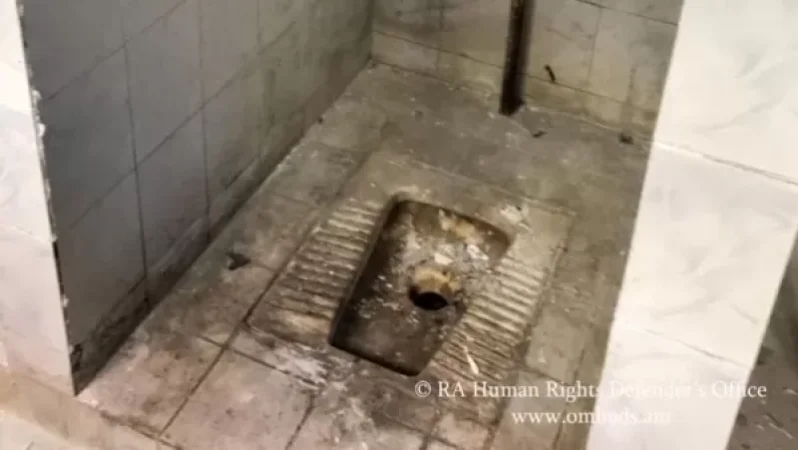
The Office of the Human Rights Defender of Armenia reports that in the COVID-19 unit of the 'Penitentiary Hospital' under the Ministry of Justice, there are inhumane and degrading conditions.
During a monitoring visit, no patients were present in the unit, but there are individuals currently receiving treatment.
The visit by the Ombudsman’s staff, acting as a national preventive mechanism, noted that part of the first floor of the 'Penitentiary Hospital's' tuberculosis building is designated for the inpatient treatment of those with COVID-19. The COVID-19 unit has two patient rooms and one restroom. The patient rooms are furnished with old and broken bedside tables and metal beds (at the time of the visit, one room had five beds, while the other had three). The floors of the patient rooms are worn out, and the plaster on the walls and ceiling is falling off. A similar situation was observed in the corridor of the COVID-19 unit.
The restroom in the COVID-19 unit is in a severely unacceptable sanitary condition, with degrading and inhumane conditions. The sinks are old and dirty. Due to high humidity, the walls of the restroom are moldy, and the plaster on the ceiling has completely fallen off. The restrooms are furnished with Asian-style toilets, which are also in an unacceptable sanitary condition. The visible water pipes in the restroom are rusted.
According to the official statement from the Ministry of Justice, a program for preventing the pandemic and necessary measures in the event of COVID-19 cases has been developed in the system, which considers various scenarios of developments related to the pandemic and corresponding response mechanisms. The 'Penitentiary Hospital' plays a key role in this program.
Despite this, it became evident during the visit of the Torture Prevention Mechanism that there is no strategy or clear action plan for preventing the new coronavirus (COVID-19), with a clear functional separation.
The issue is that the 'Penitentiary Hospital' is treating patients admitted due to confirmed cases of COVID-19 from all detention facilities. The staff of the Human Rights Defender was provided with clarifications that the 'Penitentiary Hospital' is guided solely by the instruction of the Minister of Justice from April 7, 2020, which, in addition to keeping individuals entering the detention facility in the quarantine unit for 14 days, does not record any other clear regulations (sanitary rules, mechanisms for implementing and recording these rules, and the individuals responsible for them).
It was found that individuals deprived of liberty entering the 'Penitentiary Hospital' are not isolated in the quarantine unit and are immediately placed in the appropriate division. It is unacceptable for the quarantine unit to be operated without a targeted purpose, resulting in the failure to ensure a 14-day preventive isolation for those entering the detention facility. During the visit, one detained person was held in the quarantine unit and had been isolated for a long time for security reasons.
For the purpose of COVID-19 prevention, a sanitary processing tent has been placed next to the residential area entrance of the 'Penitentiary Hospital'. It is equipped with water supply, sewage, a shower, a sink, and other necessary facilities to prevent the spread of the virus during the medical staff's entry and exit; however, it was noted during the visit that it was not in operation.
No temperature checks or other preventive measures were implemented upon entering the territory of the 'Penitentiary Hospital' in relation to COVID-19. Thermometers are not used regularly among individuals deprived of liberty; they are only checked when necessary and on medical advice. Deficiencies also exist in other preventive measures against the virus in the facility's territory. For instance, during the visit, it was observed that most employees in the administrative building of the 'Penitentiary Hospital' were not wearing masks, anti-epidemic rules were not followed, and hand sanitization and social distancing were not maintained. Some members of the medical staff also did not wear masks or wore them improperly.
In several corridors of the detention facility, there were no closed trash bins for disposal of masks and gloves. The dispensers for disinfectant liquid attached to the walls near the entrance and regime zone of the detention facility were empty. It was found that medical masks are provided to individuals deprived of liberty only during their transfer out of the facility.
The 'Penitentiary Hospital' subdivision of the 'Penitentiary Medical Center' was equipped with disinfectants, chlorine, and personal protective equipment. As for access to these supplies for correctional officers, they did not have the opportunity to use the disinfectants and protective equipment allocated to the subdivision.
The administration of the detention facility does not make sufficient efforts to provide employees with disinfectants and protective gear. Informational posters about the prevention of COVID-19 were posted in various corridors and doctor's offices in the detention facility. The subdivision had rapid diagnostic tests for COVID-19 that were used as needed. There were two oxygen concentrators available, each meant to provide oxygen to four patients simultaneously.
These issues were documented during the visit on April 12, 2021. Based on the findings of the visit and detailed analysis, reports regarding these findings and necessary proposals were sent to the Ministry of Justice by the Human Rights Defender.
In addition, the detailed issues and proposed solutions recorded by the Defender regarding the situation of COVID-19 prevention in detention facilities are also reflected in the annual report of the national prevention mechanism against torture for 2020.
The Human Rights Defender of Armenia publishes this statement due to the concerning trend of rising COVID-19 infections in the country. The described inhumane and degrading conditions not only fail to ensure effective virus prevention but also create risks for the spread of the virus, especially given that there are currently individuals receiving treatment.
Furthermore, regular suggestions are made to the Ministry of Justice, but there have not been any real changes in the situation.
Նմանատիպ հոդվածներ



Ավելին Society բաժնից

Ինչ է կատարվում Facebook-ի հետ. նոր մանրամասներ

Լայնածաված խափանումներ Facebook և Messnger հավելվածներում
Զովունիի ընկերությունից խոշոր հափշտակության գործի նոր զարգացումները. ՔԿ