Sensational Details of a Criminal Case Involving a Fatal Car Accident Resulting in Three Deaths
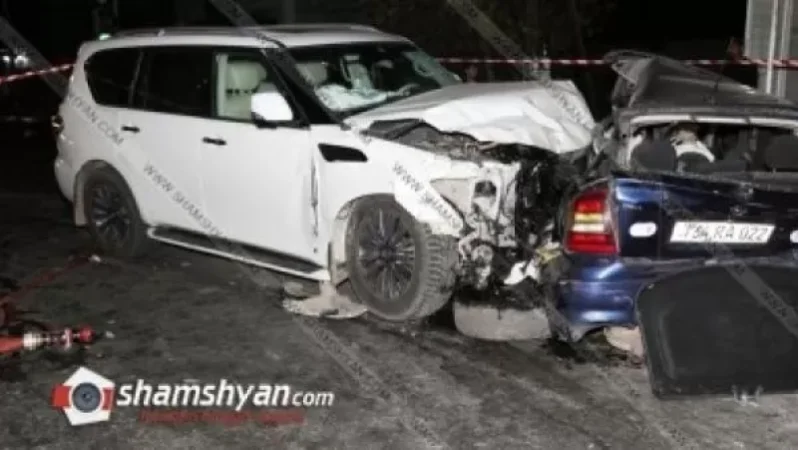
This is a story about a car accident that occurred in the capital city of Yerevan in April 2017, resulting in the deaths of three individuals. The accused was released from custody on bail by the decision of the RA Court of Appeals on March 27, highlighting the ineffectiveness of the investigative committee, the prosecutor's office, and the judicial system, thus disrupting the rule of law in the country and creating a dangerous precedent, reports "Factinfo".
As the legal representatives of the victims, we hope this publication will draw the press and public’s attention to prevent the Supreme Court, and subsequently the first-instance court and prosecutor's office from covering up the crime and neglecting their duties.
The shocking footage of the incident is featured in a publication on shamshyan.com.
According to materials published in the Datateleks system, as well as data obtained from the parties involved in the trial, the accused Arman Baghdasaryan, on April 22, 2017, around 00:40, driving his personal Nissan vehicle bearing Russian state license plates, violated traffic rules by entering an intersection at high speed despite the red light, resulting in a collision with an Opel vehicle, causing the death of its three passengers.
Subsequently, leaving one of the still-living passengers helpless, and aiming to evade punishment and conceal the circumstances surrounding the accident, he fled the scene. He then crossed the state border of Armenia and attempted to travel to Russia through Georgia, but was arrested by law enforcement officers and presented for investigation. According to our information, he has business interests in Russia and has been living there for over 10 years, possibly holding Russian citizenship as well. It is likely for this reason that he intended to escape to Russia, where his return would be more difficult, if not impossible.
Fact 1. The accused was found the day after the incident at Tbilisi airport, and on March 27, 2020, the RA Court of Appeals decided to release him on bail, ignoring the provision of Article 135, Part 1 of the RA Criminal Procedure Code, which states that a decision cannot be made on releasing someone on bail if there is a tendency to conceal from investigation.
On April 23, 2017, by the decision of investigator D. Martirosyan from the Investigative Committee's Yerevan office in criminal case number 60105117, Arman Baghdasaryan was charged under Article 242, Part 3, and Article 244 of the RA Criminal Code. Notably, blood traces were found in the back seat of the Nissan, but the investigative bodies failed to identify the third passenger, whose identity could shed important light on the case, such as whether the driver was under the influence of alcohol or any drugs.
Additionally, the availability of evidence from participants of the party that evening or discovering photo/video footage from that party could have revealed whether the driver had been under the influence of alcohol, yet this was also not pursued by state prosecutors.
On April 23, 2017, the general jurisdiction court of Yerevan's Center and Norq-Marash administrative districts decided to select detention as a measure of restraint for Arman Baghdasaryan for two months. Curiously, the arrest report compiled at the time of his detention is missing from the case materials. Consequently, the duration of the detention was extended based on references to “an unsubstantiated likelihood of hiding from investigative bodies and exerting illegal influence on participants in the proceedings.”
Throughout the trial, the successors of the victims noted that the accused has substantial financial resources and extensive connections in both Armenia and Russia, thus the bail amount could not ensure proper conduct by the accused, particularly regarding the risk of fleeing.
The materials in Datateleks indicate that Arman Baghdasaryan does not have higher education and has previously been charged with a crime for evading duty to his homeland, which was closed due to his possibilities. As in many cases, the judicial process began to drag on for years, which on March 27, 2020, the RA Court of Appeals attributed to the benefit of the accused.
Throughout the proceedings, neither the investigative bodies nor the prosecutor’s office attempted to obtain evidence regarding whether the accused was under the influence of alcohol or driving at significantly higher speeds, which could have constituted aggravating circumstances when determining criminal penalties later. At no point was the presence of drugs in the accused’s system verified.
Fact 2. The injured party (not the investigative body) presented two videos to the court, recorded by a speed camera just moments before the accident, showing a speed of 113 km/h and immediately prior to the accident at an even greater speed. Our opinion is that the prosecution presented an inquiry to experts regarding the speed at the time of the accident in such a manner that determining that speed was deemed “not successful.” These videos will also be published if necessary.
Due to the problematic investigation, this case, which has been at the trial stage for a long time, according to the ruling of the RA Court of Appeals on March 27, 2020, “does not present complexity” and a swift decision is awaited.
However, since the passage of the amnesty law on November 1, 2018, the case's proceedings began to take a different course. The accused’s representatives have repeatedly attempted to submit motions for his release on bail, which were rejected by the courts in various compositions. The latest request regarding the replacement of the detention measure with bail was denied by the Yerevan City Court of General Jurisdiction on February 17, 2020. This decision was appealed by the defenders to a higher court, and on March 27, 2020, the RA Court of Appeals "presided over by judge V. Rshthun", having reviewed the appeal of the accused’s defenders, decided to revoke and amend the decision of the first-instance court dated February 17, 2020, by applying a bail of ten million AMD to the accused Arman Baghdasaryan.
This decision is, in fact, based on the argument that there are “no apparent restrictions on applying the amnesty law” to the accused, and the Court of Appeals believes that there is no interest justifying the prolonged detention of the accused Baghdasaryan.
But does this not create a dangerous precedent for the examination of this appeal in general? It should be noted that several witnesses in this case have not yet been interrogated in court, and the accused admits guilt only partially.
Consulting with our lawyers, we find that the decision of the RA Court of Appeals on March 27, 2020, is evidently ungrounded and illegal for the following reasons.
In the same criminal case, still on February 26, 2019, the RA Court of Appeals heralded by judge N. Hovakimyan, reviewing the appeal of the accused A. Baghdasaryan’s advocate A. Ghazaryan against the decision of the first-instance court, declared the latter’s decision void and recognized the detention of the accused as warrantable for replacement with bail.
In another procedural episode of the same judicial process, on July 8, 2019, the RA Court of Appeals again decided to leave the appeal without examination on account of it being not subject to appeal.
It clearly follows from the above that both the RA legislation and the legal stance expressed in the precedents of the RA Court of Cassation indicate that a decision on substituting detention with an alternative restraint measure can’t be appealed under review. This point has also been confirmed with respect to the aforementioned criminal case by decisions of the RA Court of Appeals.
Under these circumstances, it is clear that on March 27, 2020, the RA Court of Appeals, presided over by judge V. Rshthun, examined an appeal that is not subject to review, thus violating the principle of legality enshrined in Article 6 of the Constitution of the Republic of Armenia and Article 7 of the RA Criminal Procedure Code.
Moreover, the Court of Appeals violated the rights of the victims in this case as established by Article 382 of the RA Criminal Procedure Code, which requires a 15-day period for submitting a response to the appeal, because the appeal was received by the Court of Appeals on March 20, 2020, a copy was provided to the injured parties on March 25, 2020, and the judicial act was rendered on March 27, 2020.
Fact 3. The RA Court of Appeals had no authority to examine this petition. Regarding the reasoning of the judicial act of the RA Court of Appeals dated March 27, 2020, we feel it necessary to note the following: As noted above, the reasoning of the judicial act of the RA Court of Appeals, presided over by judge V. Rshthun, is based on the argument that there are “no apparent restrictions” on applying the amnesty law to the accused Arman Baghdasaryan.
At the same time, under the first part of point 13 of Article 35 of the RA Criminal Procedure Code, refusal to initiate a criminal case, suspension of proceedings, and termination of criminal prosecution is not allowed if damage is caused that has not been compensated or resolved in another manner or if there exists a dispute over compensatory damages.
In this case, the proceedings continue in the usual manner provided the amnesty law does not stipulate otherwise, which indeed applies to the law on amnesty passed in 2018.
It follows from the materials of this criminal case that the injured parties have presented civil claims for compensation for both material and moral damages caused by the crime, claims that have not been admitted nor compensated by the accused, which in itself excludes the application of the act of amnesty to the accused Arman Baghdasaryan, meaning the arguments of the Court of Appeals in this regard are also evidently ungrounded and illegal.
The series of violations and irregularities recorded by us during the examination of this criminal case can continue. The aforementioned and several other problematic circumstances give rise to the conclusion that we are witnessing yet another improper trial by the justice system, resulting in the accused responsible for the deaths of three individuals being released after just under three years of detention. We hope that this explanatory material will serve as a call for sobriety to the justice system to properly conclude this case and impose appropriate punishment on the guilty party or parties.
We, the successors of the two injured parties, call on the authorities of the Republic of Armenia, as well as the relevant bodies of the justice system, to remain vigilant in the trial of this case, and to urge all media outlets, social media bloggers, and the general public to shed light on the victory of justice and the illegal actions present in this criminal case so that it does not become a precedent for other criminal cases. Illegal actions can threaten the foundation of justice in our country.
Representatives of the injured parties:
Ara Gasparyan
Serzh Harutyunyan
Նմանատիպ հոդվածներ
Ավելին Incidents բաժնից
Ուսուցչուհին ծեծել է աշակերտներին, ասեղով ծակել երեխաների մատները, քաշել մազերը
Արմավիրում մասշտաբային խուզարկություններ․ առգրավվել են՝ օդաճնշիչ հրացաններ, զինամթերք և թմրանյութեր
Ուժգին երկրաշարժ` Իտալիայում