Nikol Pashinyan's Full Speech in the National Assembly
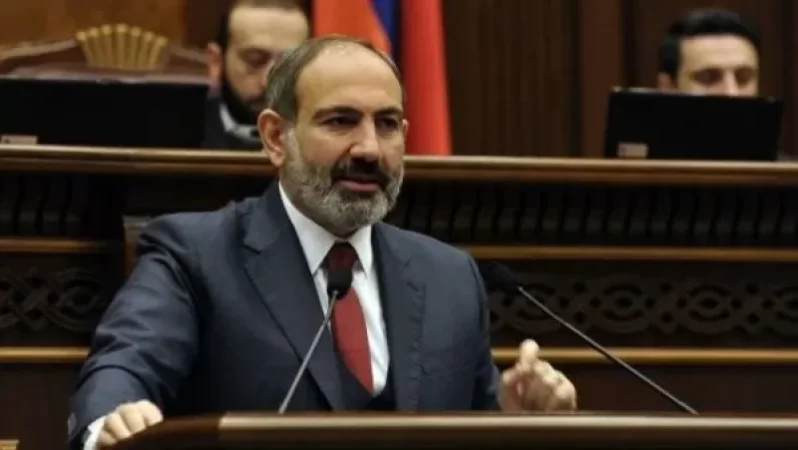
On February 6, Armenian Prime Minister Nikol Pashinyan delivered a speech in the National Assembly regarding the situation surrounding the Constitutional Court.
The current Constitution of the Republic of Armenia provides for a model of the Constitutional Court that has been widely assessed by international experts as balanced. He noted that the essence of this model is that the candidates for the Constitutional Court judges are nominated by the President, the Government, and the General Assembly of Judges, with the National Assembly electing them, allowing the Constitutional Court to serve as the upper institution for balancing the three branches of power.
Pashinyan emphasized that the new constitutional provisions have two significant nuances. Unlike the previous constitution, the current Constitution prohibits the President from being a member of any political party during incumbency, and judges cannot be party members either. Considering that the President of the National Assembly has also been stripped of the authority to nominate candidates for judges of the Constitutional Court, it can be concluded that the risks of political affiliation or politicization of the Constitutional Court have been mitigated as much as possible under the current Constitution.
Furthermore, the risks of establishing authoritarianism by the President of the Constitutional Court have also been subdued, as the current Constitution, unlike the previous one, states that the President of the Constitutional Court is elected not for life but for a term of six years. Also, unlike previously, the President of the Constitutional Court is elected by the judges of the Constitutional Court and not by the National Assembly.
Pashinyan stated, “Additionally, the abnormal practice that allowed the same person to be a member of the Constitutional Court for 35 years has been removed. This is indeed an abnormal practice because we consider it authoritarianism when any president or prime minister remains in office for 30-35 years, yet we deem it normal when the same person serves as a member or President of the Constitutional Court for 35 years.” Under the new Constitution, the term duration for a Constitutional Court judge is fixed at 12 years, and the same person can only be elected as a judge once.
Pashinyan pointed out, “This is the model of the Constitutional Court described in our currently functioning Constitution. This model, with encouragement and support from international experts, was implemented based on the assessment and analysis of the constitutional problems recorded in the history of the Third Republic. De facto and de jure, the Constitutional Court has become a tool for election fraud, illegal political power existence, and seizure of power.”
“In the presidential elections of 1996, 1998, 2003, 2008, and 2013, the Constitutional Court became the tool that prevented the people from exercising their rights to shape power in the country. Because the Constitutional Court repeatedly explained to the citizens of the Republic of Armenia — whose pleading eyes were fixed on them — that they, the citizens, could not shape power in the country as it contradicted the necessary traditional logic of the specific part of the intentional negation of the precedent of applicable practices. After that, the members of the Constitutional Court and its President published books, delivered lectures, and defended doctoral theses regarding the necessity of conventional restraint of the intentional negation of the precedent of applicable practices. But they could never answer a simple question: what about the ballot stuffing, what about the dead souls showing up at elections, the bribery, the beatings of proxies and observers, the threats of dismissal from work, and the total control of television broadcasts?”
Pashinyan emphasized that to leave behind the heavy burden of such cruel and unanswered questions and to open a new page in the history of constitutional law and the Constitutional Court of our country, the balanced and logical model of the new Constitution was chosen, which has received numerous commendations from European institutions and experts. Let’s conditionally name this model the Dream Constitutional Court.
But now I must ask a question that seems absurd in light of everything I have said from this podium because all of this is precisely provided for in the currently functioning Constitution. But do we today have this dream, balanced Constitutional Court? The answer is no, dear compatriots, we do not have one,” Pashinyan emphasized.
He recalled that during this time, we have been in a transitional phase from a semi-presidential system to a parliamentary system and posed the question: perhaps we simply have not managed to have a dream Constitutional Court?
“When will we have the dream Constitutional Court that will not be under the thumb of any political faction? Will we have it or not? Yes, we will have it, but if we do not change anything, we will have it, mark my words, in 2035. I repeat, if nothing changes, if we do not change anything, we will have such a Constitutional Court no sooner than 2035. Why? Because in drafting the transitional provisions of the current Constitution, representatives of the former Republican party provided such formulations that the old, the old constitutional court known to us would continue to function as long as possible.”
In fact, representatives of the former Republican government said the following: “True, we have found the model of the dream Constitutional Court, where the term of service of a Constitutional Court judge is 12 years, but we do not cut the powers of the members of the old Constitutional Court; let them remain in the Constitutional Court for as long as is provided for in the constitutions of 1995 or 2005.”
As a result, we have two current members of the Constitutional Court appointed by Levon Ter-Petrosyan, whose terms of office end in 2026 and 2029, two members appointed by Serzh Sargsyan whose terms end in 2021 and 2037, one member nominated by Hovik Abrahamyan and elected by the National Assembly whose term ends in 2027, one member nominated by Galust Sahakyan and elected by the NA whose term ends in 2031, and one member nominated by Ara Babloyan and elected by the National Assembly whose term ends in 2035.
Despite the fixed term of 12 years for a judge under the current Constitution, the overwhelming majority of members of the old Constitutional Court will serve much longer, often having terms of office three times the projected duration under the current Constitution,” said the Prime Minister.
Pashinyan pointed out the case of the President of the Constitutional Court. Despite the current Constitution stating that the President of the Constitutional Court serves for 6 years, the incumbent President of the Constitutional Court will serve for 17 years until 2035.
“The case of the current President of the Constitutional Court, Hrayr Tovmasyan, indeed is a separate story that requires individual examination. In general, being one of the authors of the current constitutional text, or more accurately, a trusted person of Serzh Sargsyan in the drafting group, Tovmasyan has done everything to adapt the constitutional text to his own plans. Essentially, a deal was struck between Serzh Sargsyan and Hrayr Tovmasyan based on the following logic: If Tovmasyan creates a text of the Constitution that allows Sargsyan to serve for life, then that text must also grant him lifelong authority to be the President of the Constitutional Court, contrary to the very current Constitution.”
Moreover, Tovmasyan did not curtail the term of office of the members of the old Constitutional Court, granting them opportunities to serve beyond the term set by the new Constitution, not for the benefit of these Court members, but for his own interests, as he initially planned to have been elected as a Constitutional Court member under the former rules as well. He was elected as a member of the Constitutional Court on March 2, 2018, even though he knew that only 37 days later, the procedure for electing Constitutional Court members would completely change. He was nominated by the President of the National Assembly Ara Babloyan, even though he knew that just 37 days later, the President of the National Assembly will be deprived of the authority to nominate members. He was elected for 17 years, although he knew that 37 days after his election, the term of office for Constitutional Court judges would be reduced to 12 years.
Pashinyan noted, “This is what Tovmasyan ensured would happen, guaranteeing that despite the presence of a completely new description of the Constitutional Court in the current Constitution, the old members of the Court would continue to operate, because if their terms were to be reduced, Tovmasyan would not have been able to be elected as a member for 17 years.”
According to the Prime Minister, the same applies to the position of the President of the Constitutional Court. Hrayr Tovmasyan was elected as President of the Court on March 21, 2018, by the National Assembly, even though he knew that just 19 days later, the National Assembly would lose the authority to elect the President of the Constitutional Court, and he was nominated by the President of the National Assembly, even though he knew that just 19 days later, the National Assembly would lose that power.
“But now, to have such a Constitutional Court as described in the Constitution, the Armenian people must wait until 2035 because, with the help of his party, the Republicans, Tovmasyan has secured the position of President of the Constitutional Court until 2035. Even though the current Constitution foresees a completely different scenario. I do not wish to violate anyone's presumption of innocence, but along this path, the Republicans seem to have crossed not only the limits of logic and morality but also the bounds of the criminal law,” he emphasized.
Pashinyan added that the issue stems from the fact that the term of office of the former President of the Constitutional Court, Gagik Harutyunyan, was set to expire on March 25, 2018. If he continued to serve until the end, Tovmasyan would not have been able to be elected President by the Assembly, nor could he have been elected for 17 years. Therefore, they convinced Harutyunyan, who had already been granted the status of President of the Supreme Judicial Council, to resign at the beginning of March, 20 days before his term expired so that Tovmasyan could be elected as President of the Constitutional Court for life in the convening session of the Assembly held on March 20, 2018, which was the last scheduled session before the new Constitution took effect.
Pashinyan reminded that Harutyunyan submitted his resignation on March 5, 2018, but the then staff of the National Assembly realized that if Harutyunyan’s resignation was registered on that date, procedural obstacles would emerge that would make it impossible for Tovmasyan to be elected President on March 20. Therefore, according to published data, they committed a fraud, recording Harutyunyan’s resignation as of March 2, allowing an official forgery. He also noted that this episode has resulted in a criminal case being filed with the Special Investigation Service.
Pashinyan stated, “My political assessment is unequivocal: This fraud and the entire story have permitted usurpation of power.”
He added that as a result of various constitutional manipulations, the power belonging to the people of the Republic of Armenia has been usurped.
“I have already talked about the first episode of this — that Article 213 of the functioning Constitution has granted the old Constitutional Court the ability to continue existing under the new Constitution and contrary to the Constitution described in the new Constitution. But there is another, no less important episode: Hrayr Tovmasyan has, in the current text of the Constitution, been granted more authority regarding constitutional amendments than the people of the Republic of Armenia, who are the highest bearers of power in our country. The problem is that under the current regulation, it is impossible to amend the Constitution without the permission of the Constitutional Court. This means that the people of the Republic of Armenia may wish to change something in the Constitution, but if the Constitutional Court does not permit, that effort will be considered unconstitutional. Moreover, there is no one who can challenge the position of the Court. Thus, in this situation, the people of Armenia can desire to deprive Hrayr Tovmasyan of the illegally acquired status of President of the Constitutional Court, but the Constitutional Court might not allow it, deeming it unconstitutional. This means that Tovmasyan, with the help of the Republicans, has created a subject in our country that is above the people, and that subject is the Constitutional Court. This is a blatant example of the usurpation of the power that belongs to the people,” he concluded.
Pashinyan emphasized that the absurdity has reached the point that the Constitutional Court can issue irrevocable rulings concerning itself, its status, and conditions of its continuance. “This is indeed an outrageous absurdity; how can the Constitutional Court render such a decision regarding itself, its status? There are lawyers who rebut — in that case, how does the parliament decide for itself, the government decides for itself, and the president makes decisions regarding itself? It seems like a strong argument; however, the decisions and laws passed by the parliament can be appealed in the Constitutional Court by several subjects, Government decisions can be appealed in the Constitutional Court and Administrative Court, and the decrees and resolutions of the president can be contested in the Constitutional Court, the Administrative Court; the only body whose decisions, including its status, cannot be appealed is the Constitutional Court,” he pointed out.
“I am not saying that the decisions of the Constitutional Court should be made appealable. Far from it! I am saying that in those cases where it directly concerns the authorities of other bodies, especially in relation to the authority of the people, the authority of the people, the powers of the Constitutional Court should be strictly regulated, predictable, and constrained by the sovereign rights of the people. In fact, there is not a single country in the world where the authority of the Constitutional Court for constitutional oversight is without limit, that is to say, absolute, unreviewable, and unappealable. There does not exist a second country with that situation; that situation exists in today’s Republic of Armenia,” the Prime Minister stated.
He emphasized that the circumstances concerning the Constitutional Court represents a direct and horrific threat to democracy because a fundamental component of democracy is checks and balances.
“In our country, as I mentioned earlier, the institution of the presidency, the government and the prime minister, the National Assembly, are balanced and checked, while the Constitutional Court has no check and counterbalance whatsoever and concretely restricts the highest bearer of power, the people’s power, including in relation to the status of the Constitutional Court. This is a direct and horrific threat to democracy, and this Constitutional Court has been formed in Armenia to prevent the development of democracy because the drafters of this Constitution intended that there would not be democracy or people's power in Armenia at least until 2035. As I declared during the parliamentary discussion on the election of Hrayr Tovmasyan as President, being an MP and the head of a faction, this Constitutional Court was formed in such a manner, and Hrayr Tovmasyan has been sent to the Constitutional Court as a watchdog of the corrupted, anti-people, illegal system — which literally means a guardian dog. In other words, this is where the head of the dog is buried. Proud citizens of the Republic of Armenia sometimes become angry, do not understand, become paralyzed, how is it that representatives of the past corrupted regime, their henchmen, and those killers utilizing foreign names, how is it that they threaten justice and fairness, and justice will inevitably come to them very soon, very soon,” he noted.
“What is their hope resting on? Only on one thing: Hrayr Tovmasyan and the current Constitutional Court. Why do they mock their own criminal cases, the revelations about themselves, and why do they treat their trials with such disdain? Because they hope that very soon, very soon, there will be no remaining legal accountability for them from their Constitutional Court, and their pack of wolves will devour the people’s optimism. But we will not allow that. We will force them to take another action, and today we have gathered here to initiate that action. We must make this decision today in order to resolve this issue with the people, and I hope the National Assembly makes a decision to call for a nationwide referendum on amending Article 213 of the Constitution,” Pashinyan stated.
He stated that by changing this article, the powers of all members of the Constitutional Court elected under the old system should be terminated. This will occur only if the citizens of the Republic of Armenia go to polling stations on the day of the scheduled referendum and say yes to these changes, yes to the revolution, yes to the people’s power. Under these circumstances, two newly appointed judges — Arman Dilanyan, who was nominated by the General Assembly of Judges and elected by the National Assembly, and Vahe Grigoryan, who was nominated by the President and elected by the National Assembly — will continue to serve in the Constitutional Court.
“After the referendum, the government of Armenia, the President of the Republic, and the General Assembly of Judges shall sequentially nominate candidates for judges of the Constitutional Court. The judges will be elected by the National Assembly, and within a few months or even sooner, we will have a Constitutional Court that is elected and functions in accordance with the Constitution of the Republic of Armenia, and it will elect a new President of the Constitutional Court from its ranks. Naturally, we shall condition that the new Constitutional Court must support the adoption of laws and constitutional amendments that balance the powers of the Constitutional Court regarding constitutional oversight. At the end of this process, we will have a Constitutional Court that will not be under the thumb of any political force, grouping, or official, but accountable to the people, a supreme judicial authority under the Constitution of Armenia, but not higher than the people. Such a Constitutional Court is needed by the Republic of Armenia, by all of us, a Constitutional Court that will guarantee democracy, the rule of law, and supremacy of law in the Republic of Armenia rather than being a threat to democracy,” Pashinyan emphasized.
He reminded that there would be many opinions, discussions, and speculations within and beyond the National Assembly regarding the decision to hold a referendum. “The legal justifications of the draft package being discussed are provided in all details. I do not want to delve into small or great details and can affirm from this high podium the most important thing: there is not a single issue in the Republic of Armenia for which the people of the Republic of Armenia do not have the authority to resolve. There is not a single question regarding which the people, the citizens of the Republic of Armenia do not have the authority, jurisdiction, or power to resolve,” he stated.
The citizens of the Republic of Armenia are sovereign, and the citizens are the rulers and may resolve any question and will do so. Moreover, after the Velvet Revolution of Spring 2018, much has been said about the way the Civil Contract party or the My Step alliance came to power through revolutionary means. This formulation is the result of misunderstanding because we, the representatives of the Civil Contract party and the My Step alliance, did not come to power in the Republic of Armenia. The people, the proud citizens of the Republic of Armenia, came to power. We are simply representatives of the people; we represent the people, as provided in Article 2 of the non-amendable Constitution of the Republic of Armenia. Yes, we represent the people, and we have the authority given to us by the people, while the Constitutional Court in its current form does not represent the people — it represents the corrupted power of Serzh Sargsyan, and it must go,” he asserted.
“And I want to say that all those individuals and forces who seek to create legal or any other obstacles to the free expression of the people will receive an adequate response as anti-people, anti-democratic, and anti-state forces. And those who accept the supreme power of the people, the right of the people, will become devoted ones shaping the future of Armenia,” he added.
Pashinyan also addressed the members of the Constitutional Court, saying, “I understand that what I have said in this speech is not pleasant to many of you; some may consider certain parts of it offensive. But I want to say that I have no intention of offending anyone; I am simply obliged to call things by their names. Furthermore, if anyone has felt personally offended by any part of my speech, I apologize. However, the realities do not change from this.”
“A crisis has indeed been created around the Constitutional Court, which poses risks of becoming a broader crisis, but I want to say that it is you — your members of the Constitutional Court, the members elected under the old system — you all can resolve this crisis by rendering great service to the nation and the people, a commendable service,” he pointed out.
“You — I speak about the members of the Constitutional Court elected under the old system — you have all the opportunity to resign from your position as members of the Constitutional Court. You can do so today, tomorrow, or before the decision regarding the referendum is signed by the President. By the way, I want to say that we have discussed this crisis regarding the Constitutional Court with the President of the Republic and have ensured that he agrees with the proposed formula for resolving this situation through a referendum,” he stated.
“Thus, dear members of the Constitutional Court, you can resign, and by doing so, you will render a tremendous service to the Republic of Armenia and its people! I also say that I am prepared to meet with each of you — without exception, either individually or all together — to discuss this question and its details. I can ask you to take this step personally, looking into your eyes, and I can pay tribute to your support in resolving this situation on behalf of the people. If this is acceptable to you, then good; if not, I am confident that the people of Armenia will resolve the issue, the proud citizens of the Republic of Armenia, because the Constitution is for the people and not the people for the Constitution.”
Pashinyan emphasized, “I want to highlight that we are prepared to invite the most advanced international observing organizations from the European Council, the OSCE, the European Union, the CIS, and other structures to consider the referendum, and there is no doubt that all guarantees for the free expression of the people's will will be created, although such guarantees already exist in the Republic of Armenia today.”
“The proof is the free, fair, and transparent democratic elections held in Armenia in 2018, which were the first elections whose results were, by the way, not contested in the Constitutional Court by anyone and whose results were not put into question either de jure or de facto, by any public group or any circle. This means one thing, and I consider it important to record that from this podium: democracy in Armenia has no alternative. Democracy in Armenia is now irreversible,” he concluded.
Նմանատիպ հոդվածներ


Ավելին Politics բաժնից

ՏԵՍԱՆՅՈՒԹ. Գոհար Մելոյանը` «Ուժեղ Հայաստան»-ի մանդատների մասին
Սերգեյ Լավրովի կտրուկ հայտարարությունը Հայաստանի վերաբերյալ
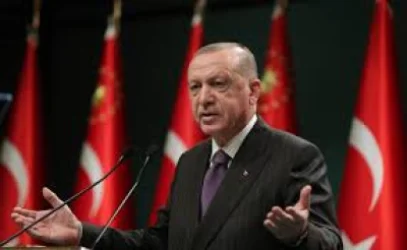
Էրդողանը հայտարարել է Թուրքիային սպառնացող վտանգի մասին