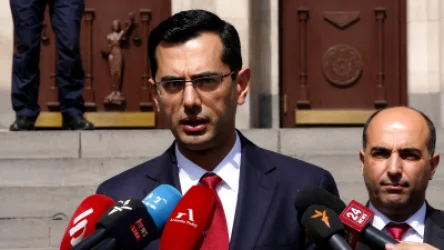
Mikael Srbazani's Defenders Submit a Motion to the Prosecutor

Mikael Srbazani’s defense team has issued a statement: "Today, on July 24, 2025, the defenders of Mikael Srbazani submitted a motion to the prosecutor requesting the following:
- To lift the arrest applied against His Eminence Archbishop T. Mikael Ajapahyan in case #58217725.
- If it is impossible to lift it, to change the applied arrest with an alternative measure or a combination of measures.
The motion specifically presents the following justifications: On July 23, 2025, we were notified by V. Mkrtchyan, the Deputy Head of the General Investigative Department of the RA CC, that the preliminary investigation regarding the public calls for seizing power and violently overthrowing the constitutional order by Mikael (Gevorg) Artashes Ajapahyan is concluding. We were summoned to familiarize ourselves with the case materials on July 24, 2025.
It should be noted that the detention was justified by two grounds: to prevent obstruction and further criminal offenses. Without delving into the validity of these grounds, it must be recorded that with the conclusion of the preliminary investigation, it can be argued that the risk of obstructing the proceedings has been minimized, and realistically, it was zero from the beginning. Now, the preliminary investigation body has found that it has unobstructedly gathered all possible evidence on the basis of which the investigator believes that the probability of establishing the charges is significantly high.
Thus, the process of gathering evidence within the criminal proceedings itself has now concluded, and so has the possibility of expressing the risk of obstructing it. For this reason, the necessity of maintaining the arrest, based on this justification, has ceased to exist.
The other ground related to the potential for committing new offenses, namely, the possibility of "making calls again". Here, it is important to note that this ground was never an appropriate measure, as it is impossible to silence someone within prison walls. The best evidence of this is the various statements made by the Archbishop while detained, which demonstrate and prove that if there is a real desire to speak, then there are no circumstances obstructing it. Therefore, from this perspective, the detention does not solve any procedural problems; rather, it becomes purposeless and involuntarily turns into a punishment for free speech. We find that the necessity for applying detention based solely on this abstract ground has also ceased to exist.
According to Article 117, Part 2 of the RA Criminal Code: "The court may alter or lift the preventive measure applied by the court at the request of the supervising prosecutor (...)". Article 18 of the RA Criminal Procedure Code states: "1. During the proceedings, the coercive measures against a person may be applied only on the grounds and in the manner prescribed by this Code. Deprivation of liberty during the proceedings should not pursue a punitive purpose. 2. The authority conducting the proceedings, when selecting coercive measures against a person, is guided by the principle of minimum intervention. It is prohibited to choose a measure of coercion that is stricter than what can guarantee the lawful behavior of the person during the criminal proceedings. 3. The court, the prosecutor, the investigator, and the investigating authority are obliged to immediately release any person who has been unlawfully or groundlessly deprived of their liberty within their jurisdiction. 4. Detention, extension of the detention period, or compulsory hospitalization in a medical institution is permitted only by a court decision when the lawful behavior of the person cannot be ensured by other coercive measures."
Part 3 of Article 116 of the RA Criminal Procedure Code states: "In selecting the type of coercive measure, all possible circumstances that ensure the accused's lawful behavior and those that impede it are considered." Part 2 of Article 118 states: "Detention may be applied only when the application of alternative coercive measures is insufficient to meet the requirements of Part 2 of Article 116 of this Code." We believe that the above is sufficient to establish that both the grounds and necessity for keeping our client in custody have ceased to exist; thus, the prosecutor can lift or amend the detention chosen by the court.
At the same time, theoretically possible minimal risks can be secured by alternative measures, following the principle of minimum necessity. In this sense, there is willingness regarding both bail and other measures, including their combined application. We find it crucial to recognize that the grounds and necessity for detention have undeniably ceased to exist; therefore, every additional minute in detention will not resolve the procedural issues characteristic of the coercive measure.
Նմանատիպ հոդվածներ
Ավելին Politics բաժնից

Իսրայելը, Լիբանանը և ԱՄՆ-ը եռակողմ շրջանակային համաձայնագիր են ստորագրել

IMEI կոդերի պարտադիր գրանցում. Տնտեսական «սպիտակեցո՞ւմ», թե՞ տոտալ թվային վերահսկողություն

ԲՀԿ-ն միջնորդում է, որպեսզի ՍԴ-ն փորձաքննության ուղարկի ընտրական ծրարները․ «Հետք»