Researchers Suggest an 11-Kilometer-Deep Layer of Diamond May Exist on Mercury
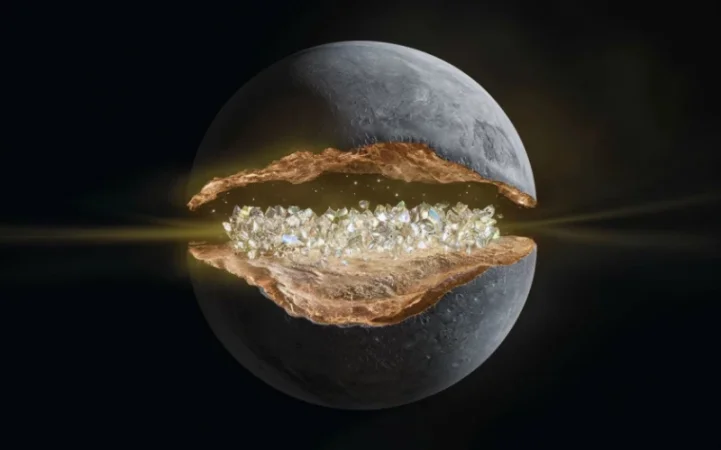
According to new research, a layer of diamond up to 18 kilometers (11 miles) thick may be hidden beneath the surface of Mercury, the smallest and closest planet to the sun in our solar system, reports CNN.
Diamonds may have formed shortly after Mercury transitioned into a planet around 4.5 billion years ago from a swirling cloud of dust and gas under conditions of high pressure and elevated environmental temperatures. It is believed that at that time, the young planet had a graphite crust floating over a deep ocean of magma.
A team of researchers recreated this fiery environment using a machine called the “Press Anvil”, which is typically employed to study the behavior of materials under extreme pressure, as well as to produce synthetic diamonds. The scientists placed a synthetic mixture of elements, including silicon, titanium, magnesium, and aluminum, into a graphite container that simulates the theoretical composition of Mercury's interior at the time of its formation.
They then subjected the sample to nearly 70,000 times the pressure found at the Earth’s surface and temperatures up to 2,000 degrees Celsius, replicating the conditions that likely existed billions of years ago near Mercury's core. After melting the sample, the scientists examined the chemical composition and mineral changes under an electron microscope and noted that graphite had transformed into diamond crystals.
The researchers state that this mechanism could not only provide more information about the mysteries hidden beneath Mercury's surface but also insight into planetary evolution and the internal structures of exoplanets with similar characteristics.
Նմանատիպ հոդվածներ
July to End with a Strong Magnetic Storm
Dragons Stones of the Tirikadar Archaeological Site in Armenia Included in UNESCO World Heritage Tentative List

Musk Announces Launch of Humanoid Robot Production in 2025

The Wedding of Asia's Richest Man's Son Will Cost $320 Million: Who Are the Notable Guests?
Ավելին Other բաժնից

20:00 Լուրերը մեկ տողով. Կարապետյանի տնային կալանքը երկարաձգվեց, Մասկը տուգանվեց

19:00 Լուրերը մեկ տողով. Գայլերի հարձակում, նոր հայտարարություններ, դատարանների թեժ զարգացումներ

18:00 Լուրերը մեկ տողով. Էլեկտրոմոբիլների քվոտան սպառվում է, ԱԷԿ-ը նոր ֆինանսավորում է ստանում