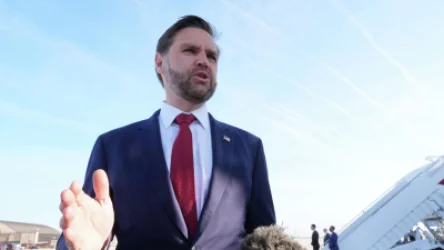
Armenia and Azerbaijan Can Reach a Peace Agreement, Says James Warlick

The former American co-chair of the OSCE Minsk Group, James Warlick, is optimistic that Armenia and Azerbaijan can reach a peace agreement. The American diplomat expressed this opinion during an online discussion organized by the Eurasian Center of the Atlantic Council in Washington.
“It seems we are approaching a final point. One could also say that we have seen this film before when we approached a deadline, but ultimately failed to cross that line,” Warlick stated.
Referring to the return of Azerbaijani villages in the Tavush region to Baku in recent weeks, the American diplomat pointed out that there are still several key points remaining in the negotiations. “Determining the borders seemed to be an easier issue since the parties agreed to resolve border matters based on Soviet maps, but it seems this will take a long time,” Warlick mentioned, adding that another issue is the communication between Azerbaijan and Nakhichevan.
“I believe it is in the interest of both countries to not only resolve this issue but also to find a way to create that corridor. Azerbaijan seems to prefer a railway route, and frankly, Armenia should welcome this option as it opens up the border and allows for the launch of new transport and trade routes,” Warlick remarked.
Warlick’s optimism was shared by Azerbaijani expert Esmira Jafarova, who emphasized that for the first time in years, Armenia and Azerbaijan have affirmed their readiness towards establishing peace through a bilateral agreement. At the same time, according to Jafarova, there has been progress in the delimitation and demarcation issues, even after prolonged negotiations and disagreements. She deemed the installation of border pillars between Tavush and Qazakh as a positive step.
According to Jafarova, it seems the parties have agreed to clarify borders not just with one 1975 map, but with all existing legal maps. She noted that during one of the discussions, the Prime Minister of Armenia seemingly confirmed the readiness to follow several maps.
However, a question arises: if we are dealing with such an understanding, what is preventing the signing of a peace treaty? “The issue of communication routes remains a problem between the parties, as Azerbaijan has already completed its part—the Horadiz-Aghband road. It is also planned to build a railway along the same line. But, at the same time, Armenia has not constructed its part. According to the ceasefire agreement signed in November 2020, Armenia committed to ensure the operation of that road. Now we are witnessing many controversies surrounding this issue. I believe Armenia must fulfill its commitments. At the same time, they consider the issue of who should ensure security a problem. According to the 2020 agreement, Russian border guards were to ensure that security, but now Armenia speaks of international mechanisms,” stated the Azerbaijani expert.
In response, Brian Ardouny, Executive Director of the Armenian Assembly of America, recalled the fate of the Lachin corridor, which was supposed to be secured and kept open by Russia and Azerbaijan according to the November 2020 ceasefire agreement. However, now there is not only no corridor, but also no Nagorno-Karabakh.
“Armenia says, ‘I agree, let’s operate the communication routes,’ but on the condition that each country will control its own section. In other words, Armenia asserts that it does not want a transit road [outside its sovereignty] running through its territory. Regarding the peace process, after meetings with the Armenian leadership, I have the impression that Armenia is willing to participate in the peace establishment process,” Ardouny stated.
At the same time, the Executive Director of the Armenian Assembly of America reiterated the repeated concerns that Armenian prisoners of war remain in Azerbaijan, including former leadership of Nagorno-Karabakh: “They have minimal contact with their families.” According to the Azerbaijani expert, these individuals are accused of military crimes, and their conditions of detention are good.
Former U.S. Ambassador to Armenia John Heffern emphasized the importance of Armenia's move towards the West and the government’s statements about leaving the CSTO at this phase of establishing peace in the South Caucasus. “Pashinyan’s bold decision to move away from Moscow and announce the departure from the CSTO signifies positive progress, particularly when Armenia is not very secure regarding its neighbors. This reflects a departure from its only security guarantor. Of course, I understand that this guarantor has not helped in recent times. Regardless, the desire to leave the CSTO is a bold decision, and the West should view Armenia as a partner and a bastion of democracy in the context of regional stability. I am not suggesting that Pashinyan should be rewarded for all this, but both the West and the EU should support Armenia and encourage its decision to move in this direction. I view the desire to move away from Moscow very positively, and we—the West—should send responsive signals,” Heffern said.
In turn, analyst Luke Coffey noted that such a trend would not please Russia very much. He recalled that the Kremlin has used regional conflicts to strengthen its influence in the area. Therefore, the establishment of lasting peace between Armenia and Azerbaijan threatens Moscow's influence in the region. According to the analyst, the path to peace will not be easy, as Moscow will try to hinder it. “The United States should do everything possible to support not only the normalization of relations between Armenia and Azerbaijan but also between Turkey and Armenia, so that everyone comes together at the peace table. Both sides would benefit from all of this. If they can resolve this conflict and engage Turkey’s economic potential and communication capabilities, it would be simply wonderful,” Coffey concluded.
Նմանատիպ հոդվածներ
Voter Turnout in French Parliamentary Elections Reaches Record High
We Are Always Ready to Support the Settlement of Relations Between Armenia and Azerbaijan and the Promotion of the Peace Agenda: Putin
Elon Musk Names Winner of Presidential Debate
A Bipartisan Resolution Condemning Ethnic Cleansing of Artsakh's Population Introduced in the U.S. Congress
Ավելին Politics բաժնից
Կալանավորվել է Մարտուն Գրիգորյանի որդին
Մեծ Բրիտանիայի վարչապետ Քիր Սթարմերը հրաժարական կտա. Թրամփ
Եթե փակեք Հորմուզի նեղուցը, այլևս երկիր չեք ունենա. Թրամփ