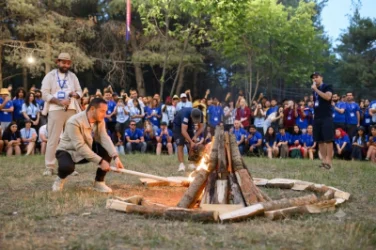
VIDEO: Nikol Pashinyan's Interview with British Media
Prime Minister Nikol Pashinyan has given an interview to representatives of British media outlets. Below, we present the entire interview:
Question - The Guardian, Patrick Wintour: I'm eager to ask you one question: you are surrounded by quite large authoritarian countries - Russia, Iran, Turkey, and Azerbaijan. You recently lost a war. How concerned are you that you are taking a big risk by trying to get closer to the West? And how likely is it that Armenia will join the European Union in the next decade?
Prime Minister Nikol Pashinyan: Thank you, but we need to make certain clarifications regarding your question, because the statistics are not quite accurate when listing the surrounding countries. Our neighboring countries are Iran, Turkey, Georgia, and Azerbaijan. We do not have a direct border with the Russian Federation, but of course, Russia plays a very significant and serious role in the South Caucasus region.
Regarding our approach towards the West, that is, as you framed it, we have never actually been far from the West that we now need to approach. Even if many bring up the example of the 2018 Velvet Revolution, after which relations with the West became much closer, in reality, before the revolution, Armenia and the European Union signed a Comprehensive and Enhanced Partnership Agreement, and the responsibility to implement that agreement has fallen on our Government.
Of course, our achievements in the field of democracy have created and are creating objective conditions for the dynamic development of our relations. But I mean to say that if we step out of the current information flows and news floods for a moment, nothing unpredictable is happening. Moreover, we have also stated that after the 2018 revolution, democracy for us is not a policy adopted due to circumstances but a strategy for us.
There is also another significant circumstance, which is the diversification of foreign relations and security relations. But in reality, to be very direct and candid, this is not a cause but a consequence, because we are diversifying our foreign relations, yes, but we are not the only ones doing so; in practice, you wouldn't find any actor in the world today that is not diversifying its foreign relations, even those who believed up to 2022 that they were sufficiently diversified.
Everyone is diversifying their foreign relations, and of course, Armenia cannot be outside this new trend. Regarding our future rapprochement with the European Union, I stated in my speech to the European Parliament that the Republic of Armenia is ready to be as close to the EU as the EU deems possible. Now we seem to be going down that path, and it is very important to note this publicly, because after the trilateral meeting in Brussels on April 5, we have been attributed some secret agreements, and so on. It is very important to note that transparency is very important for us, and we have made our agendas transparent, and we have also released the results transparently. And yes, we do see some rapprochement with the European Union, but in my observation, quite nothing extraordinary is happening because this is a course that the Republic of Armenia has not adopted recently at all.
Question - The Independent, Kim Sengupta: Allow me to ask, Mr. Prime Minister, about international support for Armenia. What leverage could certain countries have over Azerbaijan? British Petroleum has supplied Azerbaijan with $35 billion worth of oil and gas over the last four years, which is four times Azerbaijan’s expanding defense budget. The United Kingdom thus has certain leverage over Azerbaijan through British Petroleum. Would you like the United Kingdom to use this leverage?
And the follow-up question about support: Azerbaijan is receiving a large amount of weapons from Russia, Turkey, and Israel. I know that Armenia is currently receiving certain weapons from India and France. Would you like other countries to intervene as well, so Armenia has means for self-defense?
Prime Minister Nikol Pashinyan: First, I would not wish to comment on business activities and investments occurring in neighboring countries. I can say one thing, note that generally I believe any investment needs to have an interest in establishing peace in the investment environment and region.
In general, I believe the establishment of peace lies within the realm of the interests of the international community and investors as well. But of course, I want to note that the primary beneficiaries of peace are Armenia and Azerbaijan. And this theoretical thesis, which sounds very theoretical, can gain tangible expression step by step. It is particularly important that in the last five months we have reached two major agreements with Azerbaijan. And that is an expression that ultimately, it is the peoples of Armenia and Azerbaijan who benefit from peace.
This means that, of course, the investors—yes, of course, global economic stability—yes, but first and foremost, we are the beneficiaries of peace. And in this respect, a number of statements from Azerbaijan regarding the reforms and modernization of the Armenian army concern us. Why? Because you rightly pointed out that if we look at the ratio of the military budgets of Azerbaijan and Armenia, there is a significant imbalance there, and yes, that imbalance is also shaped by Azerbaijan’s revenues due to the transactions you mentioned.
But what concerns us is that even under these conditions of imbalance, Azerbaijan responds very aggressively to the reforms of the Armenian armed forces and the acquisition of arms and equipment, even though we all understand that these acquisitions have exclusively defensive significance. Also, I have stated several times that no country can challenge another country’s right to have a combat-ready army.
I believe we should note that having a combat-ready army, yes, is sometimes used for war, but having a combat-ready army is also important for peace, for creating the right balance of power. And this is also the reason why when Azerbaijan raises these issues, particularly regarding our acquisitions of armament, which is no more than 15-20 percent of the arms Azerbaijan acquires in both financial and quantity terms, and mainly has defensive nature and significance, we do not leave these statements unanswered.
We offered Azerbaijan to establish a reciprocal bilateral mechanism for arms control. That is, to ensure our armaments within the framework of the agreements and not to create an arms race in our region. We have proposed and continue to propose that there be a symmetrical withdrawal of troops based on the territorial demarcation set forth in the 1991 Alma-Ata Declaration. That proposal remains in force. We have offered to sign a non-aggression agreement even before reaching an agreement on a peace treaty, because it is a very simple agreement that, especially now that we have placed the 1991 Alma-Ata Declaration at the core of our boundary delineation process, we can, this is very simple paper, sign that we will not attack each other based on the fact that we recognize each other’s territorial integrity and have no territorial claims against each other.
Therefore, in this logic, I believe we need to continue to work, and the agreement that was reached last Friday by the commissions engaged in the delimitation of the two countries can also contribute to stability. Ultimately, you know what? Let’s ask another question. You see, we are talking about military budgets, but of course, stable and lasting peace will give us all an opportunity to spend those funds at least not at that scale and invest the remaining resources in solving our countries' socio-economic issues.
It is true that this year we have made significant progress in terms of gross domestic product per capita, but there are also many social issues in our country and in Azerbaijan. And when there is peace, it will give the first chance for the governments of both countries to make those investments in socio-economic development, and secondly, for us to consider regional economic developments at some point.
It is also in the context of regional economic developments that we have adopted and applied the “Peace Road” program, which I hope you are familiar with. Our thoughts are going in that direction. I mean, we are not preparing for war, we are preparing for peace, but on the other hand, as long as we do not have confidence that the Republic of Armenia will not be subjected to attack, we naturally must develop our defense capabilities. Moreover, I have stated that beyond the 29,743 square km territory, the Republic of Armenia has no claims in any direction - not to the south, not to the west, not to the north, not to the east. And we believe that on this basis we should build and develop our sovereignty and independence.
Question - The Telegraph and The Critic, Michael Mosbacher: Your current security system has not been effective, the Collective Security Treaty Organization agreement did not help Armenia during the recent conflict with Azerbaijan. What do you think the future of that relationship will be, what benefit does membership in the CSTO bring to Armenia, and what is the future of Russian military bases in your country?
Prime Minister Nikol Pashinyan: You know, we envision addressing the problems related to regional security within the framework of the peace process. Moreover, it is very important to emphasize that the peace process itself is not only the work around the peace treaty that is being done now. It is essential to note that we have now entered a practical phase of the delimitation process, which is extremely important, including from the perspective of reducing security risks, and we must go down that road.
Regarding the Collective Security Treaty Organization, a fundamental problem has arisen there because, you see, in essence, we have even been able to reach a principled agreement with Azerbaijan on the following: that we recognize each other's territorial integrity based on the 1991 Alma-Ata Declaration, and that the 1991 Alma-Ata Declaration is taken as the political basis for the delimitation process. I want us to record what this means in practice.
The 1991 Alma-Ata Declaration has two very important points regarding the issues we are discussing. The first is that the Soviet Union ceases to exist, and this has been agreed upon by the former Soviet Union's 12 republics, that is, all republics except the Baltic states, which had already been independent at that point, and the administrative borders that were recorded between the former Soviet republics are transformed into state borders. This means that we now know where the borders between the Republic of Armenia and the Republic of Azerbaijan pass, and it is very important that we take the Alma-Ata Declaration as the political basis for the delimitation process.
This also implies that we should not draw new borders between Armenia and Azerbaijan; rather, we should reproduce on the ground the borders that existed at the time of the collapse of the Soviet Union and had a de jure legal basis within the Soviet Union's borders.
Now, what connection does all this have with the CSTO? The connection is very direct: the borders delineated by administrative boundaries according to the Alma-Ata Declaration are also the responsibility zone of the Collective Security Treaty Organization’s responsibility. What does that mean? If that border is violated, the security mechanisms of the Collective Security Organization must be activated.
Now, what issue has arisen in our relations with the CSTO? The issue is this: when these borders were violated in May 2021, November 2021, and September 2022, and Armenia has taken measures according to the established order for the CSTO to respond to crisis situations, those mechanisms have not been activated on the grounds that the borders were not delimited. And a recent statement has been made from the Russian Federation that the CSTO was not activated at that time because there were no delimited borders. But our partners have not noted one important thing: if there are no delimited borders, does that mean there is also no responsibility zone for the Collective Security Treaty Organization because everybody knows where that border lies? And in essence, they are saying that the CSTO cannot show the responsibility zone within the Republic of Armenia.
This, excuse me, means that they are saying there is no Collective Security Treaty Organization, because it is not delimited, and it’s not delimited, for instance, in the boundary between Russia and Japan. Excuse me, I know that our partners have no such intent, but if suddenly such a situation arises, should the Collective Security Treaty Organization not react in any manner if any troops from another country enter the territory of the Russian Federation across undelimited borders? This also implies that the Collective Security Treaty Organization does not exist as a mechanism on which the member countries—Russia, Armenia, and others—can rely.
And our question is this: if we place hope on an organization that should not be relied upon because, in principle, that organization cannot be relied upon, not only we but also others cannot rely on that organization, and this is substantiated by the organization’s reaction and statements from certain member countries. Our society is asking us: why do you continue to remain a member of the Collective Security Treaty Organization? And to be honest, I do not have an answer to that question.
Question - Adam Smith Institute, James Price: How sincere do you think the desire of Azerbaijanis, or even Russians, is to normalize relations, or are they just preparing the ground for further hostile or aggressive actions?
Prime Minister Nikol Pashinyan: When I spoke about the diversification of relationships and stated that everyone is diversifying relationships, Russia as well is diversifying its relationships in the South Caucasus, and it has started doing so well ahead of us. Moreover, the issue of the CSTO has arisen from there because now, from the positions and overall of the Collective Security Treaty Organization, and for quite some time now, that is also, before the 2020 war, Russia has pursued a parallel policy between Azerbaijan and Armenia.
I want to highlight the fact that, in reality, the policy of diversification of relationships in our region has been initiated by the Russian Federation, and that has a specific date. If prior to 2012-13, Russia’s policy was such that Armenia is an ally of the Russian Federation in the South Caucasus, Azerbaijan is a partner, including within the framework of the Collective Security Treaty Organization, the entire meaning of which should have been to guarantee the security of the Republic of Armenia. But in 2013, a multi-billion-dollar arms acquisition contract was signed between Russia and Azerbaijan, and this became the point at which the Russian Federation began to diversify its relations with Azerbaijan.
And I want to draw everyone's attention to the fact that on February 21 or 22, 2022, Russia and Azerbaijan signed a declaration of strategic partnership. Essentially, it is also stipulated in that declaration the need for coordination of policies, and that is a public document, and it can be clearly noted that cooperation in the security sector, discussions around policies, etc., is effectively occurring; otherwise, that declaration wouldn't have any meaning. In other words, why would these countries sign such a declaration if they were not going to implement it? Especially given that at least two instances were previously documented regarding the failure to fulfill the obligations of the CSTO towards the Republic of Armenia before the signing of that declaration.
And recently, a very interesting statement was made when Russian officials said they offered to send CSTO peacekeepers to the Armenia-Azerbaijan border. This, excuse me, is a statement that undermines the function of the Collective Security Treaty Organization, because it should come to the Armenia-Azerbaijan border as Armenia's ally and not as a peacekeeper or peace-maker. I mean, many say Armenia said this regarding the CSTO, Armenia acted this way regarding the CSTO, but Armenia has done nothing with regard to the CSTO. Whatever the CSTO has done, it has done it through its statement, actions, and inaction.
And in this environment, we cannot pretend that we do not notice all of this. Today we have practically frozen our participation in the Collective Security Treaty Organization, and as I see it, if this continues, I mean, the political positions being expressed, it is clear that that line will also be crossed. That is, at least in saying that the re-participation in the Collective Security Treaty Organization will become practically impossible.
Question - The Guardian, Lewis Baston: Thank you, Mr. Prime Minister. I recently wrote a book specifically about borders. I am interested in the issues of displaced persons who previously lived in Artsakh and have now settled in the Republic of Armenia. The short-term policy, as I understand it, involves assisting with housing, education, employment, etc. However, this raises a long-term future issue regarding these people. Do you consider the right of return to be part of a comprehensive settlement in the region, or is that chapter closed and should Armenian society continue to develop confined within the current borders while former residents of Nagorno-Karabakh settle here in Armenian society?
Prime Minister Nikol Pashinyan: Our policy is that if our sisters and brothers forcibly displaced from Nagorno-Karabakh realistically have no opportunity or desire to return to Nagorno-Karabakh, we must do everything we can for them to remain in the Republic of Armenia. I also want to tell you that recently, during one of the regional visits, a woman forcibly displaced from Nagorno-Karabakh approached me and asked how realistic it was that we would have the opportunity to return to Nagorno-Karabakh and asked me to answer her directly and sincerely.
I told her, I will answer you directly and sincerely: in the current situation and in the perceptions that exist in our region, and the perceptions that exist in Azerbaijan, and the perceptions that exist in the Armenian population of Nagorno-Karabakh, in the context of those perceptions, I do not consider that realistic. I said, I cannot deceive you because if that were realistic, the displacement from Nagorno-Karabakh would not have happened.
But we must also note that the government of the Republic of Armenia tried to do everything possible; moreover, in the very last days of September 2023, we were accused that this was not true, but it is also very important that certain circles of the authorities operating in Nagorno-Karabakh were blaming us for not allowing the people of Nagorno-Karabakh to get saved and move to the Republic of Armenia.
Our thinking at that time was to do everything we could to create conditions because it is clear that it was not entirely in the domain of our decisions to do everything possible to prevent the forcible displacement and ethnic cleansing of the people of Nagorno-Karabakh. But our efforts did not yield results. And on the contrary, there were evidently forces that wanted to embroil the Republic of Armenia in war under far-reaching purposes.
I have stated in reply to previous questions that the Republic of Armenia is not prepared to wage war for Nagorno-Karabakh. I have stated that the Republic of Armenia has no claims beyond its internationally recognized borders. And we hope that the process of delimitation will restore the territorial integrity of the Republic of Armenia.
By the way, I believe that in the delimitation process, we have already shown our sincerity by the decisions made today. We have shown our sincerity because we have also recorded that the government of the Republic of Armenia is ready, within its jurisdiction, to take steps to make life possible where people currently do not live, particularly in four villages: Kyzylhajili, Kheyrumli, Ashagy Askipara, and Baghanis-Ayrim, so that life can become possible in those villages.
But we also note that under the same process, it should become equally possible for life without stress in the Republic of Armenia—in the villages of Baghanis, Voskepar, Kiran and Berkaber—so that those people can live in their homes, form families, have children without security anxieties. This is the point around which the governments of Armenia and Azerbaijan should be able to turn the theoretical peace agenda into concrete peaceful reality. And it is true, at this point we are dealing with a local issue, but the quality of the implementation of agreements around this local issue will either increase or decrease trust in the peace agenda and the possibility of peace.
I believe it will increase trust in peace—among both the public of Armenia and that of Azerbaijan—and ultimately will also accumulate a certain amount of trust. Let’s note that there is deep distrust. I also want to express words of appreciation to the members of the commissions dealing with delimitation issues and the two co-chairs for their work, who try to build trust molecule by molecule, which, with careful attention, can develop, and with careless attention, can collapse.
These commissions are led by Deputy Prime Minister Mher Grigoryan from Armenia and Deputy Prime Minister Shahin Mustafaev from Azerbaijan.
Question - BBC, Giles Fraser: Armenia is the oldest Christian country in the world. I am curious, can you describe the destruction of churches, crosses, gravestones, and what is happening?
Prime Minister Nikol Pashinyan: You know, spiritual values have physical expressions, and for Christianity, this is by no means secondary. Overall, the issue of preserving cultural and historical monuments is serious, and especially it is exacerbated in conflict zones. I think it is very important that we create an atmosphere of trust in the region and overcome that atmosphere of hostility.
You know, ultimately, people with negative attitudes towards cultural and historical immovable monuments actually express enmity towards one another. That is, even though an immovable monument seems objectless, what need is there to attack an immovable monument and so on? People express their enmity towards each other in that way. The solution to this problem is again about overcoming enmity; of course, those monuments, especially the churches, have history, they have the spirit that stems from that history, they are shrines, but defiling or damaging the sanctities is also an expression of enmity.
This means it is not possible for us to say, “Okay, let the enmity remain, continue deepening, but we will ensure the safety of monuments.” That is not possible. The safety of monuments can only be maintained when people do not feel enmity or at least feel it is manageable when they do not set lofty goals immediately. I consider this part of the peace agenda.
I must also say that there is another dangerous term: the movement for the preservation of monuments and being consistent about it is very important, extremely important, but it is also important that this process not be used to further deepen enmity. That exists as well, and it is a very delicate nuance, although objectively, it is happening, because if one’s holiness is desecrated, that sense of enmity naturally deepens.
If we want that not to happen, we must be consistent around the realization of the peace agenda, because it is not an isolated issue; it is an issue of this peace agenda. I envision the solution to all issues as building the peace around the three fundamental principles of peace between Armenia and Azerbaijan. We must note that the three fundamental principles of peace between Armenia and Azerbaijan are recorded: first, Armenia and Azerbaijan recognize each other's territorial integrity and sovereignty based on the 1991 Alma-Ata Declaration; second, Armenia and Azerbaijan take the Alma-Ata Declaration as a political basis for the delimitation process; and third, regional communications must be opened under the sovereignty and jurisdiction of the countries on the basis of reciprocity and equality, and this third principle we have expressed in the “Peace Road” program, which is a very important tool for overcoming animosity combined with the previous two principles.
Նմանատիպ հոդվածներ
Video: The Tricolor Will Triumph Over Black and White, Spiritual Armenia Over New Armenia - Bishop Bagrat
Armenia Has No Territorial Claims Beyond 29,743 Square Kilometers, Says Nikol Pashinyan
Residents Near Baghanis Notice New Pillars
Video: Not Inflated Properly. Nikol Pashinyan Displeased with School's Basketballs
Ավելին Politics բաժնից
Երևանի քաղաքապետարանի պաշտոնյային մեղադրանք է ներկայացվել․ 75 մլն դրամի մրցույթի գործը դատարանում է

Արփինե Հովհաննիսյանը թվարկել է 2021-2026 թթ․ ընդդիմության գործունեության արդյունքները
Նոր շուկա պետք է մտնել՝ առանց նախկին տնտեսական կապերն ավերելու․ Ծառուկյանը ՔԿՀ-ից