We Still Believe No One Will Attack Armenia: Stano
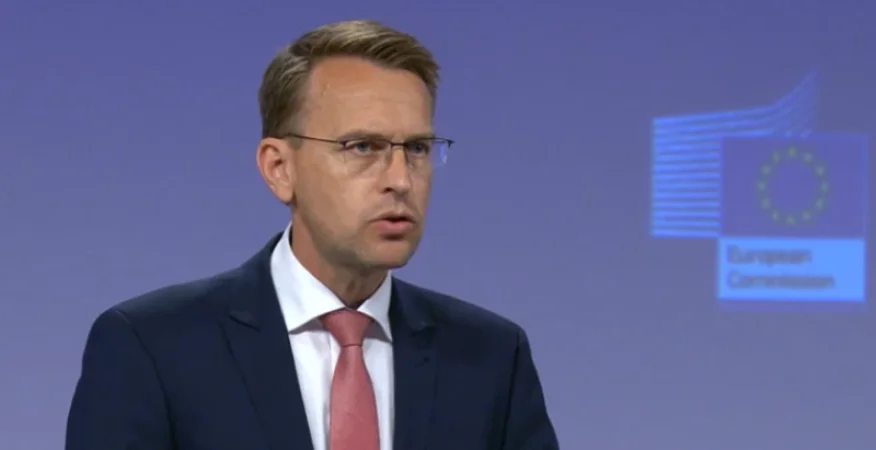
The European Union supports stable and lasting peace, emphasizing that the efforts towards normalizing relations between Armenia and Azerbaijan must continue at a faster pace. This was stated by the EU spokesperson for foreign affairs and security policy, Peter Stano, in an interview with Armenpress’s correspondent in Brussels, addressing potential EU actions against Azerbaijani aggression, the applicability of sanctions, and the EU observer mission stationed in Armenia amid Azerbaijan's statements against it.
Recently, Azerbaijani troops located in Armenia's sovereign territory undertook another unprovoked aggression against Armenia, resulting in the death of four soldiers. The high representative had warned Azerbaijan about severe consequences if the latter continued its aggressive actions. “What will your actions be now?”
“We condemn every loss of life, wherever it occurs, under any circumstances. But this recurring, unfortunately repeated incident emphasizes, of course, the necessity of removing forces from each other, and putting in place much greater efforts for measures and actions that prevent such incidents, as they lead to nothing positive. They simply contribute to an atmosphere of tension and distrust, adding yet another tragedy on top of tragedy. Thus, this truly shows the urgent need to distance forces from each other, and the EU has long supported this viewpoint. We support stable and lasting peace, hence efforts toward normalizing relations between Armenia and Azerbaijan must proceed at a faster pace. The incident reminds us how important it is to continue the normalization process, as without normalization, there is a danger that such incidents will occur, repeatedly. As I said, it just worsens the overall atmosphere. Therefore, it is indeed important to show restraint on one hand, and on the other hand, the distance of the forces from each other.”
“What will the EU's clear actions be, since ultimately the Azerbaijani attack occurred precisely on Armenian sovereign territory? You continuously emphasize diplomacy, negotiations, and so on, but these are not tools that will stop Aliyev. Incidents keep happening. Therefore, what actions will the EU take, as Armenia's sovereignty is at risk?”
“First, the EU is not a stakeholder, nor directly involved in this issue. This is essentially a bilateral problem, a matter of respecting international law. We always state that the territorial integrity and sovereignty of countries must be respected; it should be expected that when disputes arise around them, they must be resolved at the negotiating table. Thus, we can work as a third party with partners and encourage resolving all issues not by gunfire, but through discussions at the negotiating table. And I repeat, that is why we engaged with the President of the European Council and Special Representative Toivo Klaar in supporting the normalization process.”
“After the last meeting of the EU-Armenia Partnership Council, Mr. Borrell announced that relations are at their highest level. If so, then why doesn’t the EU take concrete steps to hold Azerbaijan accountable? Specifically, regarding sanctions.”
“High Representative Borrell indeed stated that the EU-Armenia relations are currently at their best phase, at the highest level, and we are determined to continue to work to deepen and strengthen them. That is why, two weeks ago in Brussels, we agreed to start working towards a new partnership agreement with Armenia or a new partnership agenda to explore the full potential of our cooperation. Armenia is receiving multi-faceted support, particularly in practical issues, through economic development, social development, economic investment plans, humanitarian assistance, for instance, for those displaced from Nagorno-Karabakh. We are working to strengthen Armenia's stability, particularly its economic resilience, through the European Investment Program, the economic investment plan, but also through other means. We already stated last year that we are also looking into possibilities for enhancing Armenia's defense capabilities, of course, concerning non-lethal means and instruments. But this is something that is on the table.”
“Discussion and cooperation around this new partnership will also include security and defense issues; therefore, there are practical steps being taken to help Armenia be stronger and more resilient in the face of any challenges its security conditions pose. At the same time, we will continue to collaborate with Azerbaijan as well, trying to send the very strict message that unilateral actions, such as threats of force, the use of force, and violations of international law, are not the way forward, and there will be consequences. We are at a phase of relations with Azerbaijan where we still prefer engagement over threats, but if the situation continues to develop negatively, then member states (EU member states) must decide to reassess the situation and see what other tools we might use.”
“What is the EU's red line, when will you say enough is enough? What is the prerequisite for imposing sanctions against Azerbaijan?”
“Perhaps I need to clarify something very clearly: EU sanctions are not a magical solution to all issues. Sanctions are always linked to other tools we employ. Usually, we start applying sanctions when all other tools have failed to achieve the desired results…”
“But do you not think that sanctions could help stop Aliyev, and he might think twice before attacking Armenia?”
“We still believe that no one will attack Armenia, that all threats will be removed precisely during engagement. But at the same time, the European Union has made it quite clear that if there is any violation of Armenia's territorial integrity and sovereignty, then we will respond. I must repeat again that we cannot really focus only on sanctions as the only magical wand that solves everything, including their use as a potential tool. If we look at the history of the application of sanctions by the European Union, it is usually a last resort that we resort to. We must not forget the principle of adopting sanctions; this is a tool at the hands of member states that must first sit together and make a decision, and that decision must be made unanimously by all 27 member countries. This is a supportive measure alongside other tools, which the European Union always prefers to use to resolve issues and eliminate threats and challenges.”
“The EU is expanding its mission in Armenia. At the same time, Azerbaijan's Ministry of Foreign Affairs invites the EU Ambassador to the Ministry, claiming that the EU's observer mission in Armenia is engaged in anti-Azerbaijani propaganda instead of building trust. What is your response to this position?”
“The European Union decided to launch its mission in Armenia based on Armenia's request, and we have stationed this mission within Armenia's territory, making it a matter between the EU and Armenia. The accusations and ongoing criticism from Azerbaijan are baseless and truly regrettable. Part of the mission, or more accurately, one of its aspirations, is also to engage in confidence-building measures with Azerbaijan, and this offer stands. Thus, we repeatedly convey our offer to Azerbaijan for engagement through our mission, as it will only be beneficial. This is a civilian unarmed mission located in the sovereign territory of Armenia, aimed at observing what is happening and reporting. It also serves to reassure the Armenian people that there is an EU partner monitoring their security and protection. This is not a mission directed against anyone. It is a mission of strengthening stability and we hope it will eventually contribute to building trust. Therefore, our offer to collaborate with Azerbaijan remains active, but at the same time, we firmly reject all baseless accusations and criticisms directed against this mission.”
“The congratulations from European Council President Charles Michel to Aliyev and the OSCE's statement regarding elections in Azerbaijan is not a good example of European common policy. Some experts emphasize differences between these two approaches. What explanation do you have for this?”
“The European Union has one policy, it speaks with one voice. What you described reflects two different aspects or perspectives on one issue. It is customary for the European Union to congratulate those who are elected or re-elected to their positions, whether at the level of prime minister or head of state, so this is done at the appropriate level. Thus, Charles Michel, as President of the European Council, speaks with his counterparts; he is addressing the President and the Prime Minister. Therefore, the President felt it necessary to congratulate President Aliyev on being re-elected and did so. This does not impede us from listening to the concerns raised by the EU observer mission on the ground, which highlighted the irregularities present in the electoral process. If you read the assessment very carefully, the report does not question the legitimacy of the elections or Mr. Aliyev’s election; the mission points out all the violations and issues, providing recommendations for the future, so that these are conducted in much more accordance with international standards in forthcoming elections. Therefore, these are two phases of the same issue, but taken from different perspectives. As the EU’s diplomatic service, our role is to focus on these processes, to concentrate on what needs to be improved. We discuss this with Azerbaijan. We have continuous dialogue; in a few weeks, within the framework of bilateral cooperation, we will have a political meeting at the highest level. Thus, we raise these issues, discuss them. I believe the final report on the elections is still pending. That was a preliminary report, and the final report is usually released a few weeks or months later, and at that time, we will, of course, take it very, very seriously and engage with Azerbaijan to ensure they meet all requirements and recommendations.”
“The EU Ambassador in Armenia, Vasilis Maragkos, announced that Josep Borrell plans to visit Armenia. Can you give specific dates for the visit and what is the purpose of the visit?”
“The High Representative is certainly committed and wants to visit all our partner countries, especially those partners interested in deepening and strengthening their cooperation with the European Union. On the other hand, the High Representative is responsible for the EU's foreign and security policy, and this policy today faces enormous challenges that require him to be in many places at numerous events, almost simultaneously. So, of course, the issue is on the agenda, and we are working on a possible date. At this stage, we have nothing to announce, but we hope that it will be possible for him to visit Armenia very soon to convey messages of European commitment and willingness to expand and deepen cooperation with Armenia.”
Նմանատիպ հոդվածներ
Ավելին Politics բաժնից
Արաղչին` ռուսական առաջարկի մասին
Փաշինյանը հանդես է գալիս պատերին ծեփելու, ասֆալտին փռելու սպառնալիքներով. Իվետա Տոնոյան
Ալիևը նորից սպառնում է «Զանգեզուրի միջանցքով»