There is a case where recovering 1000 drams is so principled that it is worth spending even 1 million: Pashinyan to the State Control Service
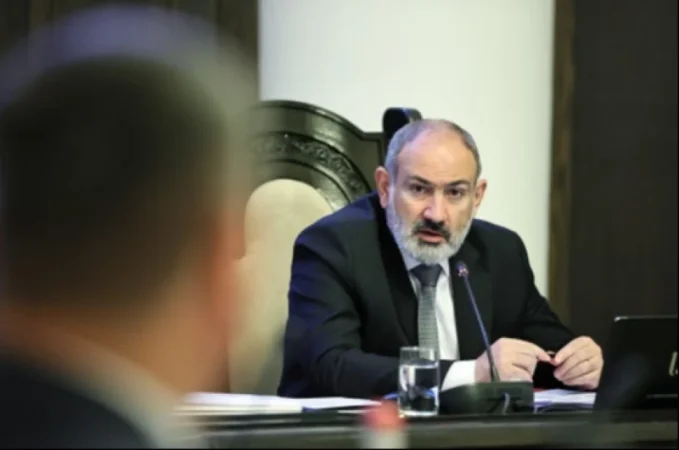
Prime Minister Nikol Pashinyan reviewed the 2023 activity report of the State Control Service on January 31. The head of the Service, Romanos Petrosyan, and his deputies presented information on the activities carried out during the reporting period.
Specifically, a summary was provided on the results of 40 studies (39 in 2022) and 216 monitoring activities (201 in 2022) conducted in sectors including public legal, economic, territorial management and infrastructure, social issues, procurement processes, implementation of audits, risk assessment and analysis, and legal assurance and legality.
In this context, particular attention was given to studies conducted in government agencies and organizations with state participation, as well as several monitoring activities. It was noted that as a result of the service's supervisory functions, 90 criminal cases were initiated in 2023 (77 in 2022). It was also reported that approximately 1.1 billion drams were recovered in relation to identified violations/discrepancies (about 135 million drams in 2022).
In this context, the discussion included the time spent by the state system on recovering these funds and the corresponding amounts spent. Prime Minister Pashinyan stated, "The issue is one of formulation. Our initial goal was to recover 1000 drams, or whether our goal has been, for example, to exercise control, and during that process 1000 drams were recovered or 400. Theoretically, in my understanding, there are cases where recovering 1000 drams is so principled that it’s worth spending 50,000 drams or even 1 million drams, because it depends on the context. For example, a similar issue arises regarding the functions of the State Revenue Committee (SRC). I say, listen, dear colleagues, there are 3000 POS terminals in the country that have not made a single transaction. What is the SRC's response? They say, 'well, these 3000 POS terminals are set up in the villages; if they operated, how much turnover would there be?' Let’s assume there was a turnover of 100 million drams, and from that turnover, 6 million drams would be generated in taxes. But I say, no, this isn’t the case, because first of all, it’s a matter of ensuring a person’s right to conduct cashless transactions, and secondly, it’s a matter of compliance with the law. We need to move from quantitative indicators to qualitative indicators and highlight problems and propose solutions; or it’s not mandatory for the State Control Service to have solutions to all questions; it can simply state, 'this problem exists; here is a policy-making body or implementer, see how you will solve this, but this problem exists.' I believe that this approach is more correct than remaining solely in a numerical logic.
As a result of supervisory functions carried out by the service, 41 legislative amendments were proposed (such as the law on financial equalization, the law on energy, the law on procurement, etc.), as well as 83 other types of proposals concerning addressing recorded omissions, correcting inaccuracies, conducting service investigations against responsible officials, applying accountability measures, etc.
Prime Minister Pashinyan also addressed the control over implemented programs and noted, "The next issue is not so much quantitative but more about qualitative control regarding highways because we are still building roads now; 500 km of road has been constructed. That’s good; we’ve built, but does the condition of this road correspond to our established quality standards three years later? I instruct that the State Control Service conduct a specific study on this topic, and not just a documentary one but to go, take the sample as required, because otherwise we built the road, but let’s assume it starts deteriorating very rapidly, and then we have no accountability; we do not know what the reason is—because the weather was poor this year, freight transportation has increased, heavy freight vehicles have increased, of which there should be a legitimate component. There is also a standards issue. By the way, I would like to mention that through the economic modernization program that we promote with technical imports, now there are self-propelled ordinary vehicles that have never been in Armenia, but we also need to understand whether we have adjusted our road standards for this logic or not. And here I expect to have answers.
It was reported that in 2023, the service received 638 public petitions from citizens (589 in 2022), noting that about 47% of these 638 petitions came from legal entities, about 46% from citizens, and approximately 7% from lawyers. It was also mentioned that during 2023, in the context of monitoring the implementation of requests and complaints addressed to state bodies by citizens in 2022, the operation of the "Hotline" service, and the citizens’ reception process, several violations/discrepancies were identified by the service.
Furthermore, the key directions of the service's involvement in anti-corruption strategies and international programs (GRECO, OLAF) were presented, emphasizing the control over the implementation of the Armenian anti-corruption strategy's 2019-2022 action plan. Within this framework, it was also emphasized that starting from December 2023, the Service is a partner state institution of the European Office for Combating Fraud (OLAF).
It was reported that the need to amend the law on the State Control Service is conditioned by the inclusion of the task of financial-budgetary control over the execution of the state budget assigned to the service under the Prime Minister’s instruction, as well as the necessity to address systemic issues identified during nearly 6 years of activity.
Նմանատիպ հոդվածներ

Russian Ministry of Foreign Affairs on Armenia's Withdrawal from CSTO
Ani Isprian Granted House Arrest
The City Hall Purchased a Shalak Type Apricot Tree for 19,500 Dram, Compared to 2,400 Last Year
We Can Show with Meter Deviations Where the Armenia-Azerbaijan Border Passes: Speaker of Parliament
Ավելին Politics բաժնից
Արաղչին` ռուսական առաջարկի մասին
Փաշինյանը հանդես է գալիս պատերին ծեփելու, ասֆալտին փռելու սպառնալիքներով. Իվետա Տոնոյան
Ալիևը նորից սպառնում է «Զանգեզուրի միջանցքով»