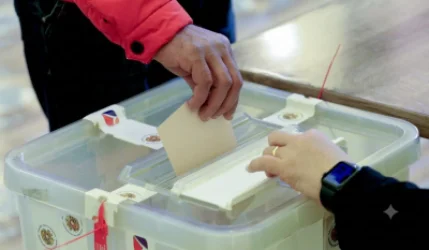
We See a Clear Intention to Involve the Republic of Armenia in Military Operations and Expand Them into Our Sovereign Territory: Mirzoyan
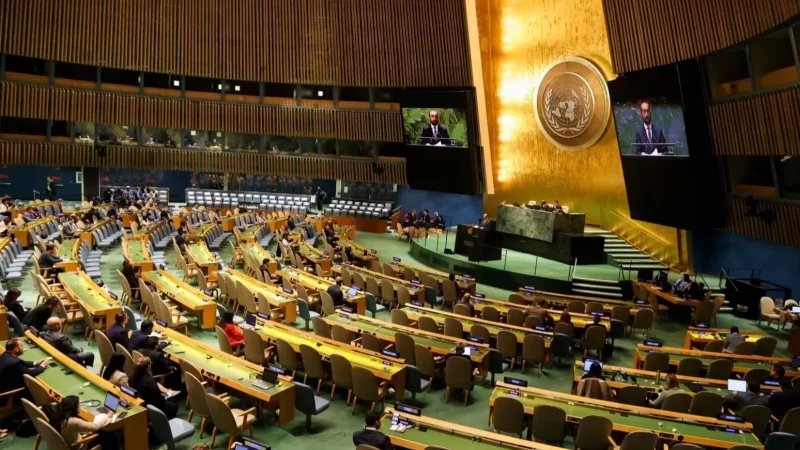
The Minister of Foreign Affairs of the Republic of Armenia, Ararat Mirzoyan, addressed the 78th session of the UN General Assembly:
“Honorable Mr. President, Your Excellencies, Ladies and Gentlemen, First of all, allow me to congratulate Mr. Denis Francis on assuming the presidency of the 78th session of the General Assembly. I will not be the first nor, certainly, the last speaker in this esteemed institution to point out global threats to democracy, security challenges, and violations of the principles and objectives of the UN Charter, including the non-use of force and the peaceful resolution of conflicts, as primary sources of instability and tension in the world.
The devastating developments of recent years that have disrupted the security architecture globally, and especially in Europe, have significantly undermined multilateralism. While a few years ago we were concerned about the retreat of multilateralism, today we are witnessing the very essence and foundations being eroded, such as international law, human rights, and cooperative security. This is not a mere theoretical conclusion but a reality that the Armenian people have faced for the last three years. The continued aggressions of Azerbaijan against the sovereign territory of the Republic of Armenia and military attacks against the people of Nagorno-Karabakh severely disrupt peace and stability in our region, grossly violate human rights and humanitarian law, posing an existential threat to Armenians.
The Armenian government, having a sincere belief and aspiration to establish peace and stability in our region, has made substantial and clearly recorded efforts in this direction. Unfortunately, we are dealing not with a partner who desires peace but with a country that openly declares that 'might makes right' and constantly uses force to hinder the peace process. Literally a year ago, from this podium, the Prime Minister of the Republic of Armenia presented the fact of aggression and occupation of the sovereign territories of the Republic of Armenia by neighboring Azerbaijan. Since then, the situation has further deteriorated, and today I am compelled to present yet another large-scale assault, this time against the indigenous people of Nagorno-Karabakh, as an egregious violation of international law and the trilateral statement of November 9, 2020.
It is no coincidence that this event has occurred precisely this week. It highlights Azerbaijan's disrespect and contempt for the assembled international community here in New York. The message is clear: 'You can talk about peace, but we can go to war, and you won’t be able to change anything.' 120,000 people, whose only aspiration is to live and create in their ancestral homeland, and who have suffered under the blockade and siege of Azerbaijan for more than nine months, have been subjected to a military attack by tens of thousands of troops. During this inhumane assault, the entire territory of Nagorno-Karabakh, including Stepanakert and other towns and villages, has been subjected to intense and widespread bombardment using heavy military equipment—rockets, artillery, combat drones, and aircraft, including banned cluster munitions.
This dreadful large-scale attack, which has claimed the lives of hundreds, including women and children, has cynically been labeled as a localized anti-terrorist operation. According to the latest reports, there are confirmed cases of over 200 fatalities and 400 injuries, including among the civilian population, women, and children, as confirmed by Azerbaijan's Ministry of Foreign Affairs. The fate of hundreds of people remains uncertain. While I speak today, 30% of the population of Nagorno-Karabakh is displaced. The entire population remains without means of livelihood, as Nagorno-Karabakh has been able to receive only limited humanitarian aid. There is no food, medicine, shelter, or place to live. They are separated from their families, terrorized, and afraid for their lives.
Ladies and gentlemen, Azerbaijan's policies and actions over the past 10 months evidently reveal the premeditated and well-organized nature of this massive crime. On December 12, 2022, Azerbaijan blockaded the Lachin corridor, the only lifeline connecting Nagorno-Karabakh to Armenia and the outside world, blatantly violating international humanitarian law and its commitments under the trilateral statement of November 9, 2020. The blockade, lasting over nine months, has led to acute shortages of food, medical supplies, fuel, and other essential goods, nearly exhausting the resources necessary for the population's survival. The blockade has been accompanied by deliberate interruptions of electricity and natural gas supplies, further exacerbating the situation into a humanitarian crisis.
I want to emphasize that on February 22, 2023, the International Court of Justice issued a ruling on the urgent measures, stating that 'Azerbaijan must take all necessary measures to ensure the unimpeded movement of persons, vehicles, and cargo in both directions along the Lachin corridor.' This ruling was later reaffirmed by the Court's decision of July 6. Numerous partner states and international organizations, including UN mandate holders, the International Committee of the Red Cross, Human Rights Watch, Freedom House, Amnesty International, and Transparency International, have continuously raised alarms about the worsening situation on the ground.
Moreover, on August 16, during an emergency meeting of the UN Security Council at Armenia's request, the majority of member states expressed clear positions on the necessity of unblocking the Lachin corridor and ending the suffering of the people in Nagorno-Karabakh, ensuring their fundamental rights. However, in response to these explicit calls, Azerbaijan has intensified its inhumane actions by carrying out this military assault against the people of Nagorno-Karabakh.
On September 21, 2023, another session of the UN Security Council was convened to discuss the catastrophic situation prevailing in Nagorno-Karabakh. The majority of Security Council members expressed their position on the imperative of ending military actions by Azerbaijan, opening the Lachin corridor, ensuring international humanitarian access, and addressing the rights and security of the people of Nagorno-Karabakh.
Ladies and gentlemen, the timeline of truly devastating developments in our region indicates that problems cannot be solved merely by statements and general appeals. Armenia has repeatedly warned the international community of the necessity for clear and practical actions, including sending a UN inter-agency needs assessment and fact-finding mission to Nagorno-Karabakh. However, the international community and the UN have been unable to provide assistance to the people over the past nine months—285 days.
Using starvation as a method of warfare, depriving people of their livelihoods, obstructing and denying humanitarian access for UN agencies, and hindering the humanitarian activities of the ICRC are early warning signs of genocide. Several international human rights organizations, lawyers, genocide scholars, and reputable independent experts, including the former prosecutor of the International Criminal Court and the former special advisor to the UN Secretary-General on the prevention of genocide, have already qualified the situation in Nagorno-Karabakh as a threat of genocide.
Just yesterday, the UN Secretary-General’s Special Advisor on the Prevention of Genocide, Alice Wairimu Nderitu, emphasized that 'military operations can only contribute to exacerbating an already tense situation and place the civilian population at risk of violence, including genocide and related crimes. All efforts must be made to prevent violence and maintain peace.'
Let me draw your attention to the fact that after the failure to prevent the Rwandan genocide, the UN managed to establish preventive mechanisms, thereby turning the motto 'never again' into a meaningful promise. But today we stand on the verge of yet another failure.
The people of Nagorno-Karabakh, trapped in the inhumane blockade and military operations unleashed by Azerbaijan and under threat of existence, still hope that prevention will not remain a mere verbal formulation but will turn into a chain of actions. The claims that the UN is not present on the ground and therefore has no opportunity to verify the situation cannot serve as an excuse for inaction. The UN is a universal body that should assist the victims of mass crimes around the world, regardless of the status of the territory, rather than engage in dismissive statements.
We hope that the international community, particularly the UN, will express strong political will to condemn the resumption of military actions and targeting of civilian settlements and infrastructure, demanding full compliance with obligations under international humanitarian law, including those related to the protection of the civilian population, especially women and children, as well as the protection of vital civilian infrastructure.
The international community must make every effort to immediately deploy a UN inter-agency mission in Nagorno-Karabakh for the purposes of continuous monitoring and assessment of the situation in the fields of human rights, humanitarian aid, and security. Unimpeded access for UN institutions and other international organizations to Nagorno-Karabakh, in accordance with humanitarian principles, is imperative.
In this regard, we also emphasize the necessity of ensuring comprehensive and good-faith cooperation with the International Committee of the Red Cross to address the consequences of the military attack—including the recovery and identification of deceased individuals, the search for and rescue of missing servicemen and civilians, the release of prisoners of war, and the provision of humanitarian assistance in a safe and unimpeded manner, in strict compliance with the norms of international humanitarian law.
Ultimately, Azerbaijan must adhere to its legally binding obligations and ensure the free movement of persons, vehicles, and cargo along the Lachin corridor, in accordance with the decisions of the International Court of Justice.
We are deeply convinced that appropriate mechanisms must be established to facilitate the return of displaced persons due to the recent military assault, as well as those displaced and refugees as a result of the 2020 war, to their homes in Nagorno-Karabakh and adjacent areas under the monitoring and control of UN agencies, as provided in the trilateral statement of November 9, 2020.
Establishing a sustainable and viable international mechanism for addressing the rights and security of the Armenian population in Nagorno-Karabakh is imperative to prevent ethnic cleansing. Moreover, guarantees must be provided to exclude punitive actions against the political and military representatives and personnel of Nagorno-Karabakh.
We also believe that the international community must demand the removal of any Azerbaijani military and law enforcement personnel from all civilian settlements in Nagorno-Karabakh to prevent panic, provocations, and escalation among the civilian population, and to create conditions for UN-mandated peacekeeping forces to maintain stability and security in Nagorno-Karabakh.
Ladies and gentlemen, the policy of ethnic cleansing against the people of Nagorno-Karabakh is only part of the bigger picture. In this context, we see a clear intention to involve the Republic of Armenia in military operations and to geographically expand them into our sovereign territory. Azerbaijan's unwillingness to sincerely and constructively engage in the peace process with Armenia, recognize the territorial integrity of the Republic of Armenia, withdraw its armed forces from occupied territories of Armenia, demarcate the state border between Armenia and Azerbaijan based on the Alma-Ata Declaration of 1991 and on the basis of maps from 1975, and establish a demilitarized zone along the state border, clearly illustrate these intentions.
Similarly, Azerbaijan has a hidden agenda regarding the unblocking of regional transportation and economic communications. As a landlocked country, Armenia is vitally interested in implementing agreements on the unblocking of all communications based on sovereignty, national jurisdiction, equality, and reciprocity. Armenia has been a persistent proponent of comprehensive and fair transportation communication to foster trade, cooperation, and people-to-people connections, while our neighbors continue to implement the blockade of Armenia, which has been a well-organized part of my country’s economic coercive policy for three decades.
The so-called 'corridor logic' advocated by Baku and their hidden and blatant sponsors is aimed at undermining Armenia's sovereignty and territorial integrity and legitimizing their territorial claims. The discourse they create, coupled with the use of force by Azerbaijan against both the Republic of Armenia and the people of Nagorno-Karabakh, demonstrates that the next objective may be forcibly imposing an extraterritorial corridor on Armenia, a corridor that would pass through Armenian territory but would be outside of our control. This is unacceptable to us and must be unacceptable to the international community.
Mr. President, Despite all challenges, Armenia continues to engage in negotiations for conflict resolution and the establishment of sustainable peace and supports international partners’ efforts in this regard. Respect for territorial integrity and sovereignty within internationally recognized borders, addressing the underlying causes of the conflict, namely the rights and security of the people of Nagorno-Karabakh, are the foundations for lasting peace. In conclusion, let me state that the people of Armenia will steadfastly defend their sovereignty, independence, and democracy, and will overcome the hybrid warfare unleashed against them. Thank you.”
Նմանատիպ հոդվածներ
‘After the Ceasefire, Armenia Has Not Fulfilled Several Agreements’: Fidan
Azerbaijan Ready for Genuine Dialogue and Negotiations with Armenia: Bayramov
A Representative from Artsakh States There Is No Final Agreement with Baku
Suspects Detained in Connection with Deaths of Peacekeepers in Nagorno-Karabakh: Details
Ավելին Politics բաժնից
Ռուսաստանի սուր հայտարարությունը` Փաշինյանի վերընտրվելու հետ կապված
Վարչապետի աշխատակազմի ծրագրերի գծով ծախսերն աճել են
Գագիկ Ծառուկյանի փեսուն զրկել են տնից և տնային կալանք տվել. «Հրապարակ»