‘The Danger Will Not Delay if Armenians Lose Their Homeland’: Vardanyan’s Interview with The American Conservative
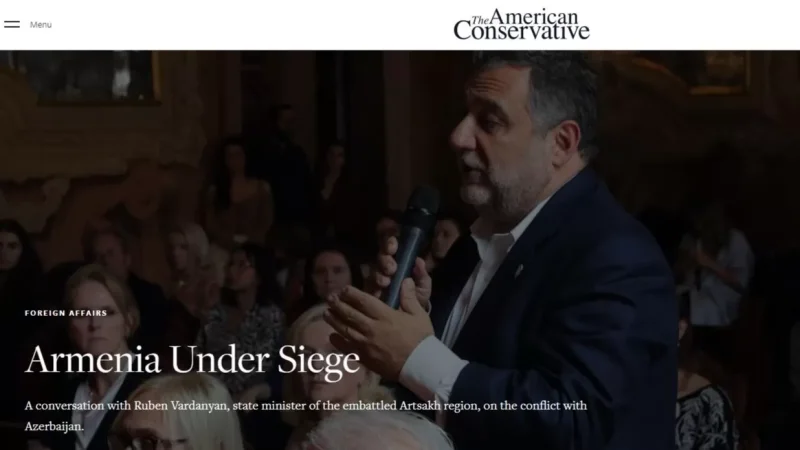
Renowned American publication The American Conservative has published an interview with Ruben Vardanyan, the state minister of Artsakh. Prominent analyst Sohrab Ahmari, addressing the blockade of the Lachin Corridor by Azerbaijan, writes that Armenians, being one of the world's oldest Christian peoples and the first victims of genocide, have recently faced increasingly aggressive pressures from Azerbaijan. The analyst emphasizes that the oil and gas-rich regime in Baku has encircled Artsakh, stating: ‘The so-called Lachin Corridor, the only road connecting Artsakh to Armenia, has been closed by Azerbaijani environmental protesters (don’t laugh), and the Azerbaijani government has threatened to bomb planes carrying aid.’
The following is a translated transcript of the interview (conducted on January 6):
Has anything changed since the blockade started on December 12?
Unfortunately, nothing has changed. We remain under blockade. We lack food, medicine, and fuel. Families continue to be divided, unable to join other family members, including children from Artsakh whose parents are in Armenia, and Armenian children whose parents are in Artsakh. It’s a rather complicated situation. It has been 26 days, and the situation is truly grave. It turns out that 120,000 Armenians are under blockade, including 30,000 children.
Did the blockade start as a protest by Azerbaijani environmental activists?
It began as a protest by Azerbaijani environmental activists who blocked the road. But if you follow the history of Azerbaijan over the past 10 years, you won’t find any other environmental protests in Azerbaijan. This is somewhat surprising, given the large oil and gas industry in Azerbaijan. Interestingly, they suddenly started thinking about the environment now and why they decided to hold their first protest here.
We have always said: ‘We see no problem in sending international experts to monitor our mining sector.’ We are working to high standards. The Artsakh government has set high standards for any industry here. Therefore, we said, ‘No problem, let’s not only check how we are mining but also check the quality of mining in Azerbaijan,’ since we are also interested in how our Azerbaijani neighbors treat the environment. But they have refused. Additionally, many of these ‘protesters’ are employees of Azerbaijani special services, military personnel... others have been hired by the government and are being paid to participate in protests.
Isn’t the Lachin Corridor under the control of Russian peacekeepers? Why aren’t the Russians helping?
Well, if you follow the work of peacekeepers anywhere in the world, you will find similar stories. One of the reasons is that the number of peacekeepers is usually very limited. They do not have the right to use their weapons. Moreover, they generally try to avoid conflicts, and when a conflict occurs, they have limited capacity to take action.... Overcoming the blockade without force is not easy.
I should have started our conversation by congratulating you on your Christmas. Today is Armenian Christmas, isn’t it? How does the blockade affect the holy days?
We are one of the oldest Christian nations in the world, and our church celebrates Christmas and the baptism of Jesus on the same day, always on January 6. This time we are celebrating Christmas in a heavy situation of blockade. Like many Christian communities, we eat fish on Christmas Day. Now we do not have fish. We have a little rice to make pilaf with dried fruit. Most people do not have the ingredients they usually prepare for Christmas. But people are in good spirits. Today I was in church, and it was packed with thousands of people. Many of them are very understanding; they understand what is happening. They understand that this blockade has nothing to do with the environment; it is about our right to live in our homeland. And that’s why most people say that we will not leave; we will remain here.
Is there a danger of famine? How much stock do you have? How long will that last?
We have storages that we have gathered over the years. Additionally, don’t forget that Artsakh is a rich country. We have good meat and grains. So we have basic food; we haven’t started to starve, but we don't have everything. We don't have vegetables. Children are not receiving proper food; they are malnourished, which is harmful to their development. As for medicine, the Red Cross is helping us somewhat, but of course, we have ongoing issues.... The Azerbaijani 'activists' allow the Red Cross to pass. Now the Azerbaijanis are playing a game, saying that look, the road is open, the Red Cross is passing. However, in other cases, they check passports and ask, ‘Why are you going? Where are you going?’ Meanwhile, according to international agreement, the road should be open and free. This is unacceptable to us.
To what extent is the government of Yerevan able to help?
Armenia itself is facing challenges with Azerbaijan. The Armenian government and Armenian society have limited resources. It seems that the Azerbaijanis are determined to apply pressure until 120,000 Karabakh Armenians are forced to leave.
Look, this has been going on for 35 years. In 1988, when Armenians in Karabakh, then part of the Soviet Union, demanded independence from the Azerbaijani Soviet Republic, they [Azerbaijanis] started a war and lost in the first war. But the goal has been to ethnically cleanse Armenians from this entire area, where we have lived for thousands of years. There are ancient monasteries that testify to our presence here and villages where people have lived for dozens of generations. But they want to cleanse this territory for the Azerbaijani people.
Are you prepared to leave? Will the Armenians of Karabakh ever leave this land?
On December 25, we held a large rally; over 50,000 people gathered. A unanimous decision was made: despite all the difficulties and dangers created for us, this is our homeland. We will die, but we will stay in our homeland. Azerbaijan faces a complex choice: they must kill 120,000 people, including 30,000 children. Azerbaijan will pay a very high price for all this, not only with the lives of its soldiers but also for the fact that the world will not accept this act. In any case, we have already made our decision: we will not leave our homes.
The Azerbaijani government says the following: ‘Karabakh is our region, where there are Azerbaijanis of Armenian descent. And they can live with us.’ Why is that unacceptable to you?
Look, you live in the United States, where democratic systems prevail. There is no democracy in the Azerbaijani state. It is an authoritarian state. Just ask yourself: what rights does the ordinary Azerbaijani people have? They have no rights. There is no opposition, no real elections, no genuine democracy. One family governs the entire country. Therefore, we say, ‘How do you expect us to live as citizens of a country where human rights violations against its own people are so common, let alone against national minorities?’
When I was in Yerevan in October, some officials I spoke with said they were willing to consider negotiations regarding the final status of this frozen conflict. They are concerned that you will be subjected to ethnic pressure and whether you can imagine what it would mean for the Armenians of Karabakh to live with Azerbaijanis who have been conducting extreme anti-Armenian propaganda for 30 years. Can you imagine the reintegration of Azerbaijanis in that territory, especially those who, it should be noted, lost their homes and were displaced in previous wars?
If you truly want to establish peace and have a long-term strategy where we can live side by side as neighbors, he [Aliyev] needs to change his approach. You cannot use your power to keep people around you. He must sit down and discuss... Thirty years ago, they lost the war. Recently, the Armenians lost a war. And this could continue indefinitely, and the balance of power could change, as the price of oil and gas may decrease in the future. The conflict could last forever...
The leaders of Azerbaijan must understand that if they truly want to establish peace in the region, they must present proposals that are acceptable to both sides. The solution is quite simple: they must acknowledge that Artsakh and its people are used to living independently, and they will not just become ordinary citizens of Azerbaijan. They must find a way to accept this. They must be wise enough to acknowledge this fact—not only to overcome the current conflict but also to avoid imposing this conflict on future generations. They must sit and talk to the people. It will take a lot of time and require much willpower from both sides to talk to each other, to reduce the hatred to a level where we can live side by side, as has happened between Britain and France, Germany and France. If we do not try, we will never find a solution.
But at present, are they trying to impose this?
They are trying to use their force. They do not understand that it is ridiculous and not correct to use power and authority unilaterally. Because that is not a long-term solution.
Some parts of the American foreign policy system have become very pro-Azerbaijani in recent years due to oil and gas because they see Baku as a tool against Iran. Well, Azerbaijan has sold itself to the West as a reliable ally. Americans may not understand that, based on this calculation, some of our foreign policy elites will be willing to harm another indigenous Christian community. Why should Americans, especially American Christians, care about Armenians in their historical lands?
You cannot live by double standards. If you, as Americans, care about democracy, human rights, and the right of peoples to live in their own homes, then it cannot be applied unevenly or allowed to be suppressed by realpolitik... The United States, being one of the world's most powerful countries, the primary supplier of democracy around the globe and the hub of Western civilization, must understand that Armenian civilization is one of the oldest in this region and in the world. We have lived and created a legacy for the world. And if we are allowed to be subjected to ethnic cleansing, it will harm not only this region but also the world, especially the Christian world. This is the first Christian civilization, and it has shaped Christianity for the entire world. Americans, especially Christians, this is a phenomenon that you may overlook, saying: ‘It’s too far from us,’ but the danger will not delay if Armenians lose their homeland.
Նմանատիպ հոդվածներ
Azerbaijan Wants to Involve Us, But Armenia Will Not Participate in Negotiations Over the Opening of the Lachin Corridor: Simonian
Probably Ruben Vardanyan is referring to himself, because they won't negotiate with him. Alen Simonyan
Pashinyan and Aliyev's Recent Speeches Confirmed That the Only Possible Choice for Artsakh Is Struggle: Ruben Vardanyan
Kremlin on Pashinyan's Proposal Regarding Peacekeepers
Ավելին Politics բաժնից
Ռուսաստանից կրկին անդրադարձել են Հայաստանին․ ինչ են հայտարարել
ՏԵՍԱՆՅՈՒԹ․ Փաշինյանը հանդես է եկել աղմկահարույց հայտարարությամբ․ Դոդը, Ռոբը, կալուգացին հացին կակա պիտի ասեն

Նիկոլ Փաշինյանը դիմել է Դոնալդ Թրամփին՝ կարևոր ուղերձով