Russia Aids Armenia and Azerbaijan in Agreement on 'Zangezur Corridor' Highway
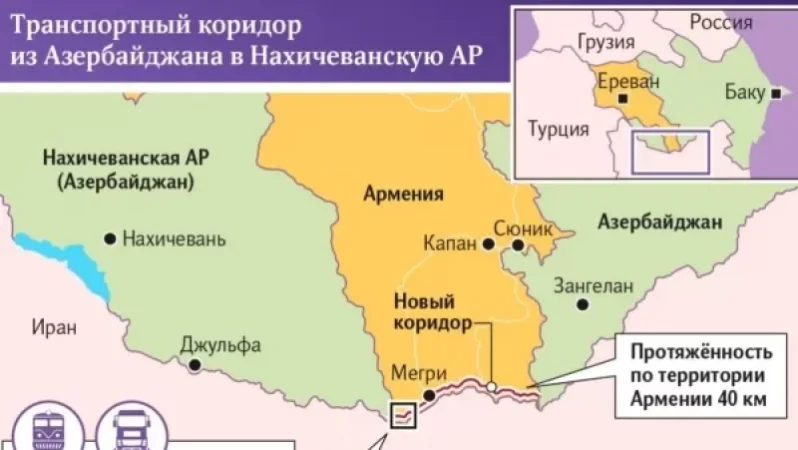
Russia has assisted Armenia and Azerbaijan in reaching an agreement on the so-called 'Zangezur Corridor' highway, with a small segment of six kilometers still remaining to be finalized.
This was reported by a well-informed senior source to 'Izvestia'. According to this source, the Russian company 'Avtodor' will help finalize the route's coordination, which has been delayed due to the mountainous terrain.
The remaining 40 kilometers of the route will utilize existing Soviet-era roads. The source noted that Armenia expedited the project's approval after Baku began considering the construction of a route not through Armenia, but via Iran.
Political figures and experts consulting with 'Izvestia' believe that the main reason for the delay in opening the corridor is the lack of trust between the two parties and differing interpretations of the texts of trilateral agreements.
Negotiations concerning the unblocking of transport communication between Azerbaijan and Armenia are ongoing at the level of the deputy prime ministers of the three countries (including Russia), with their last meeting taking place on June 3. Unblocking signifies the construction of a transport corridor along Armenia's southern border with Iran in the Syunik region, connecting Azerbaijan's main part with the Nakhchivan Autonomous Republic.
As the high-ranking source from 'Izvestia' stated, despite the relatively tough political statements from both sides, constructive dialogue has commenced between Baku and Yerevan, mediated by Moscow, regarding the transport corridor.
Azerbaijan and Armenia had previously agreed on a railway corridor to Nakhchivan as far back as last autumn. However, Yerevan took a long pause regarding the highway issue. But during the last meeting of the deputy prime ministers on June 3, they managed to agree on the future route, except for the absent six-kilometer segment. This area is mountainous, and Russian 'Avtodor' is dispatching experts there to propose clear engineering solutions.
The route will pass along the Araks River from the Armenian side. In the remaining section, old Soviet roads will be utilized, which used to connect Nakhchivan with the Zangelan (Kovsakan) region before 1992. These roads have been preserved almost along the entire length of the future corridor, with only a segment at the Nakhchivan region and Armenia's border remaining to be clarified, according to the source.
The 'Izvestia' interlocutor elaborated that the Armenian side accelerated the negotiation process after Baku signed a memorandum with Tehran in March this year, expressing intent to open a road through Iranian territory from Azerbaijan's Eastern Zangezur economic region to Nakhchivan.
In May 2021, Azerbaijan completed the construction of the Julfa-Ordubud railway line, which borders Armenia's territory near Nakhchivan. In March 2022, Armenia allocated funds for geodetic works concerning the construction of its section of the Yerasakh-Julfa-Ordubud-Meghri-Horadiz railway. The length of the Armenian section will be 45 kilometers, as noted by Deputy Prime Minister Mher Grigoryan. To that end, Yerevan will allocate $200 million, with the total length of the railway lines from Nakhchivan to Azerbaijan's main part amounting to approximately 340 kilometers.
Նմանատիպ հոդվածներ

Ավելին Politics բաժնից

Ալեն Սիմոնյանը դիմել է պատգամավորներին մանդատների և ադրբեջանցիների վերադարձի թեմայով

ՏԵՍԱՆՅՈՒԹ. Հայկ Մամիջանյանի կտրուկ արձագանքը` Էդմոն Մարուքյանի հայտարարությանը
Էրդողանը զգուշացրել է պատմության բռնապետերի ճակատագիրը կրկնելու մասին