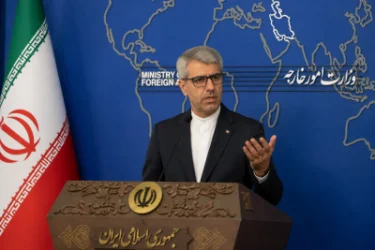
The 'Armenia' Faction Issues a Statement

The 'Armenia' faction has issued a statement indicating their intention to vote against the budget proposal. The statement reads:
“Today we are discussing one of the most important documents for the country - the state budget. A budget is not just accounting; it is not merely public finance; it is a policy, it defines political objectives, outlines ways to solve those issues, and allocates the necessary financial resources. The significance of the challenges facing the country and the government's political priorities dictate whether adequate resources are allocated for addressing certain issues or whether the allocation is postponed until 'better days.' This is the philosophy and logic behind budget formation.”
“In light of this undeniable truth, let us analyze the government’s proposed budget and understand whether the government adequately assesses the challenges facing the Republic of Armenia and the Republic of Artsakh, whether it proposes correct solutions, and whether the allocated resources are adequate to achieve those solutions.”
“Let us highlight the key issues in Armenia that need urgent resolution.”
1. Security Issues
It is clear that security challenges after the 44-day war in Artsakh have not only not subsided but have intensified. The long-term pan-Turkic objectives of the Azerbaijani-Turkish tandem do not limit themselves to merely displacing Armenians from Artsakh. Armenia is the bone lodged in the throat of the Turkish-Azerbaijani grey wolf, and their long-term political objective is the actual annihilation of Armenia. They have begun by reshaping the borders of the Republic of Armenia, already demanding a land corridor between Turkey and Azerbaijan, and tomorrow, they will demand the return of Azerbaijanis to their pre-war homes. They might even hold local referendums and demand to rename Vayq to Azizbekov.”
Azerbaijan and Turkey do not even hide their willingness to achieve their goals through military means if Armenia does not willingly relinquish its rights. It is no coincidence that this year alone, more than ten joint military exercises between Turkey and Azerbaijan have been conducted near Armenia's borders. One of the exercises included Pakistan. One must be blind not to see that instead of a peace era, we have a fragile ceasefire that is repeatedly violated. On November 16, we had an escalation of hostilities, followed by Pashinyan's directive to the Minister of Defense to begin the process of determining and delineating borders. It is evident that this was no mere coincidence. The domestic war for Armenian preservation has not ended; it has merely changed its nature temporarily.”
2. The Artsakh Issue
The Artsakh issue, as such, does not exist separately; it is one of the components of the existential problems of Armenian preservation, the Armenian nation, and Armenian statehood. There is no Republic of Armenia without the Republic of Artsakh, and there is no Republic of Artsakh without the Republic of Armenia. As a result of the 2020 war, the Republic of Artsakh lost 75% of its territory, including Hadrut and the historic Armenian city of Shushi, which predominates over Stepanakert. Instead of a land border between the two republics, we have a narrow corridor. The disgraceful document of November 9 envisages the construction of an alternative road bypassing Shushi, which will deepen the enclave status of Artsakh.
Negotiations about the status of Artsakh have effectively been halted. Azerbaijan completely denies the existence of the Nagorno-Karabakh issue. Under these conditions, what solution does the ruling majority propose, what steps does the government suggest to secure that solution, and how much money is it ready to allocate to actualize this solution? Does the state budget project answer this question? No. The section of the budget titled 'Artsakh Problem' best reflects the Artsakh policy of the Armenian authorities. It consists of merely 69 words. I quote: 'Armenia will continue to be the guarantor of the security of the people of Artsakh and will work towards protecting the rights of the people of Artsakh, including the preservation of Artsakh’s cultural and religious heritage. The resolution of the issue is possible under the co-chairmanship of the OSCE Minsk Group, through a clarification of the status of Nagorno-Karabakh based on well-known principles and elements, including the right to self-determination. Armenia will strive for the full restoration of the negotiation process under the OSCE Minsk Group, believing that substantive negotiations aimed solely at a peaceful resolution of the issue have no alternative.' Armenia will work on 'the preservation of Artsakh’s cultural and religious heritage.' And that’s it? Whom are you protecting: the authorities of the Republic of Artsakh, the Russian peacekeepers, or the Azerbaijani occupiers? The political power that demands the de-occupation of Artsakh today is satisfied with merely protecting cultural assets. It is unclear what kind of solution regarding the Artsakh issue the current government of Armenia is pursuing. The Minsk Group is merely a platform. A statement about a platform for resolving the issue does not replace a statement about a vision for a solution. The Armenians of Artsakh, as an indigenous people, can be gathered and left in reservations while being allowed to bake Jengyalov hats without hurdles—that's also a status. The vague formulation of 'clarification of status' cannot replace the ruling majority’s clear political stance.
Under these conditions, it is clear that all state efforts must be directed towards addressing security issues, aimed at restoring the combat readiness and development of our armed forces to guarantee peace. The state budget must reflect this political priority. Does it? In comparison to the budget established in 2021, the 2022 budget plans a 17.5% increase in state revenues, by 290 billion drams. Expenditures are planned to increase by 16.6%, about 263 billion drams. Without delving into the realism of these estimates, straightforward logic suggests that a country facing security and existential problems should increase its defense budget by at least 16.6%. The Armenian government proposes to increase the defense budget by only 11%, about 30 billion drams. It seems that the Armenian government is preparing for a peace era and is guided by the HHSh principle of 'our protection is in our unprotection.'”
3. Economic Issues
Armenia is facing serious socio-economic challenges. The COVID pandemic, the 44-day war, the ongoing hybrid war on the borders of Artsakh and the Republic of Armenia, along with external and internal political uncertainties, create objective complications. In these conditions, a clear economic doctrine based on economic ideology is required. However, a coherent economic policy that would introduce clarity and predictability and reduce economic risks is noticeably absent in the country. The government’s economic policy can be summarized in a few words: 'asphalt to be paved with loans.' For economic growth, three factors are necessary: capital accumulation, technological development, and an increase in human resources.”
“Let us examine what policies the government is implementing in these directions.”
1. Capital Expenditures
For 2022, the government has budgeted 346.5 billion drams for capital investments (4.4% of GDP), about 120 billion drams more than the revised plan for 2021. The government’s ability to carry out capital investments is highly questionable, as it chronically underperforms in implementing capital expenditures. Over five years, the average capital expenditures have amounted to 163 billion. In the first nine months of 2021, the performance was only 125.5 billion drams. Effectively, it is planning to carry out 346.5 billion drams of capital spending, which is more than double the five-year average. We do not regard this approach as realistic.
In addition to the ability to make capital investments, it is crucial to also consider the effectiveness of those investments. There is no calculation of the economic efficiency of capital investments provided; it is unknown whether these investments will pay off or increase external debt without generating means to service that debt. Significant risks exist that Armenia may fall into a 'debt trap' regarding infrastructure. Private companies' investments in fixed assets have also significantly decreased. It is expected that private investments in fixed assets for 2021 will show a mere real increase of 0.6%. The government’s forecast that private investments will sharply increase and constitute 15.6% in 2022 is incomprehensible. The dynamics of changes in deposits indicate that enterprises prefer to hold over 720 billion drams in banks, of which 432 billion drams are in accounts with no income, rather than invest in Armenia’s economy.
By the way, the situation in the public sector is not better. The government reports that 'due to exceeding the revenue program and relatively low performance in expenditures, there has been an increase in budgetary free resources in internal sources, which amounted to 232.9 billion drams instead of the planned 47.3 billion drams.' This means the state is collecting money from citizens and businesses and cannot use it for economic development. If you cannot use it productively, let people spend it themselves; increased private spending will lead to economic growth or let the businesses manage it themselves.”
2. Workforce
Although the Armenian government has made no forecasts regarding demographic changes for 2022, we consider it necessary to address the main factor for economic growth—the workforce. In 2021, negative trends continued. Specifically, compared to 2020, the working resources decreased by 9.7%, the labor supply decreased by 6.2%, and the number of employed individuals decreased by 10.1%. The number of unemployed persons fell by 20%.
Analyzing labor market trends, the rise in poverty, and emigration, it becomes even more puzzling and unacceptable to observe the government’s social policies. The government declares that it cannot increase the social budget as funds are directed towards supporting businesses and economic development. However, the 2022 budget plans a 25.5% (536 million drams) reduction in the employment programs budget and cuts three programs. Notably, the main beneficiaries of the reductions were women. Support allocations for disadvantaged social groups decreased by 17.9% (6.77 billion drams). Additionally, costs for maintaining the central apparatus of the ministry increased by 28%.
3. Technological Progress
There is no point in discussing technological progress since we have recorded no significant results, and if we project our modest achievements into the future, we again end up with modest results.
Moreover, we cannot fail to address the national debt. It is expected that by the end of next year, it will exceed the $10 billion threshold. Much has been said about this, although much remains to be said, but I will speak about an aspect of the debt that has not been discussed or has been discussed very little. The state budget approved in 2020 foresaw raising additional debt from internal resources; however, on February 2, the Republic of Armenia placed $750 million of foreign currency state bonds in the international capital market, with a ten-year maturity and a placement yield of 3.875%. Moreover, under the revised state budget of the Republic of Armenia for 2021, the net financing of the state budget deficit was planned to be $500 million (241.9 billion drams) from foreign currency state bonds. An additional $250 million debt was raised as they were providing good rates, and it 'aimed to increase the manageability of risks in financing the state budget deficit as well as to contribute to the stability of the external sector's balance of payments.' The excess funds from the distribution of foreign currency bonds (136.8 billion drams) were directed to the replenishment of the stabilization deposit account.
Thus, we are borrowing more money, converting dollars into drams, while the drams are being 'put to sleep.' It is clear that the issuance of dollar bonds also aims at maintaining the exchange rate. The yield on treasury bonds is at 10.06%. The state is borrowing at 10% and is again 'putting the money to sleep.' This is unacceptable. We are the ones paying the debt and the accumulated interest.
In summary, the proposed project does not adequately address the challenges facing the Republics of Armenia and Artsakh, especially the security challenges. The calculations for economic growth are unrealistic and aim to create an illusion of a good life to mitigate the growing discontent in society. The budget is, by its nature, anti-social. Instead of easing social tension, it will encourage our compatriots to continue seeking work abroad, thereby reducing the potential of the Armenian economy or, with the hope of a better life, leaving their homeland entirely. The 'Armenia' alliance faction will vote AGAINST the budget proposal.”
Նմանատիպ հոդվածներ
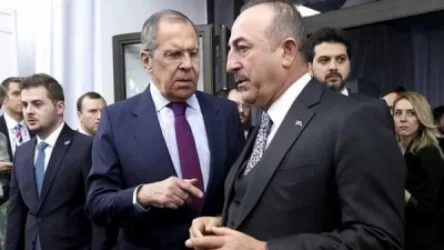
Lavrov and Cavusoglu Meet to Discuss Further Stabilization of the Situation in the Caucasus
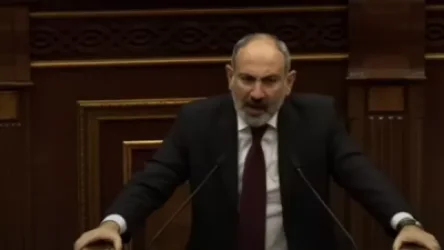
VIDEO: Prime Minister Erupted. "You Speak of Drones.. Your Minister of Defense Said, 'Hang the Hens in the Positions, So We Know When the Azerbaijanis Come'"
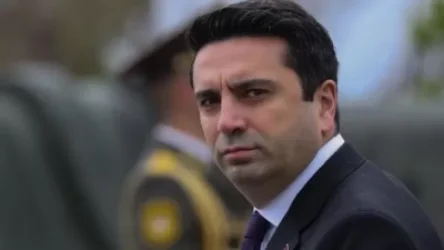
Alen Simonian to Be Summoned to Court, Says Artur Minasyan
What Issues Has the Delegation from Russia Actually Arrived in Armenia For?
Ավելին Politics բաժնից
Կարևոր ուղերձ՝ ՌԴ–ՀՀ հարաբերությունների ֆոնին
ՌԴ-ն պնդում է` ամերիկյան միջուկային զենքը պետք է դուրս բերվի Եվրոպայից

Վերահաշվարկից հետո կուսակցությունների ձայների հաշվեկշռում փոփոխություններ են արձանագրվել