After the Closure of the Goris-Kapan Road, Food Acquisition Processes in Syunik Communities Have Become Difficult: Human Rights Defender
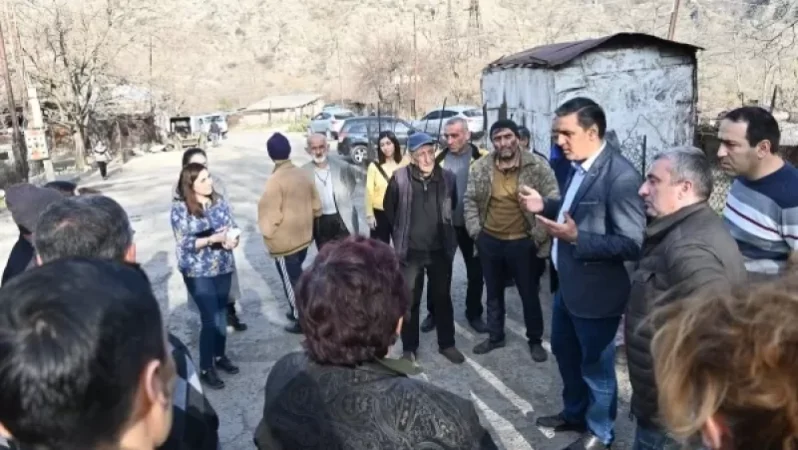
Arman Tatoyan, the Human Rights Defender of Armenia, has presented the results of his study concerning violations of the rights of residents in villages such as Vorotan, Shurnukh, and Bardzravan due to the closure of the Goris-Kapan road.
He stated: "Yesterday, we conducted fact-finding work in the villages of Vorotan, Shurnukh, and Bardzravan in the Goris community of Syunik province, holding discussions with residents. The efforts were supported by Artem Aghajanyan, the acting head of the Goris community, and his staff.
The closure of the Goris-Kapan road has led to the imposition of so-called Azerbaijani customs and border control without legal grounds and has resulted in various issues for residents, including violations of their rights.
Firstly, in light of the road's closure, an alternative route is being used that passes through the village of Khot and leads towards Vorotan. This road is impassable for light passenger vehicles (non-off-road). An off-road transport route, operating with a Ural vehicle, has been established. On Mondays, Wednesdays, and Fridays, this transport brings school teachers from Goris to Vorotan at 7:30 AM, continues to Shurnukh and Bardzravan, and then returns residents from Vorotan to Goris around 10:00-11:00 AM.
On the specified days of the week, at around 2:00 PM, the vehicle returns from Goris to Vorotan and the other villages, and returns from Vorotan back to Goris around 4:00-5:00 PM. On Tuesdays and Thursdays, it brings teachers from Goris to Vorotan at 7:30 AM, and returns from Vorotan to Goris around 4:00-5:00 PM.
However, the off-road transport, even though it operates punctually, is insufficient. The tight schedule and difficult road conditions do not allow residents to manage their daily needs or to arrange for travel in time to avoid falling into darkness while serving three villages, causing numerous challenges.
Primarily, there arise issues related to the right to health and access to medical care. For example, in Vorotan, residents have appointments with medical institutions for various health issues but are unable to reach the doctor on time due to the difficult road conditions or timing differences.
There are also urgent medical care access issues. This concern is particularly relevant as elderly individuals and persons with disabilities reside in these areas, where health preservation urgently requires swift and effective responses, timely medication delivery, and, if necessary, rapid hospitalization.
There are cases where individuals are unable to attend scheduled medical examinations due to road obstacles; the road is impassable for non-off-road vehicles and even extremely difficult for off-road vehicles. These problems are prevalent in Shurnukh, Bardzravan, and Vorotan. Particularly troubling is the access to emergency medical assistance.
Issues have worsened regarding the process of disability determination and the necessary examinations associated with it. Specifically, before the road's closure, individuals who already had mobility or other health issues were able, albeit with difficulty, to acquire the necessary documents, including passing medical examinations, within a single day. Due to the current limited operating hours of the transportation route, it has become nearly impossible to accomplish this in one day objectively.
Thus, individuals with disabilities find themselves in additional struggles. Because of this, there have already been cases where individuals simply refuse to apply for disability status to avoid the "headaches" of these bureaucratic obstacles.
Additionally, encountering difficulties in applying for the Unified Social Service to begin the process and undergo an examination is a challenge, as the service is located in Goris.
Organizing the acquisition of food and essential goods, including children's care items, has become complicated. Bread is delivered using an off-road vehicle from the Ministry of Emergency Situations. Residents face individual difficulties (for example, some cannot make personal or individual purchases from Goris or Kapan due to the road being impassable).
Some children living in Vorotan are unable to attend sports and dance classes in Goris, which is problematic because these children have achieved significant success. The children also cannot attend additional classes with teachers in Goris. When they can go, returning from Goris poses a challenge due to inconvenient timing (for example, a child finishing class at 1 PM or 2 PM must wait several hours for transportation).
All parents have stated that ensuring the road's safety is their primary concern, which cannot be addressed through the improvement of alternative pathways, particularly considering that vehicles return from classes at evening hours. Some parents have noted that ensuring safety for their children is also a priority for those who have individual off-road vehicles because the road is directly monitored by Azerbaijani armed personnel.
Residents whose work involves road construction or cargo transport, or those who require daily visits to Goris or other locations have lost their jobs and family income or have been separated from their families and cannot be together, forced to live elsewhere to maintain employment. One resident, for instance, reported having to separate from his family to avoid losing his job, only returning home once every two weeks.
In all the villages, including Vorotan, issues regarding the sale of agricultural products (like grapes, pomegranates, etc.) have arisen. Previously, various buyers would come to the villages, or residents themselves would take their goods to sell in Goris or other areas.
Students from Vorotan studying in Goris have lost the ability to attend classes regularly. Classes begin at 9 AM, a time by which young individuals cannot arrive. A problem also arises for students returning to Vorotan after finishing classes in Goris, as there are instances when the off-road vehicle route has already departed.
It has also been revealed that Vorotan School currently lacks a Russian language teacher, with the subject taught by other teachers (non-specialized) because the pregnant teacher cannot navigate the route due to its difficulty. Furthermore, teachers from Vorotan have to leave Goris at 7:30 AM.
Problems also arise in cases where residents have to conduct transactions in banks but cannot make it due to banking hours.
As I have mentioned, the alternative route to Vorotan is directly monitored by Azerbaijani armed personnel. The only solution to secure the residents’ rights and restore their safety is to remove these forces from the neighborhoods or from the roads between communities.
Aside from depriving people of their internationally guaranteed right to move freely and safely along the Goris-Kapan road due to Azerbaijani so-called customs and border controls without legal basis, the currently operational alternative route does not objectively resolve the violations that arise from illegal actions by Azerbaijani authorities and their armed personnel (such as safety, restoration of normal life, etc.).
Moreover, the closure of the road leading to the villages of Vorotan, Shurnukh, and Bardzravan (which also applies to Norarajazor) has posed serious issues of human rights and isolation. Until the closure of the road on November 11, the Goris-Kapan road passed through these villages, facilitating overall movement. Now, only either residents or visitors to these targeted villages can reach them. Iranian cargo vehicles are also navigating the route.
Therefore, there is only one necessary solution: Azerbaijani armed personnel or other service members should not be present near the communities or on the roads between the communities, and a demilitarized security zone should be established. This is the path to restoring the rights of residents in the Republic of Armenia. This entirely aligns with international experience and OECD, UN, and other international standards. No one has the right to disregard human rights and humanitarian issues in the process of determining borders, and that’s the end of it. I will present special reports by the Human Rights Defender to relevant international organizations, as well as to Armenian authorities and NGOs.
Նմանատիպ հոդվածներ

Ավելին Society բաժնից
«Նուբարաշեն» ՔԿՀ-ում երեք կալանավոր հացադուլի մեջ են մինչև 38 օր․ ՍիվիլՆեթ
Նոր ռազմավարությամբ կվերափոխվեն դատաիրավական և հակակոռուպցիոն ոլորտները
Բաքվից Հայաստան է ուղարկվել 490 տոննա ռուսական ցորեն