Old War in a New Place: What the Russian Kommersant Writes
On Tuesday, full-scale battles erupted once again between Armenia and Azerbaijan, involving artillery and armored vehicles, reminiscent of last year's events. According to Tert.am, this was reported by the Russian publication Kommersant, addressing the recent Azerbaijani attacks.
“This time, the escalation occurred not in Karabakh but in the Syunik region of Armenia, where a disputed border passes between the countries. Perhaps realizing that it is difficult to achieve victory independently in military confrontation, the Armenian authorities have intensified diplomacy, calling on Russia to provide assistance based on the 1997 bilateral agreement. In response, Moscow has taken up the peacekeeping mission once again, which has quickly yielded initial results: the situation stabilized after Russian Defense Minister Sergei Shoigu held phone conversations with the counterparts from both conflicting sides,” the publication writes.
The source notes that Armenian Prime Minister Nikol Pashinyan announced during an evening session of the Security Council that “Our armed forces have dealt significant blows to the enemy in terms of manpower and also destroyed at least six units of armored vehicles.”
No specific details have been reported from Baku yesterday evening. According to the publication, during a conversation with European Council President Charles Michel, Azerbaijani President Ilham Aliyev only mentioned that “there are casualties,” but no further information was publicly disclosed.
“The reason for such a large-scale escalation can be attributed to a combination of several factors that have accumulated over the past months,” the publication notes, mentioning the recent incidents near Shushi.
The author also emphasizes the significance of the Syunik region, noting that the positions of the conflicting sides there have emerged only after the Second Nagorno-Karabakh War. “Before that, the border passing through the region was only official, as the area to the east was controlled by the unrecognized Artsakh Republic. At the same time, the roadway connecting the region with Yerevan enters Azerbaijani territory twice,” the author recalls, noting that last week checkpoints were established in that section of the road, apparently based on an agreement between Baku and Yerevan.
A question may arise: could it have been negotiated that border control over Armenian citizens and cargo would not be exercised on that road? It would have been possible, but at the cost of a corridor logic, as Pashinyan stated. By “corridor logic,” Pashinyan referred to the future extraterritorial status of the road from Baku to Nakhchivan.
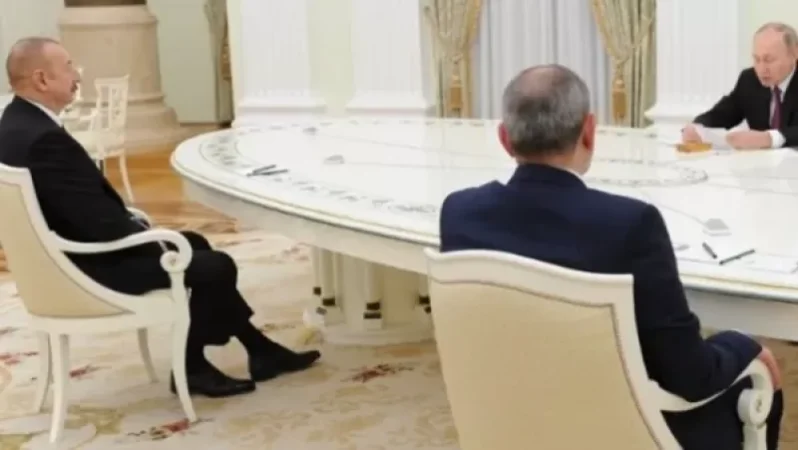
“However, as we see, this has not helped to reduce tensions in the region. The issue is that the chain of verbal agreements reached among the parties is crumbling. Probably, this is the reason why Nikol Pashinyan disrupted the trilateral meeting with Vladimir Putin and Ilham Aliyev, which had already been announced by Dmitry Peskov,” the author concludes.
The article also presents the CSTO's quick response, according to which the organization is carefully monitoring the situation at the border. The Secretariat has officially stated that no request has been received from the Armenian side.
Additionally, it was revealed yesterday evening that the Russian president had a phone conversation with Pashinyan. The statement from Moscow following the conversation was quite reserved, indicating that the leaders “discussed the situation created after several incidents on the Armenian-Azerbaijani border and agreed to continue communications.”
It is worth reminding that on November 16, around 1:00 PM, Azerbaijani armed forces attacked the Armenian positions located in that direction of the border. The adversary also used artillery, armored vehicles, and small arms of various calibers. In accordance with the agreement reached with the mediation of the Russian side, ceasefire was established at 6:30 PM in Armenia's eastern border zone, and the situation has relatively stabilized.
Նմանատիպ հոդվածներ
Urgent: The Opponent is Using Artillery and Armored Vehicles, Tensions at the Border
Nikol Pashinyan Made a Terrifying Revelation Yesterday That the Public Seems to Have Overlooked: Political Scientist
Duts Military Unit Soldiers Report They Were Under Siege Since November 15
At this moment I am in the morgue, the body is not mutilated, nor has he been taken captive. Taron's brother provides details
Ավելին Society բաժնից
Հրդեհը կանխել են. մանրամասներ
Մահացել է գերությունից վերադարձած Կարլեն Ստեփանյանը
Քաղաքացի է որոնվում