One Year Ago, Azerbaijan Used Internationally Banned Munitions Against Artsakh, Says Sarkissian
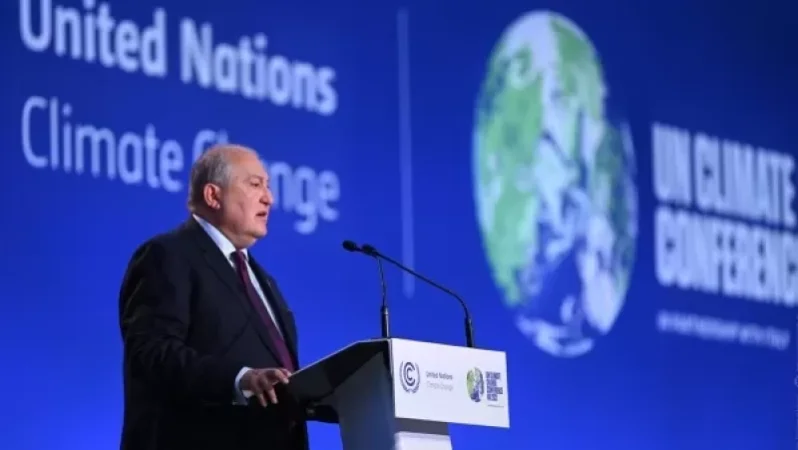
President Armen Sarkissian's speech at the 26th Conference of the Parties to the United Nations Framework Convention on Climate Change.
“Your Excellencies, Ladies and Gentlemen, First of all, I would like to express my gratitude to Her Majesty the Queen and her government for organizing such an important and timely event. Special thanks to Prime Minister Boris Johnson, his colleagues, and the city of Glasgow for the wonderful conference and warm hospitality.
Initially, about Armenia, which is a small country but a global nation. According to the World Bank's analysis, Armenia is the fourth most vulnerable country in the Eastern Europe and Central Asia region concerning climate change. Armenia has recorded a temperature increase of 1.3 degrees Celsius, while precipitation has decreased by 9 percent. Despite the challenges of the coronavirus pandemic and the ongoing conflict in Nagorno-Karabakh, we are committed to greater involvement in the global agenda on climate change and to demonstrating our aspirations in climate issues.
Armenia has consistently expressed its commitment to join global efforts to combat climate change. In 2021, Armenia reaffirmed its commitment through national-level investments, announcing a target to reduce greenhouse gas emissions by 40 percent by 2030 compared to 1990 levels. Armenia's long-term goal is to achieve climate neutrality by the second half of this century. The transition to climate neutrality is at the core of the country's energy independence, energy security, and green growth policies. Our vision of resilient and low-carbon growth is directly linked to a reliable and effective adaptation strategy based on ecosystem approaches, forest restoration, investments in renewable energy and energy efficiency, new high technologies, as well as promoting electric mobility and the further development of nuclear energy.
Dear colleagues, The significant burden of state debt is an obstacle for many developing economies in accessing both concessional and non-concessional financing to combat climate change. In this context, it is crucial to adopt a creative approach. I am pleased to present our new initiative, 'Debt for Climate.' This is a new tool for climate financing that will help developing countries adapt more effectively to the peculiarities of financing combatting climate change while creating new economic opportunities.
Mr. President, One year ago, Azerbaijan used internationally banned munitions against Nagorno-Karabakh during the war it instigated, targeting not only civilians but also vast areas of beautiful forests, causing massive forest fires and creating an environmental disaster in the area. We call on the international community to take measures to prevent such irresponsible and inhumane behavior from occurring again. Environmental challenges recognize no boundaries or lines of conflict, and we must bring all countries of the world to comprehensive cooperation.
Now a few words about this conference. I truly enjoyed the opening ceremony of this conference and the speeches from my colleagues from around the world. Here everyone confirmed the presence of a significant problem: climate change, which, however, is not the only issue we face today, as we are also confronting the pandemic, economic difficulties worldwide, and the rise of populism, uncertainty, and unpredictability.
On the other hand, having all these problems, we also acknowledge that there is a huge wealth of trillions of dollars that can solve issues. At the same time, thanks to hundreds of years of developments based on quantum technologies and physics, we have achieved significant accomplishments in the fields of science and technology. It is these technologies that today can solve our problems—whether they are climate change, the coronavirus pandemic, or other issues we are facing.
However, what is the problem? Why are we not as effective as we should be? I believe there is something we need to learn from the history of science, when 100 years ago great scientists such as Albert Einstein, Max Planck, and Heisenberg realized that the classical laws of physics and mechanics could not apply to newly discovered elements and atoms. You must change your mindset, your philosophy, your logic, even your reasoning to understand and create the theory of quantum physics.
We are at a crossroads, and the world has become quantum. This is the crossroads from which we must start thinking differently, because the world before us is not what it was 10 or 20 years ago. If we change our mindset and shape our aspirations and strategy, we can effectively utilize the funds and wealth that the world has created during this phenomenal development and use those technologies to solve the problems we face. And we must not only solve problems but also create a foundation for development for a better future.
And finally, At the opening of this conference, Professor Brian Cox took us all to space to show from above how wonderful this planet is and to realize that in the entire universe this is our home, our only home, and we have no alternative but to work for and fight for this green and blue planet.
Armenia is committed to becoming a truly intelligent state, dedicated to our nature, our planet, and humanity. And I am optimistic that we can overcome these difficulties and build a brighter future for all of us. Thank you.”
Նմանատիպ հոդվածներ

Ավելին Society բաժնից
Հայաստանի մասին նոր զեկույց․ ուշագրավ մանրամասներ

Մայր Աթոռ Սուրբ Էջմիածինը հայտարարություն է տարածել

Հորդառատ անձրևները կվերսկսվեն. հնարավոր է նաև կարկուտ, քամու ուժգնացում