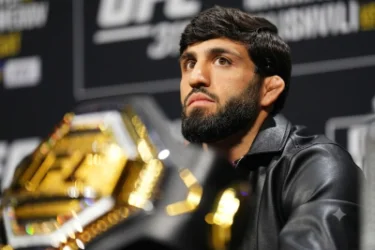
Joaquin Caparros on the Armenian National Team
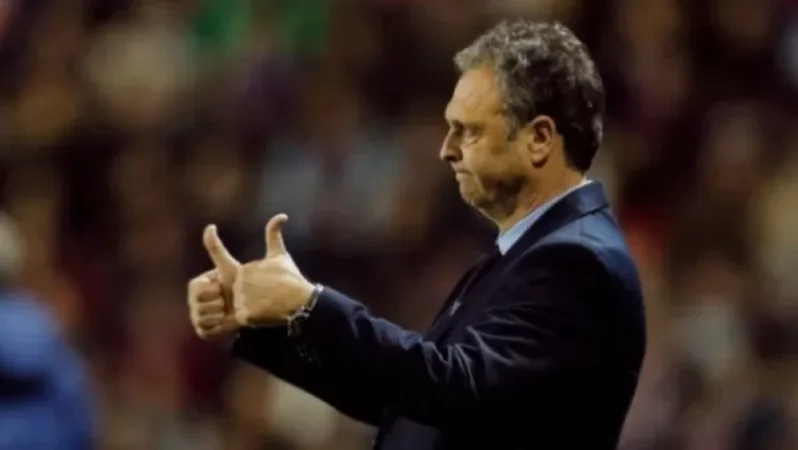
What is the secret behind the recent successes? What are the expectations for upcoming friendly matches? Who are the team leaders in the dressing room, and what is life like in Yerevan? Joaquin Caparros, the head coach of the Armenian national team, gave an extensive interview to the official FFA website, discussing these and several other topics.
- Mr. Caparros, you have vast coaching experience and have earned numerous victories during your career. Did you personally expect such a successful start as the head of the Armenian national team, with first place in our group in the Nations League and three consecutive wins in the qualifiers?
“The first words we addressed to the players were that we must be a true team. I can say we achieved that. Thanks to this, we accomplished a lot. We shouldn’t set long-term perspectives and goals for ourselves, but rather take it step by step, focusing on each next match. We also needed to develop a strong team mentality. During this time, we had to get to know the players, and they had to understand our ideas. And I believe that we can realize our goals, even though there is still a long way ahead of us. We must be united, but within this unity, we must present ourselves as a real team.”
- Nevertheless, what specifically contributed to achieving five consecutive victories and remaining undefeated in eight consecutive games?
“Thanks to this mentality and the proper attitude of the players, we succeed in being like a real family. I told our coaching staff that we have an advantage over other national teams: the sense of patriotism. Not all teams have that feeling. This should be one of our advantages. Additionally, the team mentality that filled us with belief in the work we do contributed to the gradual strengthening of that faith and confidence.”
- What can you say about the cooperation between the FFA and the national team?
“The cooperation between the coaching staff, the president of the FFA, and the administration is very transparent, flexible, and fundamentally important. We all pursue the same goal. Results always depend on the president and his staff that make up the governing body. They are the ones who select the personnel, and then these people have to form their working groups. We have excellent relationships with the leadership; we pursue the same goals and have a unified mindset. Because of all this, we can be optimistic about the future development of Armenian football.”
- Does the language barrier hinder you, given that you do not speak Armenian while most players speak Spanish? What Armenian words have you managed to learn so far?
“Armenian words? (laughs) ‘Peace,’ ‘good,’ ‘fast,’ and a few other words. I must confess honestly; I initially thought there would be difficulties related to the language barrier, but I was mistaken. There is non-verbal communication here, when people simply look into each other’s eyes and embrace. This often has much greater strength; it’s much more honest and sincere than the words you can address to the collective.”
- Many coaches have schemes into which they place players. What is your approach? Do you place the players according to your preferred scheme, or do you choose the scheme based on your players' abilities?
“There are two different points here. First, you come and accept a team, for example, a national team, and you have to adapt to it. During the pandemic, while being locked at home, we analyzed many of the national team’s matches with Berezovsky, Chakhalyan, Luciano Martini, and Ara Aroyan. We worked almost 24 hours a day, observing the team's play. We analyzed all players individually. Gradually, we understood the characteristics of the players and our requirements. Additionally, with this team mentality and the players' confidence in the work, we have to be a team that displays intense play and applies aggressive pressing, while also operating at high speeds, exploiting free spaces, and advocating vertical football. This is what we aim for in the national team.”
- Then what justifies the transition from the traditionally rooted 4-2-3-1 to 4-4-2 over the years, is it due to the absence of highlighted number 10s like Henrikh Mkhitaryan and Arshak Koryan, or is this tactical arrangement still the most suitable with the available players?
“The national team cannot depend on one or two players and adapt to them. Here, the principle we talked about with the team from the very beginning is at play: we have to be a real football team and get the most out of each player. We cannot control the initiative on the field because we do not have players of the necessary quality. However, we can play vertical football and put pressure on the opponent. Our playing style cannot depend on individual players. We need a true team spirit and behavior on the field. A match lasts 90 minutes, and during that time, you can change your strategy. We ourselves must know our strategy and approaches well, and people must recognize us thanks to our identity.”
- In June, the national team will hold two friendly matches. The first opponent is the current world runner-up Croatia, and the second is one of Europe’s strongest teams, Sweden. How important is it for you to play against strong teams in friendly matches? Was this your request, and what do you plan to test in these games?
“First, there are no friendly matches for the national team. We must be fully aware of that. When you wear the national team’s jersey, there is no such thing as a friendly match, as the whole country is behind you, and we must earn the trust of sports fans. In this regard, we need to strengthen our playing ideas. We intend to do this against national teams like Croatia and Sweden. It’s possible that we will have a new player join, but I insist that we should only strengthen and improve our strategy. Therefore, there are no friendly matches, and we must approach the upcoming two matches with this mentality.”
- You are known as a coach who discovers young talents. Will you continue to involve other young players in the upcoming games, and can you name some names now?
“I will not name any names. We will give chances to this or that player according to our concepts if we deem it necessary. Whether the player is young or older does not mean they have the right to play for the national team. Those players who are in suitable playing shape at the moment will play. I have never hesitated to give a young player the opportunity to debut. If we see that a player is talented and can be beneficial to the team, then we will think and make a decision. However, for the upcoming two matches, the overwhelming majority will be those who have played in the last matches.”
- You fielded Vahan Bichakhchyan in 5 out of 6 matches in the Nations League. In the last matches, he played only 1 minute. What was the reason for this?
“This time, other players were fielded. For example, Zhivair Shaghoyan and Eduard Spertsyan. It is good and important to have competition within your team. This only strengthens the national team. We are very satisfied with Vahan. He also needs to understand that he has to work hard. Vahan is a player who will get his chances, but again, I emphasize, other players have also emerged.”
- The formation of the BCM (Football Academy) is one of the main achievements of the FFA. What can you say about this project, and do you consider that the emergence of Zhivair Shaghoyan in the national team already indicates that it is starting to bear fruit?
“Of course. These boys have been selected, and they have all the necessary resources at their disposal: pitches, coaches, and football academies. These boys must grow in the short or medium term, but this will happen only if they have playing practice in the Premier League. We cannot allow these boys, upon returning from military service to their clubs, to lack playing practice. As I say, there is not only an educational failure but also a sporting one. So, these boys need to play in the country's strongest league, where high demands will be placed upon them. That will contribute to their growth.”
- You constantly monitor the Armenian league and are one of those coaches who, without hesitation, also invite players from the domestic league. What is your opinion on the overall level of our league, and how can it make a step forward?
“I would talk about two differences here. When we first came to Armenia, we began to watch the league matches. It turned out that there were teams where not a single Armenian player was present. I was asking myself how to make player selections. The situation changed with the president of the FFA introducing a mandatory point in the regulations for the presence of at least two Armenian players on the field. Now the situation is different, and when we watch league matches, we see at least 4 Armenian players in the teams. This is an important step. Of course, I would like every team to have at least three Armenian players on the field during matches. For example, I would very much like to see a higher number of Armenian players in the Armenian Cup matches. I am not saying that teams should be composed of 100% Armenians in this tournament, but at least the presence of four or five players should be mandatory. Naturally, I serve my interests as the national team coach.”
- Are there any young center-backs playing in the VBET Armenian Premier League that you are keeping an eye on, especially considering that Varazdat Haroyan will not participate in the match against North Macedonia?
“Of course, we are monitoring the performances of young center-backs. It is possible that we will invite someone to these friendly matches.”
- In general, how do you plan to address the absence of three leading players in the match against North Macedonia?
“We should not even talk about this situation. We should trust our strengths, accept the challenge, and I am sure that the players who will step onto the field will play with 100% commitment. And when that match is over, we will think about the next one. Now it makes no sense to talk about that. As I mentioned, our team should not be dependent on individual players.”
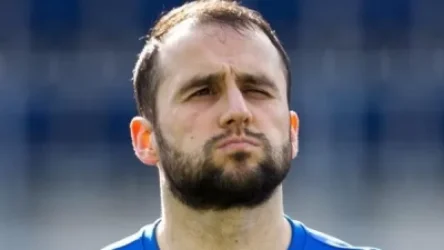
- In that match, Gevorg Ghazaryan might return to the field. He has not been able to help the team on the field in the last three matches, but his presence was important from a psychological perspective. How do you assess his role in the team?
“We will see how ready Gevorg is. He must have playing practice in his team and show appropriate performance levels. Another question is how significant his presence is in the team. Gevorg stands out with leadership qualities and is fully integrated into the team. We have very good communication with one another. Whether he steps on the field will depend on his condition at that moment. Indeed, Gevorg has a very important role in the team.”
- It is clear who the leaders are on the field, but who creates the atmosphere in the dressing room, motivates the team, or ensures a positive mood?
“Leadership manifests itself in different ways. Some can be more reserved and introverted, but due to their talent, abilities, and conduct, they earn the trust of teammates and the coaching staff. And there are other types of players—those who are much more open, extroverted, and cheerful. But the collective must have all types of people. I insist that we have a very good collective; the players, the coaching staff, the academy, and the FFA employees. We are like one family, and this brings great joy to all of us. We must preserve all of this. And players who do not adapt to this cannot be invited to the national team. Otherwise, it would mean that we are breaking our own concepts. The mentality you have off the field is then reflected on the pitch.”
- Players are usually superstitious, do you have any football superstitions?
“Of course, I have a few, but I won’t disclose what they are. Because they often lose their power after being revealed (laughs).”
- After the recent victories, you have become a hero in Armenia, and expectations are immense. There is a video of you being honored in one of Yerevan's restaurants. How do you feel about such phenomena? Do you like it, and how well have you adapted to life in Yerevan?
“I feel very good in Yerevan, as if I am at home. I can say the same for my family members. I thank Armenia for this and also the president of the FFA, who believed in us. From our first conversation, we felt mutual affection. However, I don’t like the term ‘hero’ at all. We all have achieved what we have. So the heroes are the football players, the entire coaching staff, all our fans. I always say that the goals are not scored by the player who takes the last shot at the goal. A goal is the product of much effort. The goal is scored thanks to the one who organizes the team’s movements and position as well as the physiotherapists, kitchen staff, and so on. That’s where the maturation of a goal begins. Unfortunately, I can’t thank everyone individually, but I want to bow before those people. I also feel Armenian and think like an Armenian. I sincerely say these words.”
- In Spain, you have coached teams with passionate fans. What is your opinion about our fans, judging by the games they have attended?
“Emotional significance has a huge impact from the fans. They inspired the boys a lot. In this tournament, they attended three matches in one round, and it is the fans who give the players oxygen and breath during fatigue and tough moments. Unfortunately, the number of fans was limited due to known reasons, but I am sure they are greeting and inspiring the boys on the streets. We feel a great need for our fans; they help us a lot. And this only intensifies your sense of responsibility.”
Նմանատիպ հոդվածներ
Ավելին Sport բաժնից
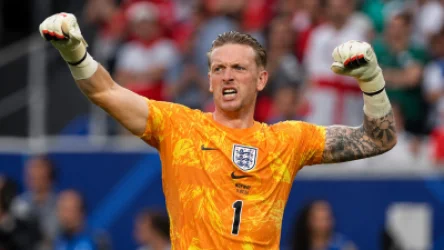
Պիկֆորդը՝ Մեսսիի մասին. «Նրան կանգնեցնելը բավարար չէ»
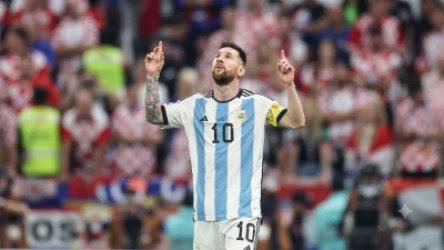
Մեսսին պահպանել է ԱԱ-ի լավագույն ֆուտբոլիստի առաջին տեղը
Հալանդը նշել է, թե ում է ցանկանում տեսնել չեմպիոնի կարգավիճակում