One Should Not Fear Referendums: It Is Necessary to Come Down from the Clouds and Regularly Obtain the People's Opinion, Says Armen Sarkissian
President Armen Sarkissian gave an interview today to Shant TV, Aravot newspaper, and Mediamax agency, addressing the situation surrounding the Constitutional Court and responding to the question of whether he would sign the National Assembly's decision regarding a nationwide referendum.
He stated, "There are certain expectations from the President of the Republic to periodically hear opinions on various phenomena, whether they relate to criminal or non-criminal activities, the adoption or non-adoption of laws. The President should not interfere in any way with either the executive authority or its various branches—be they economic, security, or foreign policy. Collaborating, advising, and supporting is fine, but meddling in their work, especially in the public sector regarding opinions on this or that issue or phenomenon—whether coming from the executive, the legislature, or even the Constitutional Court—should not happen, of course. The Constitution does not imply that the president is also an interpreter of it.
The situation often reminds me of an old Soviet joke attributed to the entire Soviet people: a citizen is asked whether he has an opinion about the 26th Congress of the Communist Party, and he replies, 'I have an opinion, but I disagree with it.' In my case, it goes as follows: I have an opinion, but unfortunately, I cannot express it. My means of expression are quite limited. And within those limits, I believe we must work.
The president is not an interpreter of the Constitution or of laws. His main tools are speech and his signature—in certain cases. This is a rather important issue. Let me give a much simpler example: Suppose a law that, according to experts, does not contradict the Constitution, appears on the president's desk. At that moment, the President has two choices: to sign the law or not to sign it, and after a certain period, the law is enacted by the National Assembly. However, this law is not sent to the Constitutional Court because it does not contradict it. Yet the president himself has a deep awareness that this law may not contradict the Constitution but could play a harmful role in solving a given issue. Such examples are numerous. The president has to make a decision.
In some countries, the solution could be that the president has the right to veto. By exercising the veto without sending it to the Constitutional Court, the president shows the public that he disagrees with the law. He then tells the executive and legislative powers, 'Dear friends, please reconsider this law because, in its current form, it is unacceptable.' The veto must be substantiated, meaning the president issues a statement or sends a message explaining why he has vetoed.
In other countries, the president has the right to return the law to the National Assembly, saying that the law does not contradict the Constitution but that certain formulations could be harmful, for example, to children's education or our family values, agricultural development, etc. Our lives are much more complicated than laws. The most crucial law—the Constitution—sets the boundaries and red lines that we must not cross. However, inside those red lines, life is vibrant, with its own patterns and laws.
If there were an opportunity to address the National Assembly and say, 'Dear deputies, the president submits this law for your reconsideration and believes that there are such dangers...' After that, the National Assembly could vote, or contradict the president and compel him to sign the law or reconsider it. In other words, broader powers could exist where the president expresses his attitude toward a given law—not only whether it is constitutional or not...
I have been closely following what has been happening lately. We have not yet received the relevant documents from the National Assembly. When we do, I will present my position to the public; again, the question will not concern merely signing or not signing.
In response to why the president did not sign the laws on amendments to the Criminal Procedure Code and the law on Banking Secrecy, sending them to the Constitutional Court, President Sarkissian stated, 'The answer is very simple—because the legal department, advisors, and also the lawyers whose opinions I often seek, who are experts in both law and constitutional law, have indicated that there may be contradictions in these laws with the Constitution. Of course, the final answer must be provided by the Constitutional Court. However, if we set aside the constitutionality of the law, the effect of the law on the public is also important. A law is a law, but we assess its real value when it begins to be applied in life. Considering my life experience, especially recently, I have met with various public groups—banking sector, entrepreneurs, investors... The absolute majority has a negative attitude towards it. I will stop here. I do not wish to analyze further.
The real reason is that the law, in our opinion, has contradictions with the Constitution, and therefore has been sent to the Constitutional Court.
Noting that he has been closely following recent events, President Sarkissian stated, 'I support that in our culture, addressing the people as a process should be strengthened. It is not an extreme measure. There are several ways to address the people, one of which is the referendum, the other is the expression of will—plebiscite. In the 21st century, I believe this is very valuable. We all mostly live two lives—virtual and real. The virtual life seems to become the life we actually live; that is, there are heated discussions, speeches, opinions, a huge number of fakes, where you cannot differentiate between the real and the unreal, the true and the artificial.
I believe for any authority, especially now, when people live double lives, it is crucial to come down from the clouds, to come down and put one’s feet on the ground, to communicate with the people and share an opinion. The expression of the people's will is not linked to this or that law but connected to the public's attitude. There are countries where this is applied very successfully, not only applied but has become part of life, meaning involving the public more actively in decision-making, political life, and economic development. In countries like Switzerland, the government even addresses the public on simple matters—ranging from launching a tram service in a certain area to issues regarding immigrants and security.
One should not fear referendums. In the 21st century, under the conditions of 'double life,' it even becomes a necessity—to come down from the clouds and periodically obtain the opinion of the people.'
Նմանատիպ հոդվածներ
VIDEO: Davit Tonoyan Speaks About Artsakh's "Elite" Military Unit in Parliament
Video: Meeting Between Pashinyan and Aliyev Kicks Off in Munich
VIDEO: Aliyev Waiting for Pashinyan - 'The Subtle Art of Waiting... ))'
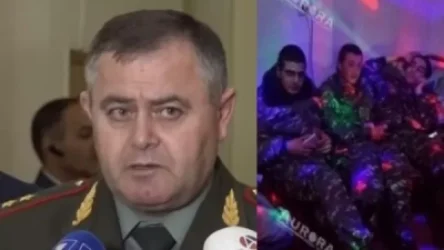
VIDEO: The Unit is Elite, of Course, Because It Performs Elite Tasks – Armenian Armed Forces Chief on Auroranews Publication
Ավելին Politics բաժնից
«Ուժեղ Հայաստան»-ը ևս հայտարարություն է տարածել Գագիկ Ծառուկյանի հետ կապված

Մարթա Կոսը հայկական ծիրանով մուրաբա է պատրաստել
«Միասնության Թևեր»-ի անդրադարձը` Գագիկ Ծառուկյանի ձերբակալմանը