Device Created to Extract Water from Dry Air: Azizyan
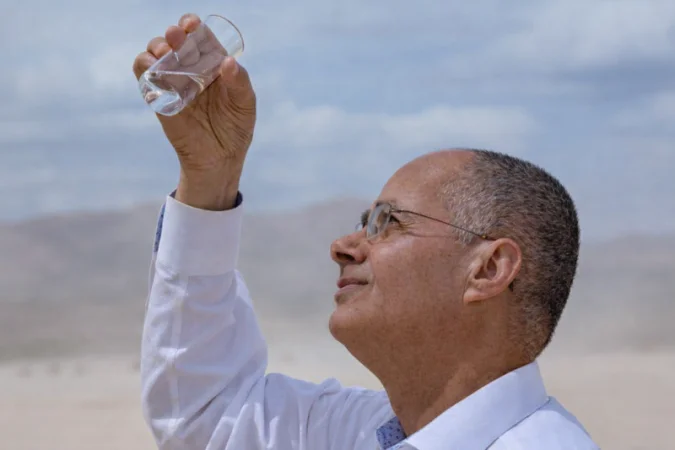
Levon Azizyan, director of the Hydro-Meteorological and Monitoring Center, posted on Facebook: "A Nobel laureate has created a device that extracts drinking water directly from dry air. Chemist Omar Yaghi from the University of California, Berkeley has developed a device that can obtain drinking water directly from the air without being connected to a water supply system or an electrical grid.
The technology is based on metal-organic frameworks (MOFs), which are synthetic porous materials that can adsorb moisture molecules from the air even in conditions of very low relative humidity. Just a few grams of this material have a total surface area comparable to that of a football field. During the day, solar heat warms the material, causing the accumulated moisture to be released as vapor, which then condenses into liquid water.
Unlike conventional air dehumidifiers that rely on cooling to the dew point, MOF technology is effective even in conditions of less than 20% humidity, which means it operates efficiently in environments where traditional methods are nearly ineffective. Field tests have been conducted in the Mojave Desert, where the device collected more than two liters of water over three days in conditions of approximately 10% humidity.
The industrial version of the technology, being developed by Yaghi's Atoco company, is comparable in size to a 20-foot shipping container and is designed to produce up to 1000 liters of water per day. The device does not require infrastructure and does not produce saline waste (brine), which is characteristic of desalination plants.
Omar Yaghi received the Nobel Prize in Chemistry in 2025, including for the establishment of reticular chemistry as a scientific discipline, on which MOF materials are based. One of the motivations for him to work on this project was personal experience; Yaghi grew up in a Palestinian neighborhood in Amman, Jordan, where water was supplied only once every two weeks.
According to the UN, today around two billion people in the world lack access to safe drinking water. Yaghi views his technology as a decentralized solution to this problem; in the future, small household devices could provide water to individual households, similar to how solar panels supply energy."
Նմանատիպ հոդվածներ




Ավելին Society բաժնից

ՏԵՍԱՆՅՈՒԹ.Վրաստան–Հայաստան սահմանին ծանր իրավիճակ է․ կան ուշաթափված երեխաներ

Իրանում գրանցվել է 2026 թվականի աշխարհի ամենաբարձր ջերմաստիճանը՝ +51.5°C

Հռոմում ջերմաստիճանը կհասնի +38°C-ի. իշխանությունները «կարմիր» նախազգուշացում են հայտարարել