Minister Presents Final Version of the Master Plan for the 'Academic City' Project
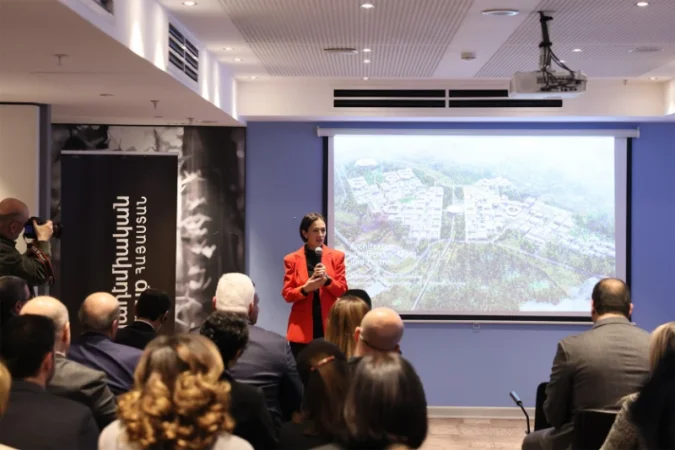
Representatives of interested organizations were presented today with the final version of the master plan for the 'Academic City' project. This information was provided by the Ministry of Education, Science, Culture and Sports (MESCS).
The presentation was made by Tobias Keil, deputy director of the German gmp Architects, which is a partner in the project. Present at the meeting were MESCS Minister Zhanna Andreasyan, Chairman of the Urban Development Committee Eghiazaryan Vardanyan, Chairman of the State Committee of Theater and Cinematography Sargis Hayotsyan, Aragatsotn Regional Governor Sergey Movsesyan, Director of the 'Academic City' Foundation Armen Simonian, as well as heads of universities, scientific organizations, representatives from the government, international organizations, the architectural community, and other stakeholders.
Minister Zhanna Andreasyan emphasized that the 'Academic City' project not only creates a new environment and quality for higher education and science but also establishes new standards in various spheres of our public life. The works we will carry out in the course of implementing the 'Academic City' will set new criteria in urban planning, the use of green technologies, environmental protection, and our interaction with nature.
She noted that the project considers infrastructures that will truly make the city a place for people, centered around human beings.
Tobias Keil mentioned that the concept of the master plan is based on the circular green zone of Yerevan's center, a vision inspired by Tamanyan, which has also been integrated into the core of the 'Academic City,' uniting essential educational, cultural, sports, and innovative infrastructures.
Keil spoke about the phased development of the Academic City, the first phase of which is planned to be implemented by 2030, starting with technology clusters, essential collaborative components such as dormitories, and transportation and administrative infrastructures. By 2034, an active expansion phase of the city is expected, including the launch of educational, arts, and consumer clusters, preschools and high schools, the installation of innovative organizations, and additional solutions for public transport (railways, buses, and metro).
After 2034, the project's completion phase is expected, which includes a major transportation hub. The transportation concept prioritizes pedestrian, cycling, public transport, and non-motorized mobility. A central issue in the landscape strategy is water conservation. Greenspaces are regarded as a vital factor in microclimate formation through shade creation, cooling, and wind mitigation.
The second axis of the presentation was the design guidelines with multi-tiered monitoring, covering everything from macro zoning of the Academic City's layout to cataloging smaller plots of land, where construction volumes (small, medium, or large), shape, height, façade requirements, greening parameters, lighting options, fire and emergency services entries, and accessibility components (ramps, elevators) are defined for each area.
Նմանատիպ հոդվածներ

Cancel the Episcopal Assembly Abroad: The Church's 'Reform' Council
TRIP's Implementation Framework Lacks Legal Binding Force, Says Pashinyan
Foreign Minister Presents What Has Been Handed Over to Another State via 'Property for Debt' Transactions

Mirzoyan: Speaking on This Matter Would Be Direct Intervention in Armenia's Internal Affairs
Ավելին Politics բաժնից
Պատժելու եմ. Շարմազանով, ջանդ յուղիր. Մարուքյան
Ալեն Սիմոնյանը դիմել է պատգամավորներին մանդատների և ադրբեջանցիների վերադարձի թեմայով

ՏԵՍԱՆՅՈՒԹ. Հայկ Մամիջանյանի կտրուկ արձագանքը` Էդմոն Մարուքյանի հայտարարությանը