I Want to Apologize to Our Army: Pashinyan
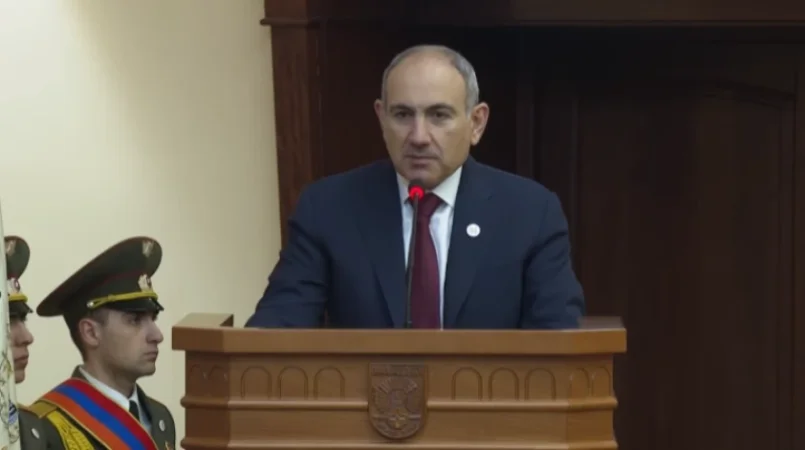
On the occasion of the 33rd anniversary of the formation of the Armed Forces of Armenia, Prime Minister Nikol Pashinyan visited the Ministry of Defense. A parade involving military units took place, followed by a ceremonial meeting with senior military officials.
Pashinyan and Minister of Defense Suren Papikyan delivered speeches.
“Dear Minister of Defense, esteemed Chief of the General Staff of the Armed Forces, deputy ministers, gentlemen generals and officers, ladies and gentlemen servicemen, distinguished guests, I congratulate all of us on the 33rd anniversary of the formation of the Armed Forces of the Republic of Armenia and I want to first of all thank you—those present and all our servicemen absent—for your service to the Republic of Armenia. I want to thank all the members of your families, who encourage you to carry out this challenging mission with honor and dedication. In my understanding, the family members serve you equally—regardless of whether they wear a military uniform or not—and their service deserves great appreciation as well.
Today, we bow down and kneel before all our martyrs. And we must return to the question of how we should honor the memory of our martyrs in the most direct and correct way. I have suggested the answer to this question several times and I am convinced of it—that is a developed, prosperous, secure, free, and happy Republic of Armenia. There cannot be a more glorious monument to our martyrs, and we must also reflect on the ways we honor their memory.
I apologize for deviating a little, but yesterday we attended the opening ceremony of a very important medical institution, which was funded not only from the state budget but also by a foundation created by the Armenian diaspora to honor their ancestors and immortalize their memory. I am sure, of course, that during this time they also funded monuments to their ancestors, which is a very important, significant ritual for our tradition, but at some point, they decided to invest in honoring and immortalizing memory in a vital, life-sustaining way that serves people.
And I believe that we need to place more and more emphasis on valuing not only our martyrs but also the contributions of our servicemen, because, after all, the goal—of both the martyrs and the army—is the Republic of Armenia: secure, developed, prosperous, and happy. And in this regard, I want to look at the perception we have had regarding our army, since the first days of our republic and increasingly later.
But I want to first apologize to our army, to our servicemen, to our soldiers, and now I will say for what. All leaders want and should be patriots; all political figures want and should be patriots; all citizens want and should be patriots; all facilitators want and should be patriots. But the problem is that we place the entire responsibility for our patriotism and patriotisms on the soldier. We place all the responsibility for everything on the soldier. We cover our shortcomings in state-building by saying, ‘Well, the soldier will do his job.’ We compensate for our shortcomings in foreign policy by saying, ‘Well, the soldier, and consequently the officer, must do his job.’ We compensate for our shortcomings in the economy by saying, ‘Well, it is for the soldier that it is being done, the soldier will do his job.’ And we often place unbearable burdens on the shoulders of the soldier and the army that arise from the impulses of all of us to be patriots everywhere and at all times.
But what am I suggesting? Am I suggesting not to be patriots? Certainly not! I am suggesting that our model of patriotism place the responsibility not only on the army and the soldier but rather extend that responsibility to all layers of our society and state—each in their measure should carry, take that responsibility, and may our object of patriotism be such that the essence of our patriotism is such that it does not sacrifice the soldier, it does not sacrifice the army.
This is why I often speak and suggest the slogan ‘The Homeland is the State,’ because this is the model that will allow us first to develop the state and second not to place unbearable burdens on our soldier and army. And we must very clearly state that we adopt the model of patriotism that provides our army, our soldier with a very specific task—to maintain and ensure the security of our internationally recognized borders and territories. And this is the model upon which we must build our new, renewed, upgraded defensible army. This is the foundation upon which we must realize the concept of transformation for the army that has already been approved by the Security Council.
This is the foundation upon which we must clearly state that, yes, in the Republic of Armenia, servicemen must have adequate, dignified material provision. This is the foundation upon which we can emphasize: serving in the army is also work, which should ensure the well-being of the families of servicemen. This is the path that will not give anyone the opportunity to question our legitimate right to have a defensible army.
And by the way, I want to tell you that it is precisely because of adopting this concept that we have managed to diversify our relations in the security sector. Otherwise, we would not have that opportunity, and I think that the attendees know this very well. Therefore, it is very important that the Republic of Armenia, political figures, the Government, and the public clarify their model of patriotism because the model of patriotism we adopt places the burden on the shoulders of the soldier, serviceman, and army. We need to know what burden we place on our army’s shoulders; we need to understand if that burden is bearable or unbearable.
Our soldiers, glory to them, never complain and I am confident they will never complain, but we must not use their strong and dignified stance to place unbearable loads on their shoulders. We must not leverage our patriotic responsibility to place those responsibilities on their shoulders and make them targets.
Thus, before the Armed Forces of the Republic of Armenia, the Government, the society, and the state must place only and only the issue of protection and security of the internationally recognized territories. And on this basis, yes, we are implementing deep reforms in the army, and on this basis we will have a strong, defensible army. In this case, no one will be able to question our right to have a defensible army, and no one can question our right to have a dignified serviceman, and no one can question our right to have a strong, prosperous, and developed state. For that state, I have said and want to say again, the existence and awareness of the officer class is crucial.
We must also affirm that yes, the army, the Armed Forces, and in general, the officer class are the pillars, the backbone upon which the state is built. Yes, it is correctly stated that we should not hide our shortcomings, but we should not hide either the shortcomings of the army, the shortcomings of the Government, the public shortcomings, or the shortcomings of the private sector. It is also unfair that everyone notices the shortcomings of the army, but it is said that you see the speck in the opponent’s eye, but do not see the beam in your own eye. This is our trajectory: to see the shortcomings of the army but to also see the connection of the shortcomings of the army with the shortcomings of each of us because the army is not formed out of thin air; the army is formed in kindergartens, schools, neighborhoods, and workplaces.
Today, there is not even a single problem, not a single shortcoming in the army that did not originate outside of the army. No such problem exists. All the problems of the army come from society, our families, our homes, our neighborhoods, our schools, our kindergartens, our celebrations, our weddings, and the ways we interact with each other, and we must understand this, and we understand this because you must know that the Government understands this.
I do not want to create the impression that there is some problem in the army, regardless of how involved anyone is, that we do not feel on our skin. Because especially in this position, when you are daily busy with this and many other problems, it is simply impossible not to feel those problems.
Today is the 33rd anniversary of our army; we have included the army in our State Security Strategy, which, of course, will change and transform in the near future, but by our decision, we have included the army in our state, our national values in the first lines. Yes, the army is a state value; for me, the first value is the Republic of Armenia, the statehood, independence, and the backbone of that statehood—the army, the armed forces, and first of all, the people in the army. And people must feel valued, respected, and dignified.
I want to once again thank you all for your service. You must know that we are proud of you, we place our hopes in you, and I am confident that together we will make the Republic of Armenia, with its 29,743 square kilometers, a safe, developed, happy, and protected state. And together, we are on that path.
Glory to the martyrs and long live the Republic of Armenia,” Pashinyan concluded.
Նմանատիպ հոդվածներ
Ավելին Politics բաժնից
ԱՄՆ-ն միջուկային գործարք կնքի Սաուդյան Արաբիայի հետ, իսկ Իրանի հետ` ոչ
ԱՄՆ-ն մերժում է Թուրքիային. F-35 կործանիչներ չեն լինի, քանի դեռ չեն հրաժարվել ռուսական Ս-400-ներից
Գագիկ Ծառուկյանին վաղը կրկին կհարցաքննեն