Causes of the Plane Crash in South Korea
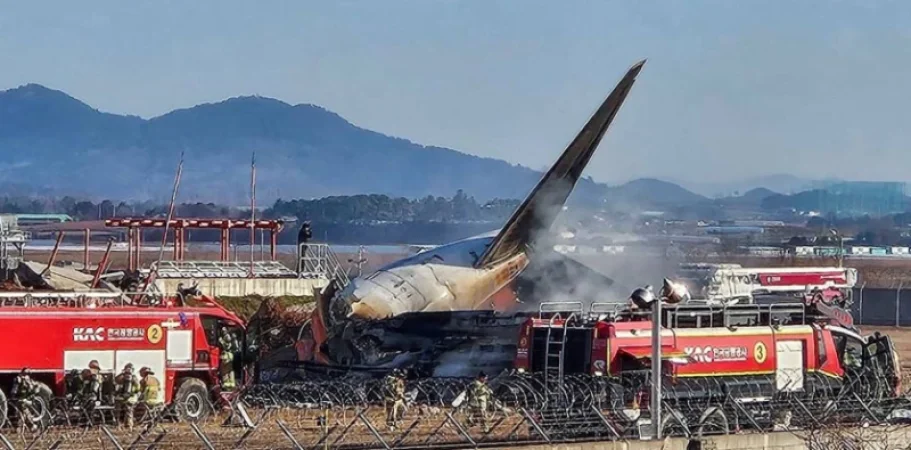
The causes of the plane crash in South Korea are still unclear, with the main theories including bird strikes, engine and landing gear malfunctions, braking systems issues, and insufficient runway length for emergencies. This was reported by "RIA Novosti." It is noted that the theories regarding the causes of the accident continue to grow, based on eyewitness videos from the scene. The footage shows how the plane begins to smoke during landing, with flames and smoke erupting from the right engine accompanied by explosions.
It was initially presumed that the aircraft struck birds, leading to engine-related issues; however, the videos also reveal that the plane approached the runway with its landing gear retracted, which remained in that position without moving. The aircraft made two landing attempts. It remains unclear whether the first unsuccessful attempt was due to landing gear or engine failure. The plane then attempted to land on its fuselage, but the nose remained elevated, and it continued to move down the runway at high speed.
The source considers this situation particularly noteworthy, as typically in such incidents, the front of the aircraft would fall onto the runway. However, the video shows that the plane was unable to slow down, and the nose stayed elevated until it collided directly with a barrier.
“The video shows that the landing gear did not deploy, and the speed hardly decreased. In such cases, when the landing gear does not operate, other braking systems should be activated, such as reverse thrust and air brakes on the wings; however, that did not happen either,” explained Choi Gi Yong, a professor at Inha University’s Department of Aeronautics. “The lack of slowing mechanisms and the attempt to land on the fuselage inevitably led to the crash,” the expert stated.
According to Yonhap, the length of the runway at Muan Airport also raises questions. At 2,800 meters, it is shorter than the runways of Incheon (3,700 meters) and Gimpo (3,600 meters) international airports, as well as nearby Gwangju Airport (3,000 meters). The Ministry of Land, Infrastructure, and Transport of South Korea has rejected suggestions that the runway length could have been a factor in the accident. The department emphasized that previously such sized aircraft regularly used this airport, and the runway length was sufficient for their takeoffs and landings.
Նմանատիպ հոդվածներ




Ավելին Incidents բաժնից

ԲԱՑԱՌԻԿ ՏԵՍԱՆՅՈՒԹ․ Կիլիկիայում հնչած կրակոցներն ու «ռազբորկան» տեսանկարահանվել է

Անչափահաս աղջիկներից մեկին սպառնալիքի միջոցով, ենթարկել է սեռական շահագործման․ նախաքննությունն ավարտվել է
Մահապարտը պայթեցրել է իրեն. ահաբեկություն՝ Պակիստանում