The Getavan Monument: Target of Azerbaijani Vandalism
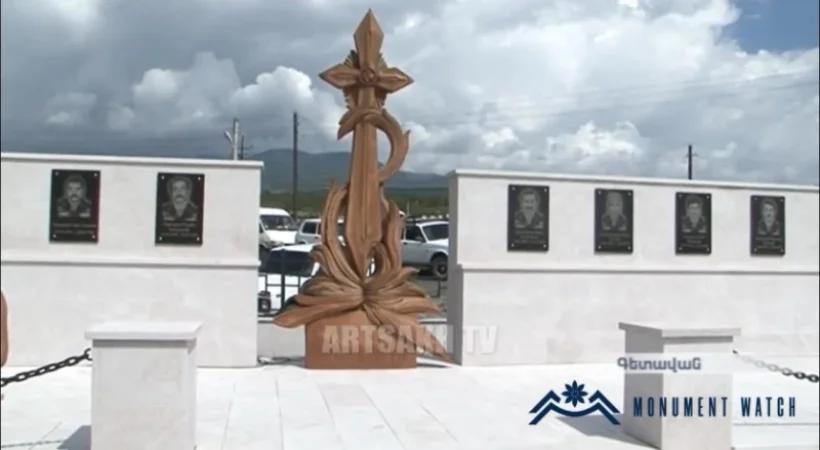
In the occupied Martakert region of Artsakh, the Azerbaijani side has destroyed the plaques attached to the wall of the monument erected in memory of the Getavan freedom fighters who lost their lives defending their village. This was reported by monumentwatch.org, which monitors the cultural heritage of Artsakh.
“The Getavan monument was officially opened in 2016. At the center of the monument stood the cross-stone created by sculptor Varazdat Hamabardzumyan, which has also been destroyed. It is important to note that this is not the only work by the master in Artsakh. After the Liberation War, ‘Tur-Crosses’ or ‘Border Crosses’ began to be installed in the protective zones of Artsakh under the initiative of Varazdat Hamabardzumyan, to indicate borders and symbolize victory, later gaining wide popularity both in Artsakh and in Armenia.
In the design of the ‘Tur-Cross’, the sword appears to be a four-bladed sword, meaning we do not see a typical sword with a hilt, horizontal divider, and tip; the master seems to have tried to depict its power and strength in all directions. According to the master, ‘the cross becomes a sword when the homeland is in danger.’
Our Response: The International Court of Justice has affirmed that the laws applicable in occupied territories, including provisions for the protection of cultural values, have acquired the status of customary international law (infra Jurisprudence), meaning they function as universal and unavoidable rules that are mandatory for all states.
It is essential to highlight that targeting cross-stones is an explicitly prohibited action and is considered a grave crime against all humanity, as ‘The Art of Armenian Cross-Stones: The Symbolism and Mastery of Cross-Stones’ has been included in UNESCO’s ‘List of Intangible Cultural Heritage’ since 2010 and is regarded as a universal value. The culture of cross-stones also has additional protection during and after wartime. Specifically, according to the principles of the Second Protocol adopted in 1999 to the Hague Convention of 1954 for the Protection of Cultural Property in the Event of Armed Conflict, the entire culture of cross-stones has enhanced protection, and any damage caused to it, according to Article 15(a) of the Protocol, is a ‘serious violation’, which, as a war crime, can be prosecuted in international courts.
Նմանատիպ հոդվածներ
Ավելին Politics բաժնից

Ադրբեջանի տարածքային ամբողջականությունը ճանաչել ենք․ Փաշինյան

ԿԳՄՍ նախարարը՝ մինչև 16 տարեկան երեխաների մուտքը սոցիալական ցանցեր սահմանափակելու մասին
Հունաստանի կոպիտ արձագանքը՝ Թուրքիայի ընդունած նոր օրենքին