Oxford Graduate Not Coming to Work as Department Head for 200, 300 Thousand Drams: Pashinyan
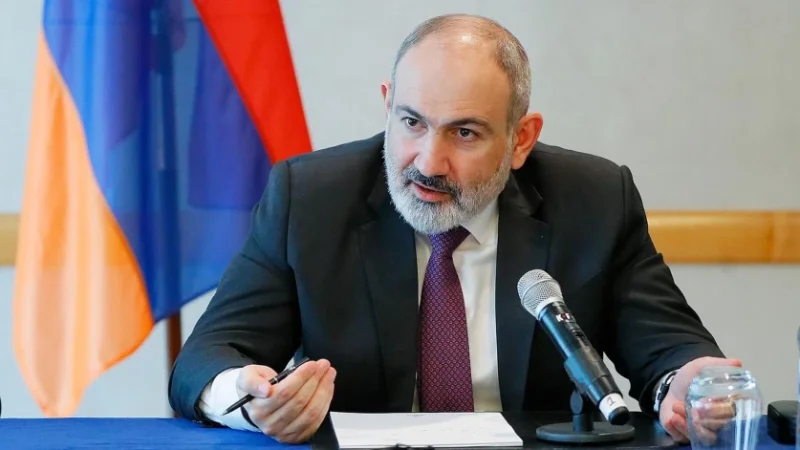
The Prime Minister of Armenia, Nikol Pashinyan, visited the Ministry of Education, Science, Culture and Sport’s Committee for Higher Education and Science to discuss the committee's activities in 2023. The Chairman of the Committee, Sargis Hayotsyan, and his deputies reported on the implementation of state programs and activities related to higher education, science, and scientific-technical activities under the committee's supervision.
It was reported that the committee, which operates under the Ministry of Education, Science, Culture and Sport of Armenia, was established on May 3, 2023, following amendments to the law on scientific and scientific-technical activities. The committee implements a unified policy in the fields of higher education and science, consolidating the functions of the former State Committee of Science, the Committee for Higher Qualification, and the Administration of Higher and Postgraduate Professional Education.
Prime Minister Pashinyan inquired how the Committee for Higher Education and Science evaluates potential scientific topics in other committees, such as the Water Resources Management Committee. Hayotsyan noted that a circular was sent to all agencies that might have scientific issues.
"They presented candidates who have the opportunity to indicate what scientific-related issues exist in their departments. We also brought scientists into that field who can understand the problem. Now those working groups are discussing with each other. They say, 'we have this need,' while scientists say, 'is this a scientific problem or not?" said Hayotsyan.
Pashinyan remarked, "It's an interesting mechanism. In my opinion, it applies to everything. For example, a scientific topic might arise in the demarcation process and in various fields related to both domestic and foreign policies. This is a very interesting mechanism, and if we can make it genuinely operational, it will be very beneficial, including for the institutional strengthening of the state as a whole."
The discussion also covered enhancing mechanisms for scientific evaluation and monitoring grant programs, as well as the effectiveness of the unified electronic platform for managing the science sector. Next, reforms planned and already implemented in higher education and postgraduate education, including those related to the improvement of education organization and quality assurance, were presented. Programs aimed at encouraging targeted education in priority areas for the state, efforts to ensure the continuity of education for students forcibly displaced from Nagorno-Karabakh, and other issues were discussed.
Emphasizing the need to harmonize higher education, scientific and research sectors, and expand networked, synergistic cooperation between educational institutions and scientific and production organizations, attention was given to the works carried out in 2023 towards establishing the Academic City, as foreseen in the law establishing the Education Development State Program of the Republic of Armenia until 2030.
It was reported that since January 1, 2023, salaries for scientific workers have significantly increased (1.5 to 3 times compared to the 2021 figures) based on the results of the scientific staff certification process included in the basic funding programs approved by the government in May 2021 for the period of 2022-2025. The gradual increase of the base state salary for scientific and engineering personnel who have passed certification will continue until 2025.
Pashinyan inquired about the dynamics of the process of awarding scientific titles. Hayotsyan mentioned that there is a fundamentally stable and low dynamic, indicating that focus has been placed on quality and combating plagiarism since 2020. Responding, Pashinyan stated, "If we compare this with our ambitions in the field of science, it's certainly low. On the other hand, we have a challenge to increase this number, but without compromising on quality. This is essentially a strategic question, and we need to understand what our policy is."
Janna Andreasian emphasized that one of the measures is financial support for publications in leading journals or publishers included in international scientific information databases, as a new certification process must also be established. In the 2023 state budget, funding for capital expenditures in the scientific sector has been allocated for the first time, amounting to 4.2 billion AMD, within which the process of purchasing 54 devices is being carried out.
In response to Pashinyan’s inquiry, authorities reported that since 2018, funding for science in Armenia has more than tripled. Addressing the operations of research institutes, Pashinyan noted, "We are conducting an evaluation in research institutes. They select the topics, and then we assess the effectiveness of those topics in the context of their standing and visibility in the international scientific environment."
The Minister of Education, Science, Culture and Sport, Janna Andreasian, mentioned that this process also involves the consolidation of universities and the merging of research organizations. "Essentially, most significant changes will stem from this sector, as the programs they implement and the directions they pursue will already involve substantial content-based management within the context of university consolidations," she stated.
Pashinyan expressed curiosity about whether there are research programs at universities as well. Hayotsyan responded positively, mentioning that, for instance, the volume of basic funding at Yerevan State University has reached 1 billion AMD. The university has become a sufficiently large research organization. "What I mean is that we need to see dynamics in the future, what growth we have had, because the consolidation process isn’t just physical. Regardless of whether they are directly connected with any institute, this research mechanism needs to start operating in universities, making our process smoother rather than complicating it," said the Prime Minister.
It was mentioned that in 2023, two procurement competitions were announced for equipping scientific centers with modern devices and creating scientific equipment centers for joint use, during which 233 applications (114+119) were submitted from scientific organizations, totaling 22.1 billion AMD in value. As a result of scientific evaluation, the acquisition of 95 devices (54+41) worth a total of 7.1 billion AMD was guaranteed. This is more than the total funds provided in all previous competitions held for the same purpose (approximately 5.9 billion AMD from 2013 to 2022).
In relation to the procurement of equipment, Pashinyan asked, "When we acquire equipment for a scientific organization, do we ensure that other partners engaged in scientific activities have access to it as needed? Also, do we have an indicator for whether that equipment has been utilized, how many hours or minutes it has been used, and for how many subjects?" Hayotsyan responded that the equipment can be utilized by other organizations in the field and added, "Currently, what we are doing is specifying in the acceptance contract that it should be eligible for joint use. Additionally, after providing the equipment, the organization is obliged to submit a report for five years on the works done with that equipment, publications produced using it, and the users involved. This will be done through an online system, meaning that everything will be automated."
Pashinyan noted, "We need to be confident that our investment serves its purpose and is maximally circulated. I also want to mention that we have written in one line 'equipment,' but we need to pay careful attention to the resource of that equipment and its relevance to today’s needs, because even the newest equipment can become outdated very quickly. We must confront this reality, meaning the relevance of usage decreases. In order to fully exploit that, this message should also be sent that the government will bring in new equipment once it ages. The scientific community needs to receive this message; it should not be seen as a political dividend but as a real demand for better equipment from our scientific community."
As part of a program for the development of scientific subdivisions, a competitive program aimed at equipping competitive scientific subdivisions has been implemented for the first time, entirely directed towards acquiring smaller and daily-use scientific equipment and materials. As a result of the competition, 99 applications from 25 organizations were received, totaling 1.6 billion AMD, and as a result of evaluation, funding was guaranteed for 60 applications totaling 932 million AMD. It was noted that in 2023, 265 grant projects were submitted for 17 grant programs, out of which 141 were funded for a total of 1,524,608 AMD.
Pashinyan inquired about how the grant program operates and who the main stakeholders are. "I remember that one of the key ideas when we were discussing the grant program was to form scientific groups around those grants. How does the program work? In other words, does the potential leader of a group apply, then gather a team, or is it a pre-formed group that submits an application?" Hayotsyan explained that a team is gathered before submitting an application for the grant program. "In all our competitions, the team is formed in advance, and the capabilities of the team are also assessed during the evaluation phase," he stated.
In response to how many scientific teams or groups have been funded in total, it was reported that 644 research project proposals have been funded, of which 141 in 2023. "This is very important. We need to be able to grasp ideas rationally, even in an unprepared state, and see if it can become a theme of a grant program. This has to be seen as a mechanism for utilizing the country’s intellectual potential," emphasized Nikol Pashinyan.
In the scientific evaluation process, 17 specialized advisory councils have been involved, conducting evaluations for 265 projects. Funding has been guaranteed for 15 out of the projects that aim to establish remote laboratories in 2023, while 6 scientific teams have been supported through programs for integrating the Armenian scientific community with foreign scientists, providing around 150 million AMD in funding for 5 years, including for laboratory environment improvements or re-equipping.
State scholarships for students studying in priority specialties in Armenian universities have increased, reaching 70,000-77,000 AMD based on academic performance, compared to the 5,000-6,500 AMD previously provided. Prime Minister Pashinyan addressed the issue of providing scholarships for youth studying at foreign universities and stressed the importance of establishing mechanisms for ensuring their return after studies. "In fact, we can spend billions sending youths abroad to study, and everyone will applaud. Later, no one will ask how many of those youths returned home, because the primary objective is that they come to work in Armenia to help solve some of our existing problems with their professionalism," he stated.
Pashinyan also highlighted discussions related to the implementation of the Academic City project, ongoing work, and planned steps. He emphasized the necessity of effectively managing the former buildings of universities situated in the Academic City. "Perhaps it is necessary from today to find a company that can provide a management scheme for the future management of university physical infrastructure because we are currently considering that all state university buildings in Yerevan might be centralized and managed. In other words, for rental purposes, and all income directed towards the financing of the 'Academic City.' I believe managing that property is also a serious issue, and we need to find a listed company with specialized international expertise that can come and offer us a management scheme for that infrastructure," Pashinyan concluded.
Նմանատիպ հոդվածներ
The Gunfire Today Originated from a Location Intruding 2.16 km into Armenia, Says Tatoyan

At least 20 poisoned after dining at Juli's café

Azerbaijan Spreads Another Falsehood, This Time About Saghmosavank and Noravank: Tatoyan
Photos: Another Church in Central Tbilisi, St. Minas, in Despairing Condition
Ավելին Society բաժնից

Նոր փոփոխություն՝ նպաստների համակարգում․ կգործի հուլիսի 1-ից
ԲԱՑԱՌԻԿ․ ԱԱԾ նախկին տնօրեն Արթուր Վանեցյանն առողջական լուրջ խնդիրներ ունի

Լավ լուր․ առողջության ապահովագրություն բոլորի համար. ինչ ծառայություններ կներառվեն