Bank Employee and Five Others Embezzle Approximately 458 Million AMD from Bank

The investigation of a high-profile criminal case at the Investigative Committee of Armenia has concluded regarding the embezzlement of substantial amounts of money from a bank operating in Armenia, involving a senior official of an internal division and several citizens of Armenia and other countries. The accused is charged with abusing official powers and forgery to steal money from the bank in a systematic fraudulent manner, as informed by the Investigative Committee.
Specifically, it has been established through extensive investigative actions that from 2008 to 2018, K.H., who held the position of head of the plastic card department at a commercial bank in Armenia, conspired with a group of individuals to create fictitious agreements for services related to the localization, implementation, and maintenance of software modules, or the warranty maintenance of equipment for foreign companies or companies operating in Armenia, during the period from 2015 to 2018. These agreements were executed without any real basis and were entered into between the bank and these companies.
The fraudulent agreements resulted in the generation of acceptance acts, claiming that the works stipulated in the agreements had been completed. Based on these acts, the bank transferred large amounts of money to the accounts of these companies, which were embezzled by K.H. and individuals representing these companies, acting upon a criminal agreement with K.H.
Specifically, through contracts with the Russian company “A...,” a total of 204,391,185.6 AMD equivalent to 420,000 USD was embezzled. Additionally, from contracts with the Czech registered company “B... E...,” a total of 160,489,445 AMD equivalent to 333,250 USD was embezzled. Moreover, through fake contracts with the Armenian registered company “L... G...,” an amount of 93,225,370 AMD was stolen from the bank.
The contracts secured the acquisition of equipment that the bank had no actual need for and that was never utilized. Furthermore, through several contracts with the bank, as a result of a criminal agreement between K.H. and the director of “L... G...,” the latter supplied products to the bank that had been purchased from another Armenian company at a price significantly lower than that stipulated in the contracts, thereby embezzling the difference.
To justify the need for the acquisition of the aforementioned devices and services, K.H. employed specialized knowledge that those responsible for procurement at the bank did not possess. Moreover, there were no established parameters regarding the processing center, resulting systems, acquired modules, or devices that would detail their functional descriptions or structure.
In a few instances, to efficiently execute the special criminal mechanism, a company named “B... E...” was established in the Czech Republic, sharing a name with the primary partner company based in Russia, to create the illusion of being a subsidiary of the mentioned company and to deceive the bank. Furthermore, to gain the confidence of the bank's management, K.H. produced a forged document in Russian, signed by the general director of the primary partner company, claiming that the newly established Czech company was their subcontractor, and that various technical, consulting, and implementation problems would be delegated to this company according to existing contracts.
Additionally, to conceal and distort the criminal origins, location, mode of management, movement, ownership, and the nature of related rights associated with the amounts embezzled from contracts with the Czech registered company “B... E...,” under K.H.'s direction, the transferred money was gradually cashed out. Portions of the funds were also transferred to an account of an individual who worked as a driver for the bank at another bank in Armenia, with the false purpose of the transfer indicated as a “local payment.” A portion of the funds was noted as a “loan” to further conceal its criminal origin.
Based on the established facts, K.H. has been publicly prosecuted under the former criminal code of Armenia's Article 178, Part 3, Point 1 (3 episodes), which corresponds to Article 255, Part 3, Point 3 of the current criminal code, Article 190, Part 3, Point 1 (1 episode), which corresponds to Article 296, Part 3, Point 3 of the current code, Article 214, Part 2 (1 episode), which corresponds to Article 277, Part 2 of the current code, and Article 325, Part 2 (3 episodes), which corresponds to Article 457, Part 2 of the current code. An indictment has been presented, and K.H. has been remanded in custody, later changed to bail of 6,100,000 AMD.
Criminal proceedings have also been initiated against N.S., the director of “L... G...,” J.D., operating in the Czech Republic, V.V., the director of the Russian company “A...,” as well as one individual residing abroad and another citizen of Armenia residing in Russia. The investigation against K.H. and N.S. regarding the separated part has concluded, and the criminal case has been forwarded to the supervising prosecutor with a request to be sent to court.
To ensure compensation for damages caused by the alleged crime, the financial assets and movable and immovable properties of defendants K.H. and N.S. have been subjected to seizure. The other four individuals involved have been remanded in custody, and they have been placed on the wanted list. The investigation concerning them continues.
Notice: The accused is considered innocent until proven guilty by a court decision that has come into legal force in accordance with the procedures defined by the Criminal Procedure Code of Armenia.
Նմանատիպ հոդվածներ
Ավելին Society բաժնից

ՏԵՍԱՆՅՈՒԹ. Ուժեղ կարկուտ է տեղացել Գյումրիում
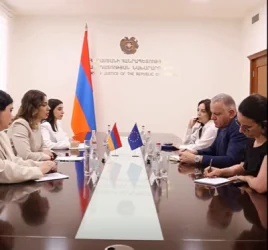
ՀՀ-ԵՄ համագործակցության և սահմանադրական բարեփոխումների հարցերն են քննարկվել

Պարեկային ծառայությունում համակարգային կոռուպցիա չկա. ՆԳ նախարար