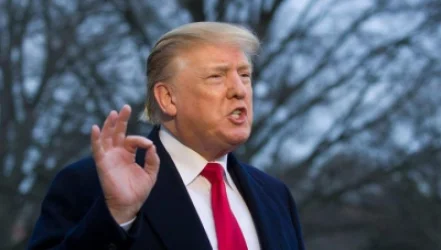
VIDEO: Today Azerbaijan is Creating a Ghetto in Nagorno-Karabakh - Nikol Pashinyan
Armenian Prime Minister Nikol Pashinyan gave an interview to Agence France-Presse, the exchange is presented below.
Agence France-Presse, Irakli Metreveli – Mr. Prime Minister, do you believe in a stable peace with Azerbaijan?
Prime Minister Nikol Pashinyan – If I didn’t believe, there would be no point in participating in the negotiation process at all. But believing does not guarantee that we will achieve results because, understandably, it does not only depend on me, it also naturally depends on the positions of the President of Azerbaijan. Not to mention that, in general, we are not negotiating in a vacuum. There is an international situation, a historical situation, a humanitarian situation, various human factors that may arise at any moment, political situations. In other words, all these naturally affect the process, but of course, the greatest influence on the process is from the direct negotiators, namely the President of Azerbaijan and myself.
Agence France-Presse, Irakli Metreveli – What can you personally do in negotiations with President Aliyev to ensure the dignity of the Armenians living in Nagorno-Karabakh? What keys do you have?
Prime Minister Nikol Pashinyan – You know, overall, the conditions are very important. If we go beyond the content of negotiations, because what happens in the negotiation room can often be evaluated as generally normal, as if nothing extraordinary is happening, at a glance by an impartial observer. But then we have to step back and observe the actions and statements. The most important thing that, in my opinion, hinders the progress of negotiations is Azerbaijan’s continuously aggressive rhetoric, hate speech, actions of hatred towards Armenians and everything Armenian, and of course, a policy of vengeance against the Armenian people of Nagorno-Karabakh and an apparent ethnic cleansing policy.
Look at what the situation is in Nagorno-Karabakh now. We have a humanitarian crisis there. When we say humanitarian crisis, in essence, it can be a mere political term or a headline in the news for many people. But let’s try to understand what this means. For example, it means a lack of essential goods. Look, today in Nagorno-Karabakh, there is no oil, no sugar, no hygiene products, no butter, and no variety of foods. The people of Nagorno-Karabakh are, of course, hardworking people, and some products are produced in this agricultural season. However, due to the lack of fuel, it is almost impossible to deliver these products to potential consumers.
This means that there are also certain reserves of grain in Nagorno-Karabakh. But first, due to the lack of fuel, it is impossible to deliver it to the mills. If, in some way, it is possible to deliver it to the mills, due to the lack of fuel, it is impossible to deliver it to the bread factories. If somehow it is delivered to the bread factories, due to the lack of power and fuel, it is impossible to bake bread at least in industrial volumes. If somehow bread can be baked, it cannot be delivered to stores. If, in some way, it gets to the stores, people have transportation restrictions to reach the stores to buy bread. If somehow they can reach the stores to buy bread, since they have lost their jobs, they do not have the necessary financial means to purchase it. When all these layers, all these burdens are placed on a person, the whole weight becomes evident. That is, under these conditions, it is understandable that pessimism is growing every day in the Republic of Armenia and, of course, also in Nagorno-Karabakh, which does not change our policy in any way. We are convinced that the method of resolving issues through negotiation is the only one. But on the other hand, if issues are not resolved through negotiation, those negotiations can also be perceived by the public as merely wasting time or merely creating an impression of doing something in the news.
These are all risks that directly and indirectly impact the process.
Agence France-Presse, Irakli Metreveli – What are your red lines in this process?
Prime Minister Nikol Pashinyan – We have said this several times; the territorial integrity of Armenia, its sovereignty, and the rights and security of the people of Nagorno-Karabakh. Moreover, it is very important to note the following observation, because again rights and security, at this level, are terms, just terms for people. It is crucial that those terms are expressed in such a way that a person can apply them, utilize them, and have rights and a kind of security that will allow them, their environment, their family, and their children to live, self-express, and develop in that environment.
It is also very important to state that from our point of view, the issue of the rights and security of the people of Nagorno-Karabakh should be addressed as a result of dialogue, negotiations, and discussions involving representatives of Nagorno-Karabakh itself. We call this the Baku-Stepanakert dialogue. However, given the disproportionate forces between Nagorno-Karabakh and Azerbaijan, we believe that if we leave Stepanakert and Baku face to face, Baku will have the opportunity either to forget this agenda or to be a monologist rather than a dialogist. This is why, in our perception, that conversation should take place within the framework of international mechanisms, where the international community can witness and be present.
The situation for Armenia is complex because Azerbaijan perceives and interprets Armenia’s interest in the process as aggression or an attempt against Azerbaijan’s territorial integrity. It is precisely this perception that has prevented constructive conversations from taking place in this format, and it has ultimately shown the entire history of negotiations.
Agence France-Presse, Irakli Metreveli – Armenia is seeking certain international mechanisms that will guarantee the safety and rights of the Armenian population in Karabakh. What kind of international mechanisms do you imagine?
Prime Minister Nikol Pashinyan – You know, these are operational issues that do not depend solely on our perceptions. That’s why I wouldn’t want to highlight any specific idea, limiting further conversation, or creating limitations for us in that dialogue. Our main task is that this dialogue should take place, and that there should be real dialogue, meaning that there must be a conversation because it is through that conversation that it is possible to overcome distrust, hatred, even tensions and better understand each other.
—Agence France-Presse, Irakli Metreveli – Do you believe Azerbaijan poses a threat to Armenia’s sovereignty and territorial integrity, particularly considering the situation in Syunik and the fact that the town of Jermuk came under fire last year? Do you consider this a threat from Azerbaijan to Armenia's sovereignty and territorial integrity, and do you think a new war could occur?
Prime Minister Nikol Pashinyan – Generally, as long as a peace treaty is not signed and that treaty is not ratified by the parliaments of the two countries, war is certainly very possible. And in general, anywhere on the planet, where there is a conflict situation that has not been resolved by a treaty, that is, not addressed, at any place, at any moment there could be war, this must be noted. Of course, there are different scales of probability, but this should generally be noted.
Added to this is Azerbaijan’s obvious aggressive rhetoric; this is compounded by the hate speech and the current geopolitical situation where, in fact, the world order that we once assumed existed is now seen not to actually exist. The breach of the military balance between Azerbaijan and Armenia, etc. contributes to this. And of course, yes, new escalations, new wars are always probable, which does not mean that it will happen, nor does it mean that it will not happen. And literally, every day there are violations of the ceasefire regime along the Armenia-Azerbaijan border. In my more than 5 years as Prime Minister, it may have happened that there could be one, two, a maximum of three days when there has not been a violation of the ceasefire regime. In five years, at the highest estimate, it may have been three days when there was no violation of the ceasefire regime; one of those days is November 11, 2020. Let’s take that out; out of that, there are two days, one is doubtful.
—Agence France-Presse, Irakli Metreveli – After signing the ceasefire agreement, which no one likes in Armenia, I am sure, to you as well, how do you justify your continued authority?
Prime Minister Nikol Pashinyan – Through elections, by the people’s decision, because what I have said and done, I have borne that responsibility first and foremost. You know that after November 9, 2020, I resigned to hold early parliamentary elections precisely to answer your raised question. Because why is this question arising only for others, this question has arisen for me as well, and has arisen, and some seem to think that this question has arisen only for them, but of course it has arisen for me and our political team as well. And we, after November 9, 2020, if my memory does not betray me, in December, publicly invited our opponents and opposition to go to early parliamentary elections.
Moreover, we could have held those early parliamentary elections as early as November or December, but everyone understands that in that chaotic situation, when no one was ready for elections, no one thought of it, the most prepared would be the government in any case.
In December, I made a public proposal, and there we had the situation where the opposition said the government must hand over power to the opposition, that is, to them. Our position was that the power or mandate to govern is not our property to give to whoever we wish. We have received that mandate from the people and agreed to hand it over, but we agreed to hand it over only to the people and are obliged to ensure conditions so that the people can decide who to transfer that mandate to. And our most important obligation in that situation was to ensure the free expression of the people so that the elections would be free, fair, competitive, and transparent, after which the elections took place in a very tense atmosphere but in a democratic environment.
Moreover, it is very important to emphasize that before the elections, at the request of civil society, we changed the Electoral Code, turning it into a fully proportional electoral system, which means that the context was such that the prime ministerial elections were held, which, in one way or another, was in accordance with both the old and new electoral systems.
There was an early parliamentary election held in a very heavy atmosphere, sometimes spiced with hate speech, voting took place, and I have essentially been elected Prime Minister through direct elections by the people. Because under the numerical reasoning of those elections, according to our constitution, the prime ministerial candidacy is not considered in parliament, but the party that gains a majority is the one that goes on to become prime minister, and we have gained a constitutional majority, which instantly means prime minister.
It is very important to note that the entire international community unanimously assessed the elections as free, fair, democratic, and transparent. Now, whether the people made the best choice, only the people can respond to that question in future elections.
—Agence France-Presse, Irakli Metreveli – It is clear that Russia has not met Armenia's expectations during and after the war. How do you justify your close ties or trust in Russia?
Prime Minister Nikol Pashinyan – The same question can be posed about any other country: how do you justify good relations with any other country under the circumstances when human rights are violated in Nagorno-Karabakh, a humanitarian crisis exists, ethnic cleansing is being prepared, and those countries do not respond appropriately? Even those countries that prioritize human rights, the UN Charter, democracy, and ethnic tolerance as a priority for themselves.
Now do we want to say that all the countries with which we have good relations are doing everything they can to overcome the humanitarian crisis in Nagorno-Karabakh? To be frank, no. For various reasons, some are buying gas, others are buying oil, the third is thinking about its banking system, the fourth has other problems, but to say from the other side that they are doing nothing, that is also not right.
We are not discussing a direct political or inter-ethnic conflict now; we are talking about an ongoing process of genocide preparation, because you know that genocide has never broken out simply overnight. Let’s take the most famous genocide in world history, that of the Holocaust, for example. Did Hitler come to power and draw the sword the next day to start hunting down Jews in the streets? No, it took years, it has been a process, a very visible and predictable process. It has manifested itself in rhetoric, it has manifested itself in politics. Now Azerbaijan is creating a ghetto in Nagorno-Karabakh, literally speaking. I again say, sometimes we do not reach the level of understanding of the terms; we give people headlines such as humanitarian crisis, humanitarian crisis. A certain percentage of the audience understands in detail what it is, but the vast majority does not understand, because it is not their job. Humanitarian crisis? What does humanitarian mean? What does crisis mean?
But today, Azerbaijan is creating a ghetto in Nagorno-Karabakh. What is the response from the international community? In Russia, they tell us, how do you justify your good relations with the West, is that your expectation from them, that they will make a half-hearted statement that the Lachin corridor should be opened? Yes, the Lachin corridor should be opened. The International Court of Justice made a ruling on February 22. That ruling belongs to the international supreme authority, and by the way, Russia does not seem to recognize that authority well, not Russian, but international supreme authority.
Russia is also telling us: is that your expectation from the West, that you establish such close relations with the European Union and other partners? Was that your expectation, that hypothetically, they would say once a week that the Lachin corridor should be opened? Thank you, goodbye. How do we justify our relations with the West? Similarly, with Russia, how our relations with Russia are unjustified, according to the logic of certain circles in the West, because Russia is not fulfilling all its obligations and not meeting all our expectations, the same is said about the West.
—Agence France-Presse, Irakli Metreveli – For many years, Armenia’s foreign policy paradigm has been complementarity between the West and Russia. However, following the war in Ukraine, there have been significant changes in the situation. Now countries are unlikely to be able to maintain good relations with both the West and Russia. What impact does this have on Armenia’s foreign policy?
Prime Minister Nikol Pashinyan – You know, in my opinion, complementarity has been a catastrophic mistake for Armenia. And this mistake is not recent; it’s not even 30 years old; it's not even 100 years old; it is an even older mistake. That is, let’s not end up in a situation where I am suddenly criticizing previous governments or criticizing anyone, because you see what is also in your question is entirely the context of how Armenia should live between the West and Russia. Excuse me, we are not actually between Russia and the West; we are in fact between Georgia, Turkey, Iran, and Azerbaijan. And indeed, the countries in the region are between one another.
In the government plan for the 2021 elections, there was a clause expressed that was called regionalization. What does experience show? Our history, I repeat, is not about the past 10, 20, 30, or even 40 years; it is about centuries. We live here; we are not between Russia and America; Europe is between Russia and America. We live in the environment of Georgia, Iran, Azerbaijan, and Turkey. And the question is how we should manage our relationships with our neighbors, sorry, can we do it through Moscow, Washington, and Brussels? In terms of paradigm—no, but in practical terms, we do not have that political tradition. Our entire problem today comes from there because what should be done is a problem that even I am affected by, because there are many historical, socio-psychological layers that are not even solvable at the level of a person with power and mandate. This same problem is not just my problem; it has been a problem for anyone who has occupied a position in the last several hundred years; I do not want to say further back, regarding the issue of the Armenian statehood. When we have an issue with our environment, what is our first reaction? Let’s see what Moscow can do, what Brussels can do, what Washington can do?
Of course, during this time perhaps the capitals may have changed, names may have changed, through historical long periods. And we understand this, but in our lives, things have not changed because that culture does not exist for us, nor does it exist for them. And it does not exist for us because of the historical some tradition, and it does not exist for them for similar historical traditions. When the moment comes that there is an opportunity, or perhaps an awareness that there should be questions solved in another paradigm, a different logic arises in our environment: do you come to solve questions with us? Didn’t you bring us under the influence of Washington, Moscow, and Brussels for a long time? Now, so come on.
That is, you spoke about paradigms; our paradigm is not positioned between Moscow and Washington. But on the other hand, in the 21st century and even in the 19th century, it was not possible or wise to conduct politics by circumventing geopolitical centers, and it shouldn't be done. The issue is that now we are trying to change that name, still trying to change the name that we should pursue a balanced and balancing policy. And we do not want that our new paradigm, which is still a theory, I say frankly, we are still not able to implement, because of us—because there is a difference between knowing what to do and what is historical not being that way. But on the other hand, this policy should not be perceived as a policy of ignoring or bypassing geopolitical centers. But we also try to take steps.
The fact that I participated in the inauguration ceremony of the president of Turkey received both positive and negative reactions in Armenia. Those positive and negative reactions are the representation of this whole mess. And the issue is how much in discussing that paradigm we will again be in the genre of cooperation, rather than monologue, because this is not easy for anyone. To perceive and record that, in this region, for example, this political map should continue to exist for centuries, some frame this statement as a question, while some sincerely want to find justifications that the existence of this political map can also align with the interests of all regional countries and not contradict the interests of geopolitical centers. I, for example, am a supporter of this second conviction, but that is not enough.
—Agence France-Presse, Irakli Metreveli – You have criticized the CSTO quite directly. Do you see any perspective of leaving this organization one day?
Prime Minister Nikol Pashinyan – No organization in the world is eternal, and each country makes decisions based on its interests. Here’s the issue: we discuss transparently the problems we have had and have with the effectiveness and implementation of obligations of the CSTO with our partners. But overall, in terms of paradigm, I have addressed this publicly several times. In fact, the question is not whether Armenia will leave the CSTO or not; the real question is whether the CSTO is leaving Armenia or not, because let me not hide it; I can directly say that many experts exist in the Republic of Armenia, independent experts, who periodically send me reports stating that these processes are showcasing that the CSTO is leaving Armenia. Moreover, there are many experts whose assessment is that Russia is leaving the region. That may seem fantastical, but unfortunately, our people have witnessed that history.
In the end, what was the result of the Armenian Genocide in 1915, when due to the heavy burden of internal problems in a conflictual environment, Russia had to abandon the conflict-prone region? And the Armenians, who had made a clear geopolitical choice, faced Turkey face to face. Naturally, those analyses became even sharper, more pronounced recently with the well-known events in Russia, admittedly lasting a day and a half, but during that one and a half days, I received dozens of analytical reports stating that this is the scenario of 1915.
1915, 1917, 1918 years—instability in Russia, Russia’s forced withdrawal from the region, and the Armenian people being subjected to genocide. But now the whole issue is that in 1915, the Armenian people did not have statehood, did not have a state that had the obligation to ensure the safety of its own people. Today it has a state, and the state’s policy should be built within this logic, because the probability that one day we will see that Iran or Turkey has left here is zero; such a probability doesn’t exist. However, the probability that any geopolitical center that is currently present here might wake up one morning and find itself not here has a higher likelihood than zero. What’s more, it does not have to be deliberately wanted, or it does not have to mean maliciousness; it doesn’t have to mean wanting to hurt; it does not have to mean not wanting to fulfill their obligations to anyone, including Armenia.
And I am again saying, this is not today’s issue; this is not a problem from the last 10 years; this is not a problem from the last 30 years. This is a problem for the last 100 years; this is a problem for the last 150 years. And today our situation is very complicated. But unlike 100 years ago and a little more, today we have a state that is considered democratic, that is considered developing, and that is considered capable of negotiation. We have a chance to understand these risks and manage them, which, however, we must understand, is not easy.
—Agence France-Presse, Irakli Metreveli – The United States and Europe have suspended or restricted vehicle sales to Russia. Armenia has become a major re-exporter of vehicles to Russia. What is your government doing to ensure that Armenia’s territory is not used by Russia to bypass sanctions?
Prime Minister Nikol Pashinyan – We are fully in touch regarding sanctions and cooperating with both the EU special envoy and the US envoy to be able to demonstrate responsible behavior on the part of the international community. And you may find it strange, but we are transparent in this regard as well. We are a member of the Eurasian Economic Union; Russia is our main trading partner, and naturally, from the first days, we understood that the sanctions imposed by Western countries against Russia would raise certain issues. We also understood that Russia would also have certain expectations from us to help in this complex economic environment as much as we can because, imagine the scales of Armenia, the scales of Russia.
And we also understood that the West would expect us to support them in maintaining the sanctions regime. We have told our Russian partners, we understand your expectations and are prepared to address your expectations, but to the point where Armenia risks falling under sanctions, because if such a vast country like Russia can afford to fall under sanctions, Armenia cannot allow such a measure, especially in this military-political environment.
And we have also communicated this same text to the West. This is proved by the fact that I say this before the cameras. And we work by this rule. Of course, there are also well-known forces that continuously lobby in European and American media to show that Armenia is a black hole in this regard. But at the official level, we currently have no demands from the European Union and American partners, or from Russia because we do not want to deceive our partners; we say it simply, and I think our position is legitimate. This does not mean that everything is ideal. First, I should record that sanctions regimes change very often. And in reality, the private sector is the one bringing in and taking out products. We do everything possible to ensure that everything falls within the framework of what I just said. And in my opinion, not just my opinion but also the opinion of our international partners, we are able to do that and will continue to do so.
—Agence France-Presse, Irakli Metreveli – Thank you, Mr. Prime Minister.
Նմանատիպ հոդվածներ
Direct: Interview of the Prime Minister of Armenia with the France-Presse Agency
LIVE: Message from Artsakh President Araik Harutyunyan
Video: We Expect Another Summit Involving the Leaders of Armenia, Russia, and Azerbaijan - Lavrov
VIDEO: Witnessing a Soldier's Return Home on the Vardenis Road - Nikol Pashinyan
Ավելին Politics բաժնից
Մեծ Բրիտանիայի վարչապետ Քիր Սթարմերը հրաժարական կտա. Թրամփ
Եթե փակեք Հորմուզի նեղուցը, այլևս երկիր չեք ունենա. Թրամփ
Ընդամենը վերջին մի քանի ժամերի ընթացքում մենք նշանակալի առաջընթաց ենք արձանագրել. Վենս