The Power of the New Nuclear Plant in Armenia Still Undecided, Could Cost $3-5 Billion
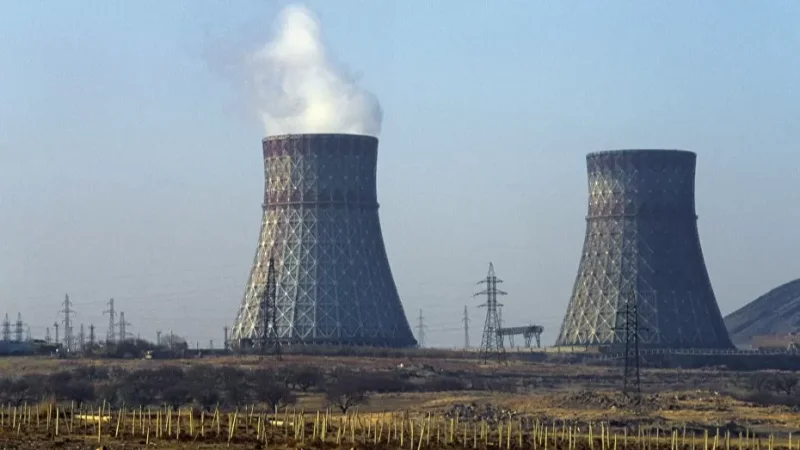
The power capacity of the new nuclear energy block or blocks to be constructed in Armenia has yet to be determined. The exact cost and the source of funding have not been disclosed, but circulating information suggests it could amount to around $3-5 billion. This was reported by the publication ‘Hetq’.
The leadership of the current Armenian Nuclear Power Plant, the institute providing scientific and technical support, and the Russian state corporation ‘Rosatom’ involved in these operations are still discussing the power capacity of the new energy block.
It has already been decided that Armenia will have a new nuclear block after 2036, when the currently active block will be decommissioned. At a panel meeting in Yerevan on June 5, representatives from the nuclear plant, ‘Rosatom’, and other sector experts discussed the future of the nuclear facility.
One of the proposals under discussion is to construct a block with a capacity of 1000-1200 megawatts, a proposal put forth by ‘Rosatom’. For comparison, the capacity of the currently operational block at the nuclear power plant is 400 megawatts.
Illya Vergizaev, the executive director of ‘Rosatom Energy Projects’, stated that Armenia and Russia have a common regulatory framework for the construction and operation of the plants. This will allow for a smooth transition from the existing plant to the new one.
“Regarding its impact on Armenia's economy, local organizations will be involved in construction, thus a portion of the plant's value will return to the country's economy,” Vergizaev added. According to him, the nuclear plant, using Russian technology, will be of a new generation.
However, not all experts agree that Armenia needs such a high-capacity nuclear block. “Currently, the total electricity demand in Armenia is satisfied with 1200 megawatts. This includes not only nuclear energy but also hydroelectric stations, solar energy, and gas. They discussed a block of 1000-1200 megawatts. It would be better to have, for example, two blocks of 500-600 megawatts. However, at this moment, such nuclear energy blocks are not operational and are not being constructed. A high-capacity nuclear plant may become a headache for the country. We need to consider all options and present them accurately to the government,” said Vahram Petrosyan, the director of ‘Armatom’ Research Institute, which provides scientific and technical support to the nuclear power plant. Petrosyan is also the chairman of the board of directors of ‘HAECP’.
According to him, the government is awaiting the final decision from the commission set up for these issues. The Armenian Nuclear Power Plant, located in Metsamor, is a legacy from Soviet times. The first energy block was commissioned in 1976, and the second in 1980. Currently, only one energy block is operational, whose operational term was supposed to end in 2016. After technical upgrades, the operational term was extended by ten years. After that, authorities plan to extend the plant's ‘life’ by another 10 years until 2036.
“Without a nuclear power block, Armenia cannot exist. Our country's energy security will be ensured if we have a new nuclear energy block. We once halted the nuclear plant, destroying the entire industry in Armenia. We must do everything to ensure safe operation. We need to not only maintain the existing infrastructure but also develop it,” Vahram Petrosyan stated.
According to him, the question of the new block's power capacity should be resolved soon, as the construction timeline is roughly 10 years, and design work must already commence. “I believe a decision should be made by the end of this year,” Petrosyan noted.
Energy expert Ara Marjanyan, who was also the moderator of this meeting, reported that the Russian side proposes to construct an energy block with a capacity of 1000-1200 megawatts.
However, a roadmap still needs to be developed, and a final decision must be made regarding the reactor's technical parameters. Construction work is planned to commence at the end of 2024 or early 2025. The work will take 10-12 years.
The cost of the new energy block is kept confidential by the leadership of the nuclear plant; circulating information suggests it will cost $3-5 billion. Further details can be found on the source website.
Նմանատիպ հոդվածներ

Mother and child were guests in that house: details of the tragic incident

Dilijan Criminal Chief Beat Minor Employee for Different Reasons, Lawyer Claims

The Mother of a Fallen Soldier, Gayane Hakobyan, Re-Arrested

Soldier Transferred to Hospital with Severe Diagnosis Dies Without Regaining Consciousness in Yerevan
Ավելին Society բաժնից
Հրդեհը կանխել են. մանրամասներ

Մահացել է գերությունից վերադարձած Կարլեն Ստեփանյանը

Քաղաքացի է որոնվում