Armenia Emphasizes Iran's Clear Position on Territorial Integrity and Sovereignty
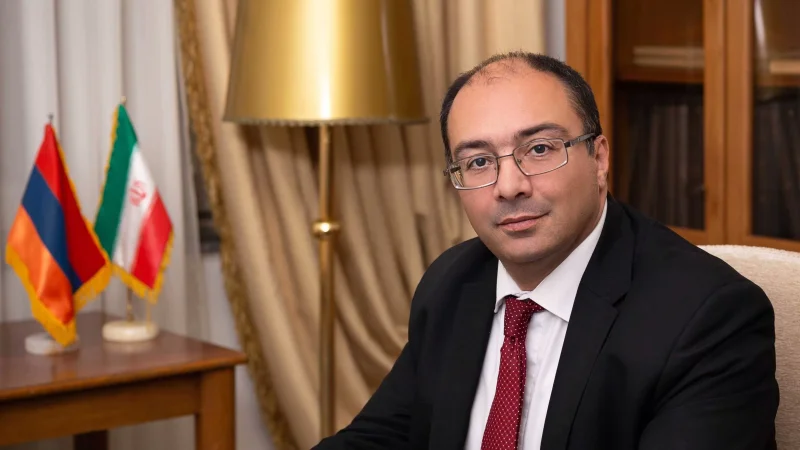
The Ambassador of Armenia to Iran, Arsen Avagyan, has given an interview to the Iranian news site "Rahbord-e Mo'aser." The Armenian Ministry of Foreign Affairs has provided an official translation of the interview.
The situation around Nagorno-Karabakh has deepened following the blockade of the Lachin Corridor. What is your assessment of the likelihood of new clashes in this context?
Answer: On April 23, 2023, the Azerbaijani authorities officially blocked the Lachin Corridor, grossly violating point 6 of the trilateral statement of November 9, 2020, taking steps to establish a checkpoint in the corridor, which is the zone of responsibility of Russian peacekeeping forces. Since December 12, 2022, the Azerbaijani side had already unlawfully blocked the corridor under the pretext of false environmental concerns. It is clear that this action by Azerbaijan is aimed at carrying out ethnic cleansing in Nagorno-Karabakh and completely emptying it of Armenians. This action is taken in defiance of the unequivocal statements by the international community, especially the binding legal ruling of the International Court of Justice on February 22, 2023. Azerbaijan's aforementioned illegal actions exacerbate the regional situation and pave the way for the large-scale use of force.
It is also noteworthy that the Azerbaijani side continues to violate the Armenian sovereign territory. This is evidenced by the fact that on May 11-12, Azerbaijani Armed Forces units fired from artillery and mortars towards Armenian positions located in Sotk, Kut and Verin Shorja.
The Armenian side has consistently expressed its commitment to establishing peace and stability in the region. However, our position does not find an adequate response in Baku, which continues its aggressive and destructive policy. We believe that it aims to nullify the negotiation process and the agreements reached during it, leading to increased tension in the region.
Recently, negotiations between Armenia and Azerbaijan have taken place with the mediation of the United States. How do you assess their outcomes, and does the U.S. mediation contradict similar initiatives by the Islamic Republic of Iran?
Answer: It should be noted that negotiations are conducted on several platforms. Recently there have been negotiations in Washington and Brussels, and on May 19, a meeting of the Foreign Ministers of Armenia and Azerbaijan was held in Moscow, followed by a meeting of the Prime Minister of Armenia, the presidents of Russia and Azerbaijan on May 25. On May 1-4, Armenian Foreign Minister A. Mirzoyan and Azerbaijani Foreign Minister J. Bayramov held negotiations in Arlington with U.S. Secretary of State Antony Blinken and National Security Adviser Jake Sullivan. The ministers presented their perspectives on the current situation and expressed their positions on existing issues related to the normalization of relations. The parties made progress on some articles of the draft bilateral agreement on "Establishment of Peace and Inter-state Relations," while noting that positions remain divergent on several key issues.
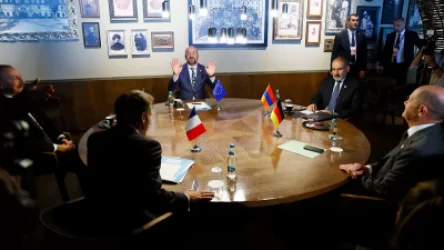
On May 14, a trilateral meeting took place in Brussels involving Armenian Prime Minister N. Pashinyan, President of the European Council C. Michel, and President of Azerbaijan I. Aliyev, during which issues concerning the unblocking of regional transportation and economic infrastructure, delimitation between the two countries, security assurance, the need to address the rights and security of the people of Nagorno-Karabakh, as well as issues related to prisoners, missing persons, and other humanitarian concerns were discussed.
It is necessary to emphasize that the Armenian side is fundamentally opposed to opposing the interests of various forces in our region and creating conflicts. Moreover, we believe that the combination of efforts of our partners interested in peace and stability in the South Caucasus can ultimately lead to the resolution of existing problems and conflicts.
The work on the draft agreement on "Establishment of Peace and Inter-state Relations" continued during the meetings in Moscow. The trilateral meeting on May 25 discussed issues related to unblocking regional transportation and economic infrastructures. In this context, it is important to stress that the Republic of Armenia greatly values the clear stance expressed at the highest level by the Islamic Republic of Iran regarding the territorial integrity and sovereignty of the Republic of Armenia.
Recently, there have been frequent publications regarding Armenia's dissatisfaction with the Russian peacekeeping forces. How do you comment on this?
Answer: First of all, I would like to note that the Republic of Armenia has officially expressed its concerns regarding this issue. The trilateral statement of November 9, 2020, clearly defines the zone of responsibility of the Russian peacekeeping forces. However, since the signing of the statement, we have witnessed a number of violations of this provision, the most vivid example being the illegal blockade of the Lachin Corridor first by fake "environmental activists" and since April 23, by Azerbaijani armed forces.
As stated above, in this regard, the Armenian Ministry of Foreign Affairs has called on the Russian Federation to finally fulfill its obligations under point 6 of the trilateral statement by lifting the illegal blockade of the corridor and ensuring the withdrawal of Azerbaijani forces from the entire security zone of the Lachin Corridor, as well as to clearly document the actions of Azerbaijan that undermine regional security to the members of the United Nations endowed with a mandate for international security and to take effective steps towards the unconditional implementation of the ruling of the highest international judicial body.
How do you assess the progress of Armenian-Turkish negotiations?
Answer: The current process of normalizing relations between Armenia and Turkey began in late 2021. Special representatives appointed by Armenia and Turkey have met four times, and high-level exchanges have occurred between the leaders, foreign ministers, and speakers of the parliaments of the two countries. As a result of the normalization process of Armenian-Turkish relations, direct flights between the two countries have resumed, and previous obstacles to air cargo transportation have been removed. Additionally, an agreement has been reached on reopening the Armenian-Turkish land border for citizens of third countries and holders of diplomatic passports visiting Armenia and Turkey. Unfortunately, the Turkish side recently took a step back and prohibited Armenian airlines from accessing Turkish airspace for flights to other countries. Nevertheless, the Armenian side is hopeful that existing obstacles can be overcome quickly and all agreements reached can be fulfilled.
Having a very good understanding of the horrors of natural disasters and remembering the devastating earthquake that occurred in Spitak in 1988, Armenia did not remain indifferent to the earthquake that struck southeastern Turkey on February 6 this year. On February 7, the Prime Minister of the Republic of Armenia had a phone conversation with the President of Turkey, after which an Armenian search and rescue team was deployed to the disaster zone, contributing to overcoming the consequences of the earthquake by saving lives. During those days, the Armenian-Turkish land border, which had been closed for decades, was opened, through which Armenia sent two humanitarian aid shipments to Turkey. On February 15, the Foreign Ministers of Armenia and Turkey reached an agreement to jointly renovate the Ani Bridge on the Armenian-Turkish border.
The Armenian side has repeatedly voiced concerns regarding the destruction of Armenian cultural heritage by the Republic of Azerbaijan. As we know, Armenian historical and religious monuments in Turkey are also not in good condition. Considering that the IRI has made every effort to preserve Armenian historical monuments, how do you assess the approaches of the three countries regarding this issue?
Answer: Speaking about Armenian cultural heritage, it is impossible not to appreciate the caring attitude of the Iranian authorities towards Armenian historical heritage. With state support from the IRI, dozens of notable churches and other monuments have been restored. Both the Armenian leadership and the Armenian people in general have always highly valued and praised the efforts of their Iranian friends in this regard. Iran's care for Armenian culture is evidence of our two states' shared civilizational ties and thousand-year historical connections. A testament to this is the restoration of the Gohar Agha Mosque in Shushi with the support of Iran before the 44-day war.
As for Azerbaijan's behavior regarding the barbaric treatment of Armenian historical monuments, you have clearly characterized it, and it is with sorrow that we must note that this is by no means a new phenomenon. Not long ago, in 2005, the Azerbaijani authorities barbarically destroyed the medieval cemetery of Djulfa located on the banks of the Araks River in the Nakhichevan region. In the last century, there were hundreds of Armenian historical monuments in Nakhichevan, all of which are now completely destroyed and obliterated.
Azerbaijan continues this criminal behavior in Nagorno-Karabakh as well. That which can be destroyed is destroyed, and in cases where the destruction of well-known monuments might provoke a significant reaction, Azerbaijan shamelessly denies their Armenian identity, attributing them to some fictitious "Albanian architecture." The audacity of the Azerbaijani side has reached the point where the President of Azerbaijan issues orders on camera to erase Armenian inscriptions from Armenian churches. It should also be noted that Azerbaijan continues to block UNESCO's access to Nagorno-Karabakh.
It is also necessary to mention that the Azerbaijani side has, for years, especially in organizations where Armenia is not represented, tried to impart a religious connotation to the Nagorno-Karabakh conflict, presenting Armenia as the enemy of Islam and all Muslims, while using the sensitive ideology of Islamic solidarity to promote false claims that the Armenian side has destroyed a number of mosques in Nagorno-Karabakh. Alongside the policy of destroying and appropriating Armenian cultural heritage, Azerbaijan is attempting to conduct the same policy towards Iran as well. Specifically, last year, during the "Euronest" parliamentary assembly, Azerbaijani delegates who visited Yerevan spread the absurd claim of calling the Blue Mosque in Yerevan "Azerbaijani," and state-level efforts continue in Baku to present various prominent Iranian writers as Azerbaijanis.
Նմանատիպ հոդվածներ
Ավելին Politics բաժնից
Ի՞նչ ուղղությամբ կշարունակի շարժվել Հայաստանը․ Փաշինյանի պատասխանը

Ժողովուրդը թույլ չի տա՝ պատերազմի եռագլուխ կուսակցությունը թպրտա. Փաշինյան

Քրեաօլիգարխիկ համակարգը պետք է արմատախիլ արվի ՀՀ–ից. Փաշինյան