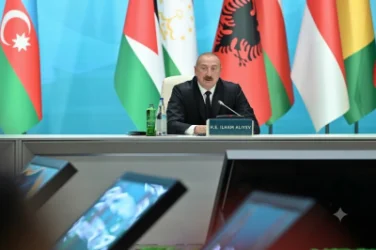
Government Provides Details on Negotiations with Azerbaijan

The Armenian government has presented details regarding the ongoing negotiations with Azerbaijan on various fronts. According to the report on the implementation of the Armenian government’s 2022 program, the Armenia-Azerbaijan negotiation process has taken place in several key areas: the Armenia-Azerbaijan peace and relations establishment agreement, resolution of the Nagorno-Karabakh conflict, unblocking regional transport and economic communications, delimitation and security, and humanitarian issues.
To discuss these issues, three trilateral meetings took place involving the Prime Minister of Armenia and the President of Azerbaijan under the mediation of the President of the European Council (on April 6, May 22, and August 31, 2022, in Brussels), along with two quadrilateral meetings mediated by the President of the European Council and the President of France (one remotely, the other in Prague on October 6, 2022), and one trilateral meeting mediated by the President of the Russian Federation (on October 31, 2022, in Sochi).
On February 18, 2023, another trilateral meeting was held in Munich, mediated by U.S. Secretary of State Antony Blinken. The Secretary of the Armenian Security Council, Armen Grigoryan, and the Azerbaijani President’s aide for foreign affairs, Hikmet Hajiyev, have met four times with the mediation of the U.S. and EU, while the Prosecutors General of Armenia and Azerbaijan have conducted two meetings under Russian mediation. The Foreign Ministers of Armenia and Azerbaijan have held six meetings mediated by Russia, the U.S., and other partners.
There have been three phases of work on the peace and relations establishment agreement, during which Armenia and Azerbaijan exchanged observations and proposals. Armenia submitted its observations and proposals to the Azerbaijani side on February 14, 2023. It is acceptable for Armenia that the signing of the agreement between Armenia and Azerbaijan could be separated from the resolution process of the Nagorno-Karabakh issue, ensuring that an international mechanism for discussions between Stepanakert and Baku is formed.
For Armenia, it is vital to establish guaranteed mechanisms for addressing the security and rights of the Nagorno-Karabakh populace, which will have international visibility and involvement. The report states, “In the context of the Armenia-Azerbaijan agreement, it is crucial for the Armenian government to establish security guarantees for the 29,800 square kilometers of territory of Armenia and practical mechanisms for resolving potential misinterpretations and disputes over the text of the agreement.”
Furthermore, it is noted that in 2022, under the leadership of Deputy Prime Minister Mher Grigoryan, a commission on delimitation and border security between Armenia and Azerbaijan was established, followed by three joint meetings on state border delimitation and security issues within the year. On February 17, 2023, Armenia conveyed through diplomatic channels another draft procedure for organizing and holding meetings of the commission on state border delimitation and security issues between Armenia and Azerbaijan.
By the agreements reached on October 6, 2022, in Prague, and October 31, 2022, in Sochi, Armenia and Azerbaijan confirmed their commitment to recognize each other’s territorial integrity and sovereignty in accordance with the UN Charter and the provisions of the 1991 Almaty Declaration. The Sochi declaration explicitly stated that the parties agreed to refrain from the use of force or threats thereof, discussing and resolving all contentious issues exclusively while respecting the principles of sovereignty and territorial integrity.
During 2022, two meetings of a trilateral working group co-chaired by the Deputy Prime Ministers of Armenia, Russia, and Azerbaijan on unblocking regional economic and transport communications occurred (the group has conducted 11 meetings since its creation). The topic of unblocking has also been periodically discussed in other formats. Armenia is interested in unblocking transport and economic communications in the region and is ready to implement it as soon as possible in accordance with its legislation within the framework of the “Armenian Junction” project. The new opportunities for the movement of goods, products, and citizens will clearly increase the attractiveness of the “Armenian Junction” for international and regional passenger and freight transportation, significantly highlighting Armenia's unutilized logistical role in the region, which will also provide additional guarantees of security and stability.
By the government order, a working group was established on January 14, 2022, to ensure the effective implementation of the infrastructure restoration project, which also involved international high-level experts. The report indicates that several humanitarian issues present in Armenia-Azerbaijan relations remain unaddressed. Despite point eight of the trilateral statement of November 9, 2020, Azerbaijan continues to hold 33 captured Armenian citizens in detention.
Armenia is pursuing the issue of captured citizens and their return in all international forums, including the European Court of Human Rights and the International Court of Justice. In 2022, 31 captured Armenian citizens were successfully returned. The issue of missing persons remains significant in Armenia-Azerbaijan relations, with the whereabouts of 975 citizens from the Armenian side considered unknown, including 777 from the First Nagorno-Karabakh War, 196 from the 44-day war, and 2 from the September aggression. Armenia consistently raises the issues of enforced disappearances and violations regarding the torture of captives and the desecration of the bodies of fallen soldiers in international courts and diplomatic forums.
In 2022, Armenia returned 35 skulls of individuals presumed missing and three maps indicating possible burial sites of Azerbaijanis. Throughout 2022, Armenia filed four complaints against Azerbaijan at the European Court of Human Rights concerning mass violations of human rights during the 44-day war and the following two months, including violations of the right to life, torture, and maltreatment, as well as numerous other rights violations concerning illegal trials regarding captured individuals, including unlawful deprivation of liberty, human rights violations related to the occupation of Armenian sovereign territory by Azerbaijani armed forces, and incidents in Nagorno-Karabakh, particularly in Parukh and Karaglukh, and in the Lachin corridor.
In 2022, Armenia submitted a complaint against Azerbaijan to the International Court of Justice regarding the application of the International Convention on the Elimination of All Forms of Racial Discrimination. The complaint addresses all manifestations of racial discrimination, including propaganda of hatred and anti-Armenian sentiment, including by officials, the protection of Armenian cultural heritage objects, historical revisionism, consistent propaganda of anti-Armenian sentiment in educational institutions, ethnic cleansing, cases of torture and mistreatment based on ethnic hatred, killings, beheadings, and many other violations motivated by hatred toward ethnic Armenians. The initial application was submitted on September 16, 2021, with the complete application presented on January 23, 2023.
In all interstate complaints raised by Armenia in courts, claims for compensation for both material and non-material damages have been and will be raised.
Նմանատիպ հոդվածներ
Ավելին Politics բաժնից
Ես կրքոտ հռետոր եմ. Նիկոլ Փաշինյան
Սահմանամերձ բնակավայրերի բնակիչների համար լավ լուր․ կառավարության նոր որոշումը

Համաձայնագիրը ստորագրվեց. ինչ է թաքանված փասթաթղթի հետևում