Anna Hakobyan Shares Images of Burned Armenian Homes and Excerpts from Charents' 'Land of Nairi'
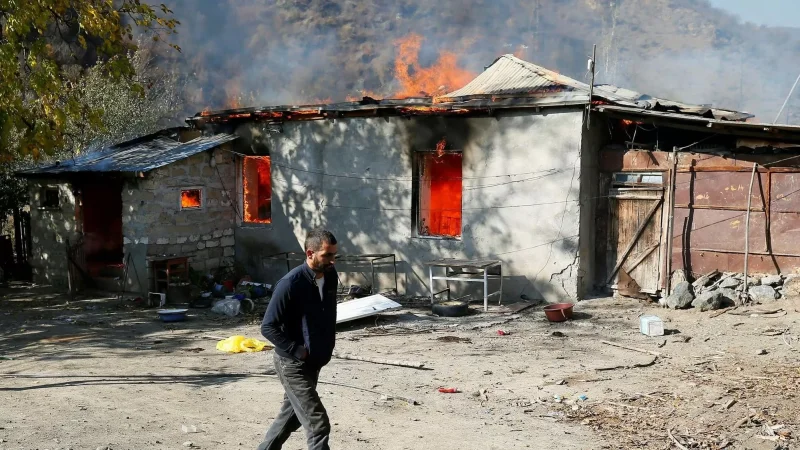
Anna Hakobyan has shared images of homes burned by Armenians alongside excerpts from Yeghishe Charents' novel 'Land of Nairi' on her Facebook page.
“The text features excerpts from Yeghishe Charents' 'Land of Nairi,' written between 1921 and 1924, which describes the fall of Kars. The photographs are from 100 years later.
(...) The following morning... But it was better not to dawn that morning, because that fateful morning was just beginning to break when the people left in the city(…), — they heard the crackling of gunfire and cannon fire still quite far off, but gradually approaching. No force anymore, not even any celestial superior power, was capable of keeping the remaining people in the city 'in place.' Like a huge herd, counting in tens and hundreds of thousands, the terrified remaining populace of the city fled; some took the path to the station, others to the highway.
The houses of the city began to burn one after another, and in those burning homes, retreating warriors of Nairi were stealing something in the midst of the fire and smoke. It can be definitively said that from that moment on, the city could already be considered fallen, but it had not yet been so, because the enemy had not yet cut off the escape routes, and it was still possible to flee.
From that moment on, there was no longer any authority in the city. The Supreme Authority had gathered in the fortress to immediately direct military operations. The residents of the lower neighborhoods of the city (i.e., those of the central streets) had almost all left the city; they had already begun to depart from the upper neighborhoods as well, so that only a tiny part of the city's actual population remained in the city. Nevertheless, the city was still filled with thousands of terrified human crowds, predominantly mixed groups of people fleeing from the countryside, with no end to their chaotic lines.
— Telephon Seto, who had previously remained in the city with astonishing carelessness, burned his famous café-restaurant with the help of his brother, Kor Arut, and his eternal companion, Mereli Yenok, and collecting his 'choluďi-choghu,' took the path to the station. (...) Thus, they reached the railway track and saw right in front of them — the train. The train, filled to the brim with fleeing Nairi people, had left the station and, for some unknown reason, stopped there.
A group approached the train from behind, and, as Telephon Seto was convinced, they miraculously faced the very open wagon, which, it was true, was packed with 'over a thousand' people, as Telephon Seto would later recount, but miraculously at the edge of the wagon, there was space — Haji Manukof Efendi and the barber Vasil. It seemed that after considering their scavenger functions to be exhausted ('— Ah... who could they scavenge when there was no army?') — they had decided to join in too. (...) At that moment, the train began to move. It was the last train to leave that Nairi city; as the train moved, the crackling was already heard beneath the fortress. The enemy, as it seemed, had already approached the fortress.
Standing on the zhinchily, Telephon Seto, Kor Arut, and Mereli Yenok, as well as all the Nairi people aboard that last train, looked with terrified eyes at the fortress. And the thought that Kor Arut expressed while looking at the fortress was the thought of all Nairi people in the train: 'Why aren't our own firing...,' said Kor Arut, angry and surprised. But alas, he was not fated to hear the answer to his legitimate question, not because the answer did not exist, but for the simple reason that, within two seconds, he, Kor Arut, was gone. And not only he, but also his eternal companion Mereli Yenok. And here is why.
— Hardly had Kor Arut uttered that aforementioned, later-historically significant sentence when the train jolted violently forward; the sudden jolt of the train caused Kor Arut's bundle to fall to the ground, and at that moment the train jolted back again, the bundle was torn away:
As his bundle fell from Kor Arut's hands, he instinctively bent down to grab hold of it. He did not catch it; he lost his balance... fell.
— 'Ah, Harout...' — Mereli Yenok cried out in fear and tears after him. He too instinctively bent down, reaching out to catch his friend. He did not catch him; he lost his balance... fell.
— And the next moment, passing over the embedded corpses of Kor Arut and Mereli Yenok, the last train was fleeing from that Nairi city, where the enemy had already set foot, where death was already, devastation, unspeakable massacre, indescribable terror... And thus, passing over the heroic corpses of Kor Arut and Mereli Yenok, the last train departed from that Nairi city, and the enemy, the foe, entered the city.
We will not recount, dear reader, what happened in that Nairi city from that moment on, for it is beyond our capability; we will only say that many people remained in the city, who were also struck down by the onslaught of the enemy’s hordes.”


Նմանատիպ հոդվածներ
Tussle Between Armenian and Azerbaijani Soldiers: Our Forces Outnumbered but Triumphed in Hand-to-Hand Combat

What is the Condition of Citizens Who Fell Unconscious During Azerbaijani Invasion

Artsakh Residents in Severe Psychological and Stressful Condition Released from Hospital

Egyptian Flight to Armenia Makes Emergency Landing in Erzurum
Ավելին Society բաժնից

Անձրևները կվերսկսվեն․ սպասվում է՝ ամպրոպ, կարկուտ, քամու ուժգնացում

Կապանում աղմկահարույց դեպք․ հանքավայրից հոսած դեղնավուն ջրերի առթիվ վարույթ է սկսվել

Ազատազրկված անձանց թիվը գերազանցել է 3000-ը. Գալյան