Anna Hakobyan: "We Have Been Taught That Happiness Belongs to the Unchaste"
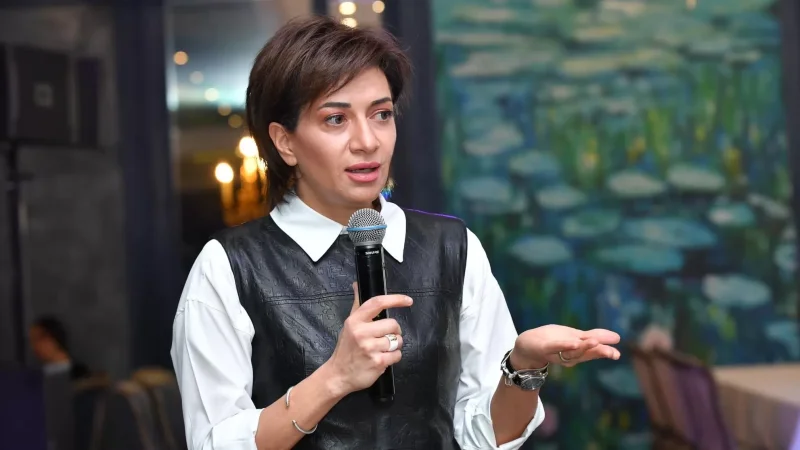
Anna Hakobyan, the wife of Prime Minister Nikol Pashinyan, has delivered a speech at the conference titled "Opportunities and Obstacles: The Place and Role of Women in Armenia."
“Dear ladies, I welcome all of you and thank each of you for responding to my invitation and accepting the offer to spend this festive day together. Before we begin our core event, I want us to stand up and send our words of love, our longing, and our gratitude to the heavens, where our heroes, who bravely sacrificed their lives for the defense of our homeland in the wars unleashed against us, enjoy immortality. We love you, we are grateful to you, we owe you, we owe you a state that corresponds to your lives; we must ask ourselves every day, what is your life worth to us, how much do we value it? Is the price of your life merely a barely surviving, fearful state with endlessly crying and whining citizens? No, and no. A thousand times no. The price of your life is a thriving, developed, rich, prosperous strong state with happy citizens. And we are building that state every day with our work. Long live our heroes, and long live the Republic of Armenia!
The title of our event today is "Opportunities and Obstacles: The Place and Role of Women in Armenia." I must confess that this title was born as a general guideline for our conversation. It is accepted, right? That during events dedicated to women, we must talk about their opportunities, obstacles, equality, violence, etc. But then I started to think: opportunities for what? Obstacles to what? Why do we women want opportunities, opportunities to do what? Or what do we want to do that we encounter obstacles? Perhaps many people and organizations that deal with women's rights have the answer to this question, but I believe we need to find and articulate the answer ourselves.
My version is that we need opportunities to make our environment better, safer, more beautiful, and happier. We need opportunities to be happy and to contribute to others' happiness. However, here is where I emphasize the importance of our conversation today. What does happiness mean for us? What do we Armenian women understand by happiness?
For centuries, we have been taught that a woman's role is to raise good children, to be a good wife for the family, to give birth to heroes for the homeland. For generations, Armenian women have adhered to this message passed down through the ages, but correct me if I am wrong: I still have not met a happy Armenian woman in that role. I have not seen it among my relatives, neighbors, friends, or in literature. Most of the women I know have completely matched that centuries-old formula—child, family, good wife, good daughter-in-law. They have performed that role sacredly, but it has not made them happy. And all those women who have tried to step outside this formula and engage in something else might have come closer to happiness, but even then the environment has not allowed them; they have been labeled, insulted.
Here another question arises: do we, Armenian women, even want to be happy? In my opinion, this question is extremely delayed but at the same time a vitally important question for our country. My answer to this inquiry is as follows: no. We do not want to be happy. We have never posed such a problem before us. Otherwise, if the role assigned to us through generations does not make us happy, why do we continue to live this way?
I think we have not posed such a problem because we have indirectly been taught that happiness belongs to the unchaste. The virtuous Armenian woman is the suffering Armenian woman. The more she suffers, the more virtuous, more noble, more revered she is. We do not have a moral and happy image of an Armenian woman. If moral, then only tortured; if happy, then only trivial. There are no other options for us. We have not even tried to combine virtue and happiness.
I would not even touch upon this extremely sensitive topic if I saw that our state, inhabited by primarily unhappy and suffering women, is becoming stronger, more powerful, wealthier, and victorious. If I saw that men’s strength, will, courage, combat readiness, and self-esteem were increasing from this, if I saw that at least our children were happy. But no. There is none of that. And for this, we must change our perceptions of the place and role of Armenian women.
We must clarify what we want opportunities for and why we will not tolerate obstacles. Yes, I want to be happy, I want to be happy, first and foremost for the smile of my child, for him to feel protected and secure, for me not to tarnish his pure world. I want to be happy for my husband, for my family's happiness. I want to be happy for my country, for my people. I want to be happy for myself.
And what does happiness mean to me? Happiness for me is the feeling of love. A feeling around which everything is built. Happiness is carrying that love, giving it to others, and receiving it from others. And love is a living phenomenon; everyone knows that. It must be cared for and nurtured constantly; otherwise, it will wither and die. When an Armenian woman directs her love and care solely towards her family members—children, husband, in-laws—at some point, that love and care change their nature because children grow up, the elderly pass away, and the husband is always busy working. As a result, the heart of an Armenian woman who 'serves' only to the family does not only fail to grow with love but eventually, at some point, either withers or is left to rot in that woman’s heart, turning the once beautiful and fluttering girl into a wretched and embittered creature.
But that same Armenian woman can extend her love and care beyond her family members to hundreds, thousands of others. For example, she can be a police officer and express her love and care by maintaining public order, making the streets, homes, and yards safe and secure for her family, neighbors, and community members. Or she can become a rescue paratrooper and express her love and care for those whom she is destined to save or help. A judge—hundreds of fair decisions, saved destinies. A doctor—thousands of healed people, a hairstylist—thousands of beautified people, a musician, actor, painter—thousands of softened hearts, a deputy—hundreds of citizens’ voices in parliament, a minister—a change in the quality of life for thousands, a soldier—peace and security for thousands.
And everyone benefits from this, but first and foremost, family members, because the love in a mother’s daughter’s wife’s heart will never be allowed to rot; it will be in perpetual motion along with blood. I do not remember a prolonged period when our state and those living in it were happy. Perhaps the molecules of happiness only danced in our atmosphere for a short time after the 2018 revolution. A revolution that became possible because women participated in it equally with men. A strong and happy state can be built only if Armenian women participate equally with men.
We must irrevocably discard the image of the exalted and suffering Armenian woman. It costs us far too much. We must be happy and bring happiness.
Thank you.”
Նմանատիպ հոդվածներ
Defense Ministry Reports Discovery of Soldier's Body: New Details

A Ban on Plastic Bags and Single-Use Plastic Tableware Will Be Imposed: Details

Azerbaijani Combat Positions Fired at a Resident of Herher Village: Artsakh Ministry of Internal Affairs
“Please, do not underestimate the value of my horse”: Kadyrov states the real price of his horse
Ավելին Society բաժնից

Viva-ն ձեռք է բերել Ovio-ն. մանրամասներ
Ծառուկյանի տանը պահվող կենդանիները տեղափոխվում են Կենդանաբանական այգի

Լիպեցկում բենզինի իրավիճակը կտրուկ վատացել է. լցակայանները չեն հասցնում սպասարկել