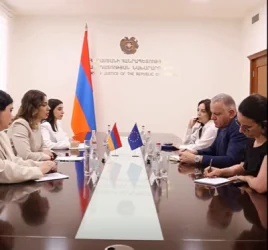
Gunfire Towards the Villages of Taghavard and Karmir Shuka Almost Every Day

From February 14 to 16, together with my counterpart from Artsakh, Human Rights Defender Gegham Stepanyan, we collected evidence regarding the rights of people in the Artsakh Republic's villages of Taghavard, Karmir Shuka, Aghavno, and Kharamor, following the 44-day war. This information was shared by Armenia's Human Rights Defender Arman Tatoyan on his Facebook page.
"Gunfire towards the villages of Taghavard and Karmir Shuka occurs almost every day. Just a few days ago, on February 11, Azerbaijani armed forces fired bursts of gunfire towards residential homes. Walls and roofs of houses were damaged. At the time of the shooting, there were children and women inside the houses. The windows of one house were shattered, and sleeping children were in the room at that moment. Azerbaijani armed servicemen are positioned just a few hundred meters away in front of these residential homes, placing the residents under complete surveillance. Their positions are on lands owned by the people—pastures, arable land, and hayfields. The local school in Taghavard is directly targeted by Azerbaijani military positions. Conversations with teachers and children revealed that gunfire is also directed at the school and is targeted," Tatoyan reported.
Additionally, residents mentioned that specific lights are fired from Azerbaijani positions or vehicles towards residential homes, including inside the houses, for the purpose of intimidating the residents. This often happens especially in the evenings and at night. During our stay in Artsakh, we personally witnessed the criminal acts of Azerbaijan. Specifically, on February 15, around 3:30 PM, Azerbaijani armed forces fired targeted shots at people engaged in agricultural work in the village of Kharamor in the Askeran region, which resulted in damage to a tractor. Yesterday, on February 16, between 10:00 AM and 11:00 AM, Kharamor residents were working in a vineyard located within the village territory when Azerbaijani armed servicemen approached and forced them to leave the vineyard. Most of those working were women.
In all communities, residents noted that whenever they try to approach their land for agricultural work, even those located just a few hundred meters away, Azerbaijani armed forces open fire, which is targeted. Such actions create serious social issues for the people. They are not allowed to earn an income for their families. It is evident that the lack of work during the seasonal period will lead to severe problems for the residents.
In the Aghavno community, residents are facing serious issues regarding drinking and irrigation water. Almost all residents reported seeing Azerbaijani armed servicemen throwing unnecessary organs of livestock they butcher into the water used by the village residents. This has caused cases of mass water poisoning in the village, affecting women, children, and the elderly. Moreover, due to Azerbaijani incursions, several villages in Armenia’s Gegharkunik province have also been deprived of access to water, posing a real threat to water security in various communities in Syunik.
It is clear that the Azerbaijani authorities are pursuing a criminal policy aimed at terrorizing peaceful residents and creating an atmosphere of despair, which has a systematic and targeted nature. In all areas where Azerbaijani armed servicemen are stationed, the safety of the people is disrupted, and lives are under real threat. Azerbaijani servicemen located adjacent to Armenian and Artsakh villages are doing everything possible to turn the lives of the peaceful population into impossibility, preventing recovery post-war: they fire at villages, obstruct agricultural work carried out by peaceful residents, steal livestock, and so on. All evidence proves that the criminal actions of Azerbaijani armed servicemen against peaceful residents are fundamentally the same in both Armenia and Artsakh, exhibiting aggressive manifestations in Artsakh.
It is evident to us that at the core of all this lies the ongoing policy of incitement and hostility propagated by the Azerbaijani authorities, which is directed jointly at both Armenia and Artsakh. As long as Azerbaijani authorities pursue this policy (and for them, this serves as a source of political life), the terroristic nature of their armed servicemen’s criminal actions will not cease. Therefore, the solution for protecting the peaceful population is that they should not be present near or along roads adjacent to Armenian villages, allowing civilians to exercise their rights uninterruptedly.
Նմանատիպ հոդվածներ
Ավելին Society բաժնից

ՀԷՑ-ի շուրջ նոր փուլ է սկսել կառավարությունը. ինչ է պլանավորել իշխանությունը. «Ժողովուրդ»

ԱԱԾ-ն անօդաչու թռչող սարք է գնել. «Ժողովուրդ»

ՏԵՍԱՆՅՈՒԹ. Ուժեղ կարկուտ է տեղացել Գյումրիում