Pashinyan-Aliev: What to Expect in Moscow - Tatul Hakobyan
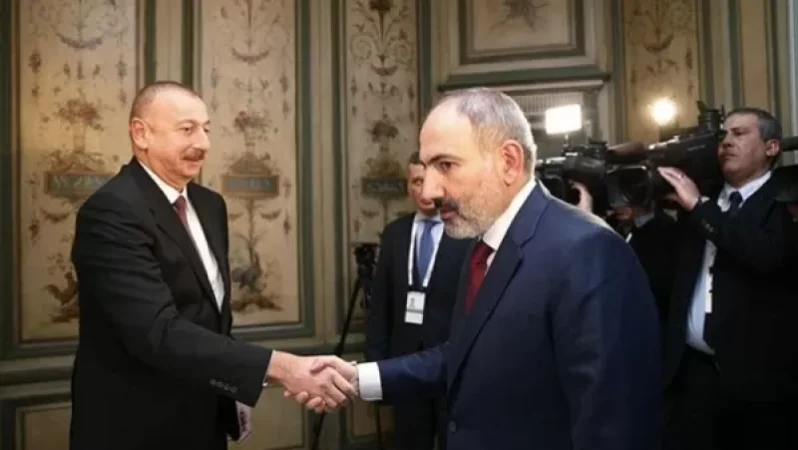
Columnist Tatul Hakobyan writes for "Aliq Media":
"My last column about the signing of two documents expected in Moscow in November received wide coverage and even caused some nervousness in certain circles. This is surprising, and once again, you realize that our people, along with our intellectual and political elite, do not want to accept the magnitude, depth, and consequences of the disaster that has occurred to us. A part of our population continues to live in the Armenia of September 26, 2020, the Armenia that no longer exists.
So what is surprising, remarkable, or aggravating? Do we not know that, with the mediation and participation of Moscow, meetings of the Deputy Prime Ministers of Armenia, Azerbaijan, and Russia are taking place, and that Vladimir Putin is negotiating and having phone conversations with Nikol Pashinyan and Ilham Aliyev? Do we not know that as a result of these negotiations, documents are being prepared, and do we not know that when you lose, you decide very little and are forced to bow your head to the dictates of the victors, as was the case a century ago in Batumi, Alexandrapol, and Kars?
Armenia and Azerbaijan are preparing to sign two new documents in Moscow, which have almost reached a final form unless unforeseen circumstances arise at the last moment. In diplomacy, there is a formulation: as long as everything is not agreed upon, nothing is agreed upon. There is still time to finalize the documents, and a situation may arise where, at the last moment, either side, in this case, Armenia, might attempt to derail the process. During the history of the Karabakh conflict, at least two similar cases are known: In 2001, it seemed the sides would sign the Key West or territorial exchange option under the OSCE Minsk Group, primarily under the American initiative, but Heydar Aliyev refused to accept the agreements. Ten years later, in 2011, his son, Ilham Aliyev, refused to sign the Kazan document, slammed the door behind him, and returned home to prepare for the April 2016 and then the September 2020 wars.
Regarding the Status of Karabakh
The first document negotiated in recent months pertains to the delimitation and demarcation of the Armenia-Azerbaijan state borders, recognizing each other's borders and territorial integrity. The disputed points of the negotiation process have revolved around the status of Karabakh, enclaves, and the maps used for the Armenia-Azerbaijan border demarcation. For Azerbaijan, as well as Turkey, there is no question of status; the Karabakh conflict has been resolved and is in the past. At best, Baku may agree to some form of cultural self-governance. If before the 44-day war Azerbaijan did not agree to a status for Karabakh outside Azerbaijan, after the victory on the battlefield and the November 9 declaration, it is natural that it would not agree to the highest degree of autonomy, something that has been offered for 25 years.
For Yerevan and Stepanakert, the formulation of Karabakh being part of Azerbaijan is unacceptable. For the Armenian side, the lesser evil today concerning the status issue is to leave it for the future, and if the signed document does not mention the status of Karabakh, even if Armenia and Azerbaijan recognize each other's borders and territorial integrity, and this is clearly written in black and white, it can be considered or presented as an achievement. The Armenian side will attempt to ensure that the status of Karabakh is left open.
It is also important for Russia that the status of Karabakh remains ambiguous. The moment the status is established, the Russian peacekeeping and military presence becomes redundant, which is what Azerbaijan and Turkey seek. Azerbaijan agreed to the presence of Russian forces when it gained not only the seven regions in the battlefield but also Shushi and Hadrut.
The West, particularly the United States and France as co-chairing states of the OSCE Minsk Group, value the status of Nagorno-Karabakh. In Armenia, whenever the word status is mentioned, regardless of who uses the term, it is interpreted as independence for Karabakh. In reality, there has never been and still isn’t an influential Western state that understood the term status as independence for Karabakh.
Surely, the West is concerned about the agreements between Moscow and Ankara to partition the Caucasus at the expense of Armenian interests. On the other hand, during the 44-day war, the West did almost nothing to lessen the pain of the Armenian defeat. It did not attempt to restrain the moves of its NATO ally Turkey, including the use of mercenaries from Syria and Libya.
Regarding the enclaves and controllable border areas, under Moscow's mediation, Yerevan and Baku are trying to find mutually acceptable options and formulations. The Artsvashen enclave has been under Azerbaijani control since August 1992, while the Upper Voskepar, Barkhudarlu-Sofulu, and Tigranashen enclaves have been under Armenian control since 1990-1991. Undoubtedly, for Russia, it is desirable to take on the responsibility of ensuring the security of the enclaves, if the parties agree to return to the Soviet-era borders, meaning that Armenia would receive Artsvashen while Azerbaijan would receive Upper Voskepar, Sofulu-Barkhudarlu, and Tigranashen. This would contradict Armenia’s vital interests as to pass from Ijevan to Noyemberyan and from there to Georgia/Russia, we would have to cross Azerbaijani territories at several points, just as is the situation today in the Goris-Kapan-Jacat section, and the Ijevan-Berd road would pass under Azerbaijani control at the section of Azatamut. The main road from Armenia to Syunik, Karabakh, and Iran would pass under Azerbaijani control at Tigranashen.
Azerbaijan, by returning Artsvashen to us, does not lose any routes, nor does it lose any strategic areas. Aside from the enclaves, there are also border areas that, as a result of the war, have passed from one side to the other. Thus, partially or fully under Armenian control are the Baghanis-Ayrum, Inner Voskepar, Kheyrimli, and Kyzyl-Hajili villages in the former Kazakh region. Under Azerbaijani control are lands from Tavush’s Barekamavan, Berkaber, Paravakar, and Chinari villages.
The History of Corridors
The mechanism of corridors in the resolution of the Karabakh conflict received documented formulation at Key West in 2001. According to it, proposals for territorial exchanges acceptable to the Armenian side were intended to have three corridors: 1. The Lachin corridor, which connected Artsakh to the Republic of Armenia, thus, in fact, becoming Armenian territory, as the document made Artsakh a sovereign part of Armenia. 2. The Megrin corridor, which would be given to Azerbaijan along the banks of the Arax River, having about 40 kilometers in length and 8 meters in width, would not become Azerbaijani property. However, at the same time, Azerbaijan would not be required to pay any fee to receive free access to this corridor from Armenia. Initially, a 40-kilometer elevated road connecting Azerbaijan and Nakhchivan was also discussed, but it was becoming excessively expensive. The proposal for an 8-meter wide road along the Arax River was made, which would turn into an elevated structure when it met residential areas in the Megrin region and then descend back to the ground. This minimized the likelihood of contact between Azerbaijanis and Mehri Armenians. The construction of viaducts near Armenian settlements, that is, raising the sovereign passage from the ground to the air, addressed another issue: the land connection between Armenia and Iran. Indeed, broadly, Armenia’s territory shrank by 8 meters, and in addition, Armenia lost the possibility of accessing the Arax River over an entire length of 40 kilometers, but on the other hand, Armenia could build more than one bridge in the section of the viaducts, which would connect Armenia and Iran, as happens today with a single bridge in the Norduz-Karchavane section constructed in 1995. 3. The corridor from Fizuli to Shushi: The issue of refugees and displaced persons has always been on the negotiating table. In the Key West version, the focus was particularly on the return of the Azerbaijani refugees to Shushi. The Armenian side did not fundamentally oppose this. However, the issue of not only ensuring their safety but also of how they would connect to Azerbaijan has become a serious topic for discussion. Here, the idea of a corridor assisted as well, intending to create an opportunity for Azerbaijanis to have free access to Azerbaijan. That corridor or road could be from Fizuli to Shushi (after the 44-day war, Azerbaijan is constructing this very road), from Aghdam to Shushi, or from Shushi to Lachin, then looping via the banks of the Hakar to Qubadli and the Arax Valley.
Will Pashinyan Resign?
In May 1994, Azerbaijan, defeated in the war, was compelled to agree to the Russian proposal for an indefinite ceasefire but did not sign any treaty as long as the seven regions were under Armenian control, and the status of Karabakh was disputed. Azerbaijan used the subsequent 25 years to build an army, arm itself, and achieve vengeance while making its plan a reality.
After the 44-day war and defeat, the Armenian authorities are rushing to open a new era of peace. The two documents negotiated under Moscow’s mediation may not be signed soon for two main reasons: the Armenian side refuses to sign them at the last moment, or Nikol Pashinyan resigns. Although slight positive changes have been made for the Armenian side in both documents, they are almost the same texts that caused an uproar in the Armenian sphere last May. Today, Armenia possesses neither resistance, nor capability, nor allies to enforce advantageous terms favoring Armenia in the negotiated documents through coercion or assistance.
On the other hand, Nikol Pashinyan will not resign because neither he desires it, nor will they allow him to leave at this moment. He must finish the job. He and his teammates will view this as the opening of a peace era; others will see it as the documented confirmation of our catastrophic defeat.
Could We Be Forced to Sign Even Worse Documents?
There is an unwritten rule in diplomacy, especially when you are weak and defeated: today you may reject the unacceptable, the document contradicting your interests, but tomorrow you may plead to again put yesterday’s document on the table. This has happened multiple times throughout our last 100 years of history. At the beginning of 1918, we didn’t even want to hear about Brest-Litovsk, but when the Turks reached Alexandrapol, we begged for the very Brest-Litovsk conditions. The Turks, however, refused and left us with an Armenia of 10,000 square kilometers. In 1920, we wanted 160,000 square kilometers with Sevres, but in weeks we lost half of Eastern Armenia—Kars and Surmalu—and the Kemalist Turks also seized the then largest settlement of Armenia—Alexandrapol and the Shirak plain. After the indefinite ceasefire of 1994, we had the opportunity to hold onto half of Karabakh’s area of 12,000 square kilometers, albeit without establishing a status; however, the forces eager for power promised an independent Karabakh of 8,000 square kilometers, accused the ruling authorities of defeatism, and executed a military coup.
Ultimately, we lost three-fourths of Karabakh, and today only 3,000 square kilometers remain—the very same, without a status, depressed and weak, whose security is ensured by Russian peacekeepers.
Նմանատիպ հոդվածներ


Ավելին Society բաժնից
Հայաստանի մասին նոր զեկույց․ ուշագրավ մանրամասներ
Մայր Աթոռ Սուրբ Էջմիածինը հայտարարություն է տարածել

Հորդառատ անձրևները կվերսկսվեն. հնարավոր է նաև կարկուտ, քամու ուժգնացում