I Regret Leaving the Village So Much; We Would Have Known We Were Dead Instead of This Slow Death – A Resident of Aygek Village
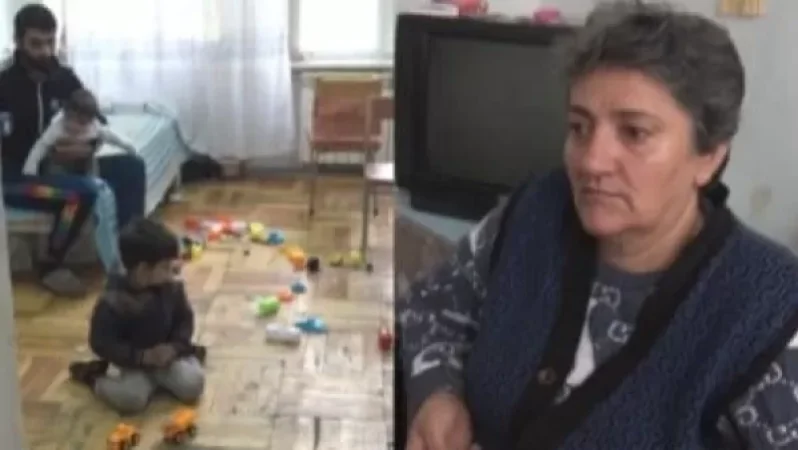
Tikhin Alisa has been living with her disabled son in a room at the Kotayk Regional Educational and Psychological Support Center for a year, which is set to be vacated in four days. On the first day of the war, residents of Aygek village in the Kashatagh region were given 20 minutes to evacuate. Alisa managed to grab only her documents and leave. This was reported by news.am.
“I regret leaving the village so much, we would have been better off staying there. The Turks would have killed us, at least we would have known we were dead, not going through this slow death,” Alisa cries, as her other son is currently serving in the army and worries about where the family will go. “That boy is now in the trenches, he is anxious and wonders where we will live. In this situation, how can he hold the line? Do you understand the hopeless state we are in? I’m not insisting that we have to live in this building; what’s important for us is to have a place to stay,” notes Alisa Hovsepyan.
The administration of the center has repeatedly requested that residents vacate the building. Some have left, but 24 families still reside here. The behavior of the Kotayk Regional Educational and Psychological Support Center director, Tatevik Shirinyan, has deeply offended many from Artsakh. “She justified it, saying we are dirty, we are pigs, this and that, but people cannot be continuously discredited. I have lived in Aygek for 25 years; it was no different from the frontline. You should see my child’s condition when he hears a blast even now. Now they are throwing us out; where should I go?” asks the 60-year-old woman through tears.
“First, they forced us to leave what we had built up over the years to the enemy, and now they are stripping us of these four walls,” say the residents of Artsakh, noting that they have nowhere to go. “Houses start at 100,000-120,000 drams, and on top of that, they want two months' rent in advance. If I receive 47,000 drams as assistance and an orphan's pension, where am I supposed to get that money, or if the state gives 68,000 drams, what are we supposed to eat? Are we supposed to breathe air only?” says Tikhin Alisa.
A few doors down lives 67-year-old Anahit, who lives alone. She has heart and lung issues and has been on a respirator for nearly 10 days. Her neighbors care for her. “I don’t know what to do, I probably have to go to the yard again. I have no place to go, and I can’t go anywhere. What, should I hang on the residents’ necks and ask them to take me too? They can’t even manage themselves; they are surviving by the skin of their teeth. Which relative’s house can I go to, that they would say, ‘yes, come and stay with us, you have a place here’? No one would say that,” says Anahit Yeghoryan, who was displaced from Berdzor on the first day of the war.
Three-year-old Max lives in the center with his parents for about 11 months. His mother, Inessa, asks how it is possible to give just five days to leave a home as winter approaches. “You can’t come and impose a five-day deadline when my husband was injured in the war and can’t support the family; all of this is on my shoulders,” says Inessa Hovhannisyan.
The family’s father, Vano, worked for a while after moving to Armenia, but now his varicose veins have worsened, and he can no longer perform physical work. Inessa has to leave three-year-old Max and five-month-old Mark under her husband’s and neighbors’ care and take on various jobs.
The center's director refused to comment, emphasizing that the issue lies within the domain of the Ministry of Labor and Social Affairs. The ministry clarified that the number of students in the educational and psychological support center has increased, hence the building needs to be vacated for children to attend school. Currently, there is no accommodation program to address the housing needs of Artsakh residents; instead, the ministry has initiated a four-month program wherein from September to December, residents of Artsakh will receive 50,000 drams in cash.
“All those Artsakh residents who were previously our beneficiaries can apply and receive that amount. If there is a need for renting a house, then that amount can cover rental expenses,” notes Zara Manucharyan, spokesperson for the Minister of Labor and Social Affairs.
“With 50,000 drams, can anyone in Armenia find even a chicken coop to house their family? Naturally not,” Vano Grigoryan, the father of two young children, responds. Residents of Artsakh have not yet been able to submit applications for the program, as they must wait for the ministry to announce deadlines. It is expected that they will not receive this money until late October, yet the director demands they vacate in five days.
“All those currently facing housing problems, we direct them to apply to the regional centers of the Unified Social Service. We will attempt to match supply and demand, as there are benefactors and organizations that can provide accommodation. We will try to find solutions for their issues that way,” says the spokesperson for the Minister of Labor and Social Affairs. There is also an option to apply to the Unified Social Service and the non-governmental organization “Mission Armenia” to receive 68,000 drams monthly for four months for renting a home, but this is also not accessible to all residents of Artsakh, as a needs assessment must first be conducted.
Նմանատիպ հոդվածներ
Today, an Artsakh resident was shot dead by a sniper in a pomegranate orchard. Tatoyan provides details
Access to Leisure Venues Prohibited Without Vaccination or Testing, Minister Says
David Tonoyan Arrested on Suspicion of Large-Scale Embezzlement: NSS
Opponent Provokes in the Gegharkunik Direction, Casualty Reported
Ավելին Society բաժնից
Հրդեհը կանխել են. մանրամասներ
Մահացել է գերությունից վերադարձած Կարլեն Ստեփանյանը
Քաղաքացի է որոնվում