Azerbaijani Airplane in Armenian Skies: 'HETQ' on Today's Topic
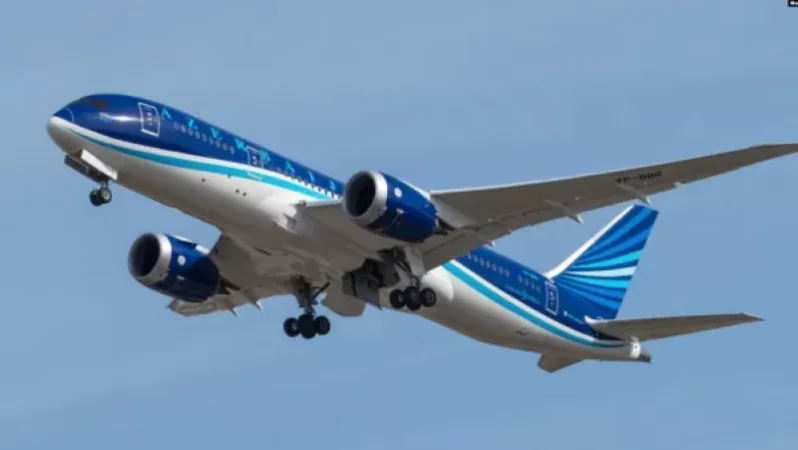
For the first time since 2014, an Azerbaijani airplane has flown over Armenian airspace. In the context of a 30-year conflict and a war that lasted 44 days just a year ago, this is, perhaps, the news of the day. The last time Azerbaijani aircraft used Armenian airspace was seven years ago, reports HETQ.
“And today, as tensions rise between Azerbaijan and Iran, and Tehran has informed Baku that it prohibits Azerbaijani military flights over its territory, Azerbaijan’s national carrier ‘AZAL’ has conducted a flight from Baku to Nakhchivan and back over our airspace. There is no official information indicating that Iran has also prohibited the entry of Azerbaijani civilian aircraft into its territory, which would make it understandable why they would need to use Armenian airspace, but according to the Russian news agency ‘TASS,’ such information has been circulated on social media. This means that if true, Iranian airspace is closed to all types of Azerbaijani aircraft, and Azerbaijan is now able to maintain a connection with the blockaded Nakhchivan through Armenian airspace (despite the fact that Nakhchivan has a narrow land border with Turkey, there is no air route in that direction).
It is not new that Turkish aircraft fly to Nakhchivan through Armenian territory, nor is it new that Turkish carriers conduct domestic flights from Nakhchivan to Ganja through our skies. However, the flight of an Azerbaijani carrier in the current regional tense situation is a significant surprise.
Officially, Armenian airspace is not closed to either Turkish or Azerbaijani aircraft. However, in August, HETQ reported that Turkey has been prohibiting Armenian-registered aircraft from entering its airspace since September 2020, although it does so without justification and formal notification. Conversely, Armenia has not closed its airspace to Turkish aircraft. The Civil Aviation Committee of Armenia has clarified this by stating that international legal requirements, specifically Article 9(b) of the Chicago Convention on International Civil Aviation, prohibit ICAO member states from applying discriminatory practices regarding the use of their airspace. Thus, Turkey is applying this discrimination, while Armenia remains loyal to Turkish carriers.
Regarding Armenian-Azerbaijani air connections, the CAA informed us that Azerbaijani-registered aircraft have not entered Armenian airspace since 2014, and Armenian aircraft do not use Azerbaijani airspace because there is no demand for flights in that direction (to the east).
The Armenian aviation sector is in such a state that currently, only two airlines operate flights: one to Georgia and Russia, and the other to Iran. Given that our carriers have been on the EU's ‘blacklist’ since 2020 and do not have the right to fly into EU airspace, the Turkish airspace, which serves as a transit route to Europe, currently has no demand from our carriers. However, when the European ban is lifted, and Turkey continues to arbitrarily deny access to our aircraft without justification, a significant problem will arise, as Armenian airlines will have to circumvent Turkish territory from the north or south, which will significantly increase costs, and for ordinary passengers, ticket prices.
It is also interesting what will happen when our carriers wish to fly to Central Asia, for example, through Azerbaijani territory. Will permission be granted?
According to ‘TASS,’ Azerbaijani ‘AZAL’ has announced that it has started using Armenian airspace for its Baku-Nakhchivan-Baku flights. ‘This step demonstrates Azerbaijan’s determined willingness to unblock transport communications in the region, benefiting all neighboring countries,’ stated ‘AZAL.’
The statement from the Azerbaijani carrier is, to put it mildly, absurd, as they are the ones benefiting from the communication that Armenia has opened, not the Armenian carrier flying over Azerbaijani airspace. So if we are to speak of determined willingness, then it is the Armenian authorities who were the first to open (though theoretically, it wasn’t closed) the skies for Azerbaijan. This is a clear example of how Azerbaijanis spread primitive fabrications about their 'fraternal relations.'
As for Armenia, it remains difficult to understand what this step by the Pashinyan government will yield for us. We emphasize the name of the government because without the agreement of high-ranking officials, the CAA would not have allowed the Azerbaijani side to conduct flights over our skies, regardless of any absence of restrictions. Perhaps the same applies to not closing the airspace to Turkish aircraft.
Interestingly, ‘AZAL’ has stated that it can use both Armenian and Iranian territories for the Baku-Nakhchivan-Baku flight, which suggests that Iranian airspace is open to Azerbaijani civil aviation. Nevertheless, the shortest route from Baku to Nakhchivan is indeed through our airspace, which the national carrier of Azerbaijan has stated will reduce flight time and fuel consumption.
If we speak of financial benefits, Armenia also stands to benefit as it will charge ‘AZAL’ for using our airspace, utilizing our aeronautical services based on the distance traveled. However, this is likely incomparable to the economic and especially political benefits that Azerbaijan will receive starting today. Ultimately, utilizing the short route for the daily Baku-Nakhchivan-Baku flight cannot be compared to the theoretical possibility of flying from Armenia to Azerbaijan over some country.
The Baku-Nakhchivan-Baku flight today was operated by ‘AZAL's’ Airbus A320, which crossed the Armenian border at the Chambarak-Sotk section, passed over Lake Sevan, Martuni, and the Khosrov Reserve, and then entered Nakhchivan territory at the Zangakatun area.
The reader may wonder why the airplane flew this way and not over the Meghri area, which seems to be the shortest. The fact is that both on land and in the air, there are clear air routes that airplanes must follow. Moreover, there is also a shorter air route over Sotk-Vardenis-Vayots Dzor-Nakhchivan. Perhaps later, the Azerbaijani side will use this route.
Նմանատիպ հոդվածներ



Ավելին Society բաժնից
Հրդեհը կանխել են. մանրամասներ

Մահացել է գերությունից վերադարձած Կարլեն Ստեփանյանը

Քաղաքացի է որոնվում