My son and his friends died bleeding because they were abandoned
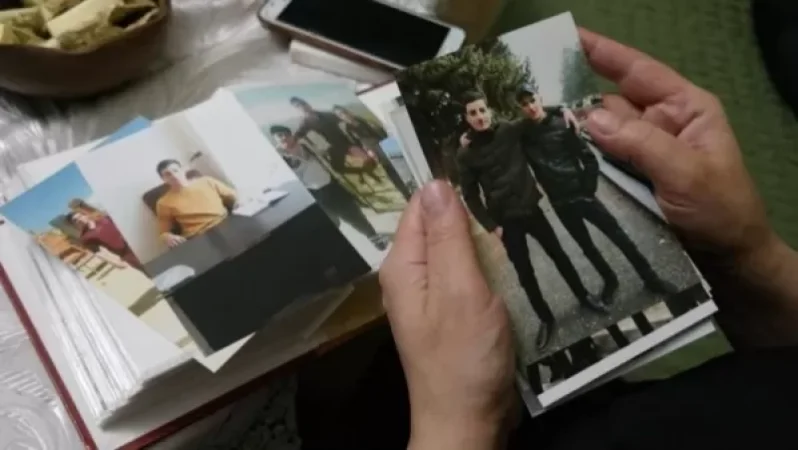
Everyone talks about the real victims of the war, but we often forget about us, the living, thinking victims. What kind of life has this been, dear girl? This is not life for us, so much so that yes, we are surviving,” sighs the elderly woman's voice, her cheeks etched deeper with wrinkles from the effort to hold back tears. She turns to the two large photos of her grandson, 18-year-old Evvard Gevorgyan, who was killed in the 44-day war over Artsakh.
“I was Evvard's first teacher,” she continues, pride swelling in her voice, “he was a very intelligent boy. He didn’t want to go to kindergarten. At five years old, one day in September, he came to school with me and stayed on as a student. He decided that he was a student from then on, and seeing how smart he was, the principal made it official.”
The grandmother sighs again. She understands that a war does not happen without casualties, but her 18-year-old grandson, like many others of that age, should not have been at the frontlines nor should he have perished. “Evvard was in a hurry to live,” notes Evvard's father, painter and potter Vazgen Gevorgyan. “He was more mature at a young age than many adults; he was very mature.”
On Vazgen's lap is one-year-old Hovhannes. The little boy, with his babbling, is trying to communicate with his father, reaching for a plate of fruit on the table. Vazgen shares a piece of apricot and tries to feed the boy cautiously. “If he wasn’t here, I don’t know what our situation would have been like—the whole day we focus on him,” says the grandmother.
The little one was born a week before his brother was conscripted into the army on July 9 (he turns one today). Evvard's mother, Satenik, does not participate in the conversation. I also try not to ask questions. She cannot come to terms with her son's absence.
“I don’t believe that Evvard is gone; he will come back,” Satenik emphasizes, “I wish that by the time your article is ready, it turns out that everything is a lie and he comes back.”
Evvard was called up for service on July 16, 2020. During the draft, the place of service chosen was Mekhakavan (Jabrayil). His father remembers that for almost six months before going into service, the boy listened to the song “13 Eagles, Jabrayil,” dedicated to the memory of Gurgen’s Lieutenant Colonel Aleksan Arakelyan and 12 soldiers who perished during the April War.
“He liked the song, and I remember he kept listening to it. When he drew Jabrayil during the draft, we weren’t surprised at all. He spent a month quarantined at Martuni 2, then was transferred,” Vazgen recounts. “In the two months of his service, he had made a name for himself in the unit. Everyone knew him as someone who sang very well; he even managed to organize a small concert.”
Evvard wanted to become a singer. The older son of a painter chose to convey art through song rather than canvases. His passion was folk music. Mrs. Kiman says that her grandson's abilities became apparent when he performed Komitas’s “Crane” at a school event at the age of ten.
“Initially, Evvard's talent was revealed at a school performance; then he studied at the Tigranyan Music School in the kamancha department, at the Kara Murza Music College in vocal, and before entering the army, he was accepted into the Department of Folk Songs at the Conservatory,” Mrs. Kiman recalls. “He had a great future ahead of him; it’s a pity everything was left unfinished. The Conservatory had high hopes for my grandson.”
Joining the conversation is the grandfather, Evvard Gevorgyan Sr. He recalls his grandson's initial steps in farming. “He was still small when he built a chicken coop in the yard, then decided to raise rabbits, making calculations on how to generate income from them. But then he gave it up, realizing it wasn’t for him. Before going into the army, he was making tennis tables; he had even sold one. He wanted to try everything to figure out what suited him,” says grandfather Evvard.
After the draft, the relatives did not see Evvard due to the pandemic, which prevented contact; they didn’t even attend the swearing-in ceremony. They relied on phone calls, and occasionally video chats, to alleviate their longing for him. The day before the war, Evvard called his father, saying he might not be able to call for a month or two, as they were collecting phones.
“He didn’t mention the word war; he only said not to worry if there was no contact for a long time. During the war, we talked almost every day—most of the time he was the one calling. He had lied that they were in a bunker, but I later found out they were at the front, in the hottest areas of Jabrayil,” Vazgen sighs. “He wouldn’t say anything to prevent us from worrying; we thought they wouldn’t place inexperienced newcomers into significant military operations.”
Vazgen has spoken with Evvard's comrades, who said that they didn’t see any Turks for the first seven days; they were just hiding from bombings and drones, and then they were thrown into battle.
“On October 7, they brought large vehicles to transport soldiers to Hadrut. Evvard started to persuade the boys, saying don’t get in, let’s go on foot. Those who listened survived; those who got into the vehicles were bombed by the enemy. This has been shared with me by the saved boys. After that, the kids were moved to Hadrut and stayed for a couple of days in a local school. Only a group of 20-25 people were involved in fighting, supposedly not letting Hadrut fall, which was then in the outskirts of the city,” Vazgen recounts. “I spoke with the head of Hadrut, Kamo. The reality was that the kids were taken to a place that the Turks had already occupied. The villages of Sarishen and others above it were no longer ours. This inexperienced kid was divided into thirty-strong squads, directed upstairs, and told that only five Turkish special forces were there; neutralize them! The kids climbed up, and the positioned enemy killed and wounded everyone, with about 50 people saved; there was no proper leadership, only sergeant-level personnel.”
The last call from Evvard was on October 10, the day of the disastrous attack. Vazgen remembers that it was 17:40; he was driving to Yerevan. He was glad to receive the call, while also feeling uneasy, urging the boy not to call again to avoid GPS tracking. Evvard didn’t say anything to his father about being wounded or any unsuccessful military operations. That day he spoke to all his relatives, but his mother was worried about her son’s frequent use of the word “jan.” She even conveyed her worries to Vazgen, wondering what might have happened as Evvard spoke so warmly.
Vazgen expresses that it was as if Evvard was saying goodbye, holding little hope they would survive.
When hidden with four wounded friends in a ravine outside the village of Vank, Evvard alerted friends and his mother’s brother-in-law, asking for help. “Then a friend called and said, ‘Vazgen jya, Evvard is wounded, the kids are bleeding and there’s no one to help them.’ I contacted the deputies, urging them to find a way to send help before I could reach Hadrut. Later I learned that the kids had also contacted the military commission; the military commission reached out to the Artsakh defense ministry, convincing them help would be sent. But it never came. They relaxed me, saying special forces would go to extract the kids, but there was not even an ant’s worth of help. On the 13th, I arrived at Karmir Shuka. A friend of mine, Hakob Khalatyan, came with me; a local resident from a nearby village told us, ‘Vazgen jya, it’s impossible to go where you mentioned; the Turks occupy that area. Until we clear them out, we cannot get close. But during that same time, I would hear officials saying, ‘Yes, we have gone; the kids have been extracted; they are in the hospitals.’”
On October 13, the fighting intensified, and they asked Vazgen to return. He went to Stepanakert and Ivanian (Khojalu), checking all the hospitals. Then he returned to Yerevan and spent two days searching for his son in the capital’s medical facilities, continuously checking the updating lists of the fallen. “Now it’s clear that absolutely nothing was done. They essentially left the kids defenseless to bleed out and die. They all need to answer, from the commanders down to the other responsible parties,” Vazgen asserts.
On December 29, to see one of the six captives who returned from Baku, Vazgen went to the village of Yervandashat in the Armavir region. The boy said he saw how the enemy took the injured boys captive in the ravine and insisted that Evvard was among them.
“There had been cases where documents were mixed up; we thought it might be true, especially since the deceased was described as being 1.53 m tall, while my son was 1.90. Apart from that, it didn't mention any injuries on the arms or legs. In mid-February, I grew curious since I had submitted my DNA; they told me it was similar but asked for my wife’s sample as well.”
The results of the analysis dragged on for almost three months. On June 11, Vazgen decided to personally go to the Goris morgue to confirm that the body found with the documents did not belong to his son. However, reality had a different surprise in store. “I asked the morgue director if we could go in and take a look. Inside, there were three bodies preserved under ideal refrigeration conditions; the others were remains in 50 bags. I said I needed to see because I had doubts. I immediately recognized my son. Additionally, we verified the dental records as he had three fillings before entering the army. I came back to Yerevan and went to Heratsi hospital, telling them that this child is ours; arrange for us to bring him to Yerevan. They replied that they were uninterested in what should be done, especially since they hadn’t done anything for so long,”
Evvard Gevorgyan was buried on June 13 in the Shirak Military Pantheon. Vazgen's other children, 17-year-old Edgar and 10-year-old Milena, do not speak about their brother’s absence. Vazgen shares that the daughter stayed at their uncle’s house for a week until all the ceremonies were over, refusing to return home, subconsciously rejecting her older brother's absence. Only little Hovhannes, unaware of the grief, fills the void in the family with his childish joy.
“Hovhannes was born on July 9, 2020, Evvard was taken to the army on July 16; so he had only seven days to enjoy his brother's presence. Though he didn’t hug him or love him in the way that he would have later, nonetheless, after being in the army for just a month, he told a friend he regretted not having loved his little brother more, that he hadn’t hugged him much and now he misses him greatly,” Vazgen hands the little one back to Satenik and continues, “If only he knew how much we miss him. When you think that if help had reached on time, your child would be next to you, if they hadn’t abandoned him, Evvard would be alive now, when you think... all the guilty parties for these atrocities, the innocent victims must pay.”
Նմանատիպ հոդվածներ
The Beating Lasted for Four Days, Every Two Hours Like on a Schedule: BBC Speaks with Returned Service Members
Group of 15 Armenian Prisoners of War Set to Return
The Plane Transporting Prisoners of War Arrived in Yerevan from Baku
They Are Not Related: The Wife of the Vet from Isahakyan Village on the Cause of Her Husband's Death
Ավելին Society բաժնից
ԵՊՀ-ից դեկան է ազատվել աշխատանքից

Տվյալ ճանապարհահատվածում վերագործարկվել է լուսանկարահանող տեխնիկական միջոցը

Նոր պահանջներ՝ բենզալցակայանների համար․ ՆԳՆ-ի կոշտ նախազգուշացումը