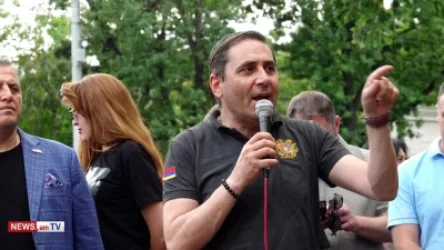
My Second Birth: Maral Najaryan

On March 10, 2021, 49-year-old Maral Najaryan, a mother of two from Lebanon, was released from a prison in Baku, where she had been illegally held by Azerbaijani authorities for four months, reports Armenpress.
In the summer of 2020, following the explosion in Beirut, dreaming of resuming a peaceful life in her homeland, Maral Najaryan moved to Armenia with her sister Ani on August 24, and then to Artsakh in mid-September under the resettlement program for the Armenian diaspora in Artsakh. Just one day before the war, the sisters had barely settled in a hotel in Berdzor when the area also began to be bombarded by enemy forces. They were forced to leave their suitcases behind and again evacuate, finding refuge in Yerevan.
After the ceasefire in November, the sisters decided that Maral would go to Artsakh in the car of Vigen Euljhekyan to retrieve their modest belongings. As Vigen's suitcases had been left in a hotel in Shushi, on November 10, he and Maral set off from Berdzor toward Shushi. Just before reaching the fortress city, they were stopped by two Azerbaijani soldiers and taken captive along with dozens of other Armenians. This was only part of the widely known tragic events surrounding this incident.
However, before the New Year, aside from Maral's immediate family, no one had heard of Maral Najaryan or seen her innocent smiling photo. Maral's sister, Ani Najaryan, in Yerevan, and her remaining family in Beirut were trying to figure out whom to turn to for help. Meanwhile, after January, interest and concern for Maral's fate multiplied thanks to public speeches from relatives and friends, as well as through a modest initiative that began an international petition (which amassed over 17,000 signatures), unexpectedly making Maral widely known among Armenians around the world.
From Russia to England, Canada, and the USA, the European Parliament, the Red Cross, international human rights organizations, and Armenian and foreign political figures and activists joined the campaign for Maral's release. The intervention of the Lebanese government was crucial to her liberation, with the most notable evidence being Maral's invitation to meet the President of Lebanon, Michel Aoun, just a few days after her release. It was also reported that Armenian President Armen Sarkissian had congratulated Maral by phone.
In our interview on March 11, Lebanese Armenian MP and leader of the Lebanese Tashnag Party, Mr. Hagop Bagratuni, informed me, “It was my sacred duty to work for Maral's release. Naturally, as a member of the Lebanese Parliament, I had the opportunity to address this issue using the official levers of Lebanon. Therefore, I must mention that our Minister of Foreign Affairs, as well as Lebanon’s ambassadors in Tehran, Moscow, and Baku, made their direct contributions. Our foreign ministry worked tirelessly every day with the Central Office of the International Red Cross and the Lebanese branch to ensure Maral returned safe and sound.”
After seeing videos from previous months of Armenian prisoners of war being returned, it was a great comfort to see Maral in relatively good condition upon her emotionally charged arrival at Beirut airport, where her tears were those of joy from a person who had overcome four months of ordeal. The fight for Maral's release was endless for her family and all those who worked tirelessly for her liberation day.
One week after returning to Beirut, I spoke with Maral again, now calm and happy, with her charming voice and Mona Lisa smile. I share our intimate conversation with the Armenian readers to provide a real and direct insight into the extraordinary and harsh fate of this simple and refined diasporan Armenian woman.
— Maral, I am so happy to speak with you today, relaxed and smiling. How is life since March 10?
— March 10 has been a very important day in my life, as it was the day I received my freedom. It was a very, very joyful day that I did not expect. My family, my children, and my loved ones surrounded me with their warm blankets and kisses. That day was very joyful for me. After going from the airport, I went to my mother's house, where many guests came to visit me – our party members, journalists. After that, I had to stay in the hospital for a day, where I underwent detailed examinations, thanks to our local Tashnag club, its administrative members, and especially Mr. Hagop Bagratuni. Fortunately, the results were mostly positive—there are some minor issues, but they are not critical overall, so I was able to leave the hospital healthy.
My children took me to the village on weekends so I could rest. There, I was surrounded by my family and in a joyful atmosphere. Now I have finally returned to my home and am spending time with my children, loved ones, and neighbors.
— I am very glad to hear that you are in good physical condition. However, I am sure it will take some time to recover psychologically after your trauma. Are you ready to feel like returning to work at your beauty salon?
— Of course, it takes time for me to return to my daily life. Psychologically, I cannot say that I am very well or very bad. I am in the middle. It’s impossible to forget all of it, but I have put all those memories in a “memory box.” Sometimes I think about those terrible months, but I try to put those negative thoughts back in the “box.”
— You are one of seven siblings and have a large family. Who have you missed the most in the past six months?
— Undoubtedly my two children and my mother! My mother’s condition was very concerning when I arrived in Beirut, but the next day she told me that all her pain had vanished.
— Your release from the Baku prison was a great surprise for your family. Your sister was only called on March 10. When were you informed that you were to be released?
— A few days before, I was informed, but I feel there was a waiting list; that’s probably why my release was delayed a few days from Sunday. Finally, on Wednesday, when the prison guard knocked on my cell door at 5 in the morning, I couldn’t believe I was really going to leave. I was so happy to wake up to such news!
— How were you transferred from Baku prison to the airport? Was the International Red Cross involved in that transfer?
— Two soldiers accompanied me to the airport. When we arrived, a Red Cross representative accompanied me to the door of the airplane, but they did not go into the plane; I went in alone. I had a bouquet of flowers that they gave me in prison for March 8, and a bag containing the jacket they had given me. They gave me my freedom and a bouquet of roses that I wanted to take with me.
— Your release seems like a miracle to all of us, especially since the Azerbaijani authorities have consistently stated that all those taken captive after the November 9 ceasefire are considered terrorists according to their laws and will be prosecuted. You and Vigen were taken captive on November 10. What do you think about the fate of Vigen and the other Armenian prisoners of war still in Azerbaijan?
— I would say that nothing is impossible. We must pray that they are released and can return to their families, parents, and children. I thought my liberation was impossible, but it became possible, so it may be that others will be freed as well. Nothing is impossible for God. The miracle that happened to me can also happen to them; I hope so.
— How were you treated during your months in captivity? Were there any changes during that time?
— For me, the months of November and December were particularly harsh. I was unwell, and they dealt roughly with me, but they did not harm me at all. They talked roughly and slammed doors, but later I realized that this was customary behavior towards all prisoners, even their own detainees. When they understood that I held no ill will against them—that I was an ordinary citizen—after January, their treatment changed dramatically. For example, when I needed medication, they provided it immediately.
— When was the last time you spoke with Vigen?
— That was on my birthday, November 18. We were still being held in a military camp, not in prison. The commander ordered the guard to bring Vigen in. We spoke for a few minutes, after which they took him away, and I returned to my cell. The next day, we were moved to a different prison, but I did not see him during the transfer.
— What do you say about the accusations against Vigen, claiming he is a terrorist?
— If he were a terrorist, he wouldn’t have gone to Artsakh without weapons, without anything. These accusations are completely false. He volunteered at the beginning of the war. He was a volunteer, and that’s it. But a few days later, he returned to Yerevan.
— Do you remember exactly where you were arrested?
— We thought that if Shushi had surrendered, why didn’t the Armenian side put up a road sign or position to warn its citizens not to enter Shushi? The road was open, and we were following news on social media constantly, so we thought that the news about Shushi surrendering was wrong. Just before entering Shushi, Azerbaijani soldiers had taken positions, and that is where they stopped us.
— Why were you going to Shushi on November 10?
— When the war began, Vigen was staying at the Shushi hotel, right behind the Ghazanchetsots Church. He was waiting to soon move to his new apartment in Shushi. He left three suitcases in the hotel during the war and moved to Yerevan until the end of the war. Once the ceasefire was declared, we decided to drive back to Artsakh to collect our and my sister’s items from our hotel in Berdzor and then go to Shushi to pick up Vigen’s suitcases from his hotel.
— Maral, what are your thoughts about the future?
— Right now, I feel that I have been reborn. God has given me a new life. Just as what happened to me, I hope all the other prisoners of war will be released soon.
Maral Najaryan’s unexpected yet long-awaited liberation prompted me to ask a question that I directed to Syuranuys Sahakyan, the human rights advocate for Armenian prisoners of war at the European Parliament. I wanted to understand whether the advocacy actions by the diaspora for illegally detained prisoners of war in Azerbaijan, the publication of the prisoners' identities, could prevent violence against them, the physical and psychological persecution known to all international organizations, and whether such publications and actions could speed up their release.
According to the human rights defender, it is becoming increasingly clear that publishing names on various platforms, such as letters addressed to international organizations, Armenian diaspora and international media platforms, including the actual data of prisoners of war, undoubtedly increases moral pressure on the Azerbaijani government, and therefore will have an impact on expediting the process.
Undoubtedly, a range of states, organizations, politicians, and individuals intervened for Maral's release. However, our conversations made it clearer to me that most of all, Maral herself helped with her pacifist nature and patient character: “If I did not have this calm and balanced nature, I would not have been able to endure this ordeal,” replied this delicate-looking Armenian woman with immense willpower.
Then I suddenly recalled that in an interview with the Lebanese Armenian press, Maral confessed that during her captivity, having spotted a sharp razor left in the prison bathroom either intentionally or by accident, she had contemplated suicide several times, but remembering her children, she promptly threw it away and pulled herself together.
Strong with a gentle voice and Mona Lisa’s enigmatic smile, Maral is as resilient and steadfast as the Armenian nation. Mr. Hagop Bagratuni succinctly summarized Maral’s portrayal during his visit the day after her arrival in Beirut: “You went to Artsakh as a simple Maral, and returned as a hero Maral. You are an unwavering symbol of our fight, the indomitable spirit of our nation.”
Նմանատիպ հոդվածներ
Ավելին Society բաժնից
Մոսկվայի «Армения» խանութ-ռեստորանը կփակվի. նրա տեղում կբացվի «Вкусвилл»
Ընդդիմությունը պատրաստ է ցանկացած զարգացման և արժանի հակահարվածի. Լևոն Քոչարյան
Փոխվարչապետ Մհեր Գրիգորյանն ու ՏԿԵ նախարար Դավիթ Խուդաթյանն այցելել են ՀԱԷԿ