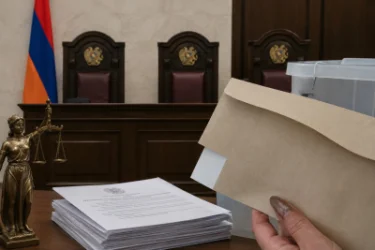
Aliyev Has Presented Distorted Claims Regarding Reality, Informed Citizens' Union

The Informed Citizens' Union has outlined the facts that Azerbaijani President Ilham Aliyev distorted in Munich. The "Fact-Checking Platform" has decided to verify several other statements made by Aliyev to ascertain whether they align with reality.
During a panel discussion on February 15 in Munich regarding the Nagorno-Karabakh issue, Ilham Aliyev claimed that due to Armenia's aggression, 20 percent of Azerbaijan's territory is supposedly under occupation. Aliyev specifically stated, "At the beginning of the 1990s, Armenia started aggression against the Republic of Azerbaijan, as a result of which 20 percent of our territory is today under occupation, and one million Azerbaijanis became refugees and internally displaced persons."
Azerbaijani officials frequently promote the thesis that Armenia has allegedly occupied 20 percent of their state territory. The territory of Soviet Azerbaijan (including Nagorno-Karabakh) comprised 86,600 square kilometers. The total area of the Republic of Artsakh is 11,500 square kilometers. A simple calculation shows that the territory under Armenian control is not 20 percent of Soviet Azerbaijan's territory, but rather only 13.3 percent.
Moreover, British journalist and author Thomas de Waal has also written about the territories currently de facto controlled by Armenian forces in his book "Black Garden: Armenia and Azerbaijan Through Peace and War." On pages 285-296, he noted that the idea of 20 percent was first advanced by former Azerbaijani President Heydar Aliyev. Azerbaijanis, not wanting to contradict their president, have continued to repeat that Armenians have "occupied" 20 percent of Azerbaijan's territory. After meticulously calculating the former Nagorno-Karabakh Autonomous Oblast areas and all regions that currently constitute the Republic of Artsakh, and acknowledging that his calculations may have slight inaccuracies, Thomas de Waal stated, "Armenian forces control an area of 11,797 square kilometers, which was previously part of Azerbaijani territory. Azerbaijan's total area is 86,600 square kilometers. Thus, the occupied region constitutes 13.62 percent of Azerbaijan, a significant figure but not as much as President Aliyev claims."
In fact, Ilham Aliyev's assertion that 20 percent of Azerbaijan's territory is under "occupation" due to Armenia's aggression is incorrect.
Aliyev also stated during the same discussion that several states recognize the independence of Artsakh: "More than 10 states have recognized Nagorno-Karabakh as an independent state," he said. Later in his remarks, Aliyev contradicted his own statement by asserting that Artsakh is not a recognized state: "...no one recognizes this illegal entity (Nagorno-Karabakh - ed.)." The website of the Ministry of Foreign Affairs of the Republic of Artsakh lists names of entities that have recognized Artsakh as a separate state. According to the MFA's website, resolutions have been adopted by eight U.S. states, one Australian state, and the parliament of the Basque Country in support of the right to self-determination of the people of the Republic of Nagorno-Karabakh. However, it has not been officially recognized by any state.
Interestingly, Aliyev expressed this thought immediately after discussing the events of Khojaly. It is known that the events of February 1992 were classified as genocide by ten countries, according to Azerbaijani sources. Presumably, Aliyev made a slip of the tongue.
Moreover, the Azerbaijani president claimed that the Nagorno-Karabakh conflict has two sides: "There is no Nagorno-Karabakh army. There is no Nagorno-Karabakh Republic. The conflict only has two sides - Armenia and Azerbaijan. Ask the co-chairs of the OSCE Minsk Group who the parties to the conflict are. They will tell you the same - Azerbaijan and Armenia, not Nagorno-Karabakh. Why not, is another question, but we will not talk to them," Aliyev said.
However, there are several important documents in which Nagorno-Karabakh is recorded as a party to the conflict. Specifically, in 1994, negotiations for a ceasefire in Bishkek were conducted with the participation of Karen Baburyan, the president of the Nagorno-Karabakh parliament. The Bishkek protocol was signed by the chairmen of the parliaments of Armenia and Azerbaijan as well as Baburyan. Additionally, the ceasefire agreement regarding the Nagorno-Karabakh war was signed by defense ministers from three parties: Serzh Sargsyan (Armenia), Samvel Babayan (Nagorno-Karabakh), and Mamedrafik Mamedov (Azerbaijan). The last tripartite meeting between representatives of Armenia, Nagorno-Karabakh, and Azerbaijan took place in Moscow in the spring of 1997.
It is also noteworthy that until 1998, Nagorno-Karabakh was a participant in the negotiations, and on November 10, 1998, the "Common State" proposal presented to the parties by the mediators was also sent to Nagorno-Karabakh for feedback.
Thus, despite claiming throughout the discussion that his arguments are correct and can be verified online, the Azerbaijani leader has in fact presented claims that distort reality.
Նմանատիպ հոդվածներ
Urgent: First Case of Coronavirus Infection Recorded in Armenia - Nikol Pashinyan
Urgent: Head of Military Police and Head of Psychological Support Department Dismissed
Proposals to Dismiss Military Police Chief and Alexander Aleksanyan Sent to the President
Prime Minister Meets with David Tonoyan and Artak Davtyan
Ավելին Politics բաժնից
Փաշինյանը պատասխանել է Ալեն Սիմոնյանի հետ անձնական խնդիր ունենալու մասին հարցին
Փաշինյանը՝ Պուտինի հետ առաջիկա հանդիպման մասին
Արձագանքի կարիք չենք տեսնում. Փաշինյանը՝ Իսրայելի կողմից Հայոց ցեղասպանության ճանաչման հարցի մասին