Yerevan State University's Scientific Council Gives Negative Opinion on Draft Law on Higher Education and Science
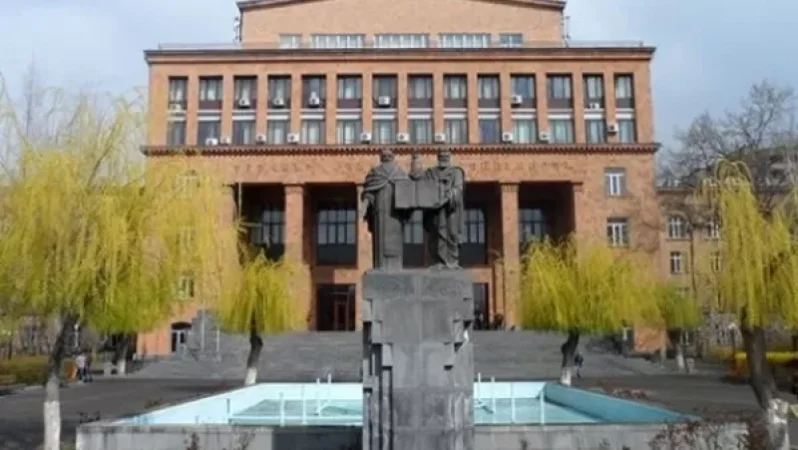
Today, a meeting of the Scientific Council was held in the conference hall of Yerevan State University (YSU) to discuss various agenda items, one of which was the preliminary consideration of the draft law on "Higher Education and Science". The information was provided by the university's press office.
According to the press release, after exhausting the agenda and current issues, the Scientific Council discussed the draft law on "Higher Education and Science". Acting Rector Gegham Gevorgyan stated that comments would be presented during the discussion, there would be speeches, and all participants could submit written proposals by tomorrow at 12:00. "All proposals will be systematized and presented at the rector's council meeting scheduled for the 5th. So not only the unified opinion of the Scientific Council will be submitted but also the suggestions of individuals," he said.
He emphasized a fundamental point before presenting his comments on the draft law. "In my opinion, before writing the law, the fundamental principles should be discussed, meaning agreement on a common concept should be reached, and then a group of experts should be assigned to professionally draft the law. Of course, discussions and suggestions can continue after that, but they will have a lighter editorial nature. This draft law has been circulating for three years, with provisions being included and then excluded. It is unclear at what point we should determine that it is acceptable to the educational community. The only fundamental new provision currently in this draft is the inclusion of science," said Gevorgyan.
He noted that according to this draft law, the role of the National Academy of Sciences has been almost nullified but suggested that this issue not be discussed today, hoping that a separate discussion will be organized regarding it.
The Acting Rector presented various provisions that are contentious. Specifically, the first concern pertains to the provision in Chapter 1 of the draft law, which transitions to a single-degree system. "This issue has been discussed many times. I suggest including the doctoral degree in the draft, which should be awarded as a result of the implementation of educational programs and the defense of a doctoral thesis. Which degree meets what scientific criteria is to be determined," said Gevorgyan.
As justification, he asserted that the claim that there is a single degree in all Western countries is incorrect. "In almost all countries, there is a second degree. There is none in the USA, but in return, there is significant funding. In other words, they differentiate based on the funds received. Moreover, it is no secret that many young people have defended their candidates’ theses in one way or another, and there are young people who have successfully defended it and even their doctoral dissertations. Now, it is wrong to see all of them as one category."
Gegham Gevorgyan's next observation related to the provision in the draft law that mandates institutional and program accreditation processes. "If program accreditation is mandatory, it will impose a serious financial burden on the university since we have more than 50 bachelor's and over 120 master's programs. It will also require substantial labor resources. I suggest that institutional accreditation be mandatory while program accreditation should be voluntary," he said.
Moving on to the next observation, Gevorgyan suggested adding that universities should autonomously decide on the salaries, staffing levels, and fee amounts for all academic ranks, without restrictions imposed from above. "Today, the law restricts the upper limit of the fee from above. If it were from below, it might be understandable in the sense that it raises doubts about the quality of education provided. However, limiting from above is incorrect particularly since not all universities are subject to this. In our case, the upper limit is 1 million drams, while, for instance, it is 1.5-2 million drams for the RAU," he noted.
Article 10, Section 5 of the draft establishes that the language of instruction at universities is literary Armenian. However, according to the Dean of the Faculty of Armenian Philology, Artsrun Avagyan, Western Armenian is also considered a literary language. "In other words, there is a need for clarification here," Gevorgyan added. After a brief discussion, however, he withdrew this proposal.
His subsequent proposal referred to Articles 10’s Sections 13 and 14, which state that in the Armenian higher education system, the maximum annual study load for students in all educational level granting programs is 60 credits, and a fully loaded student must accumulate at least 75 percent of the credits corresponding to the annual study load specified by the educational program, while a part-time student must accumulate at least 50 percent. "It is not stated what 75 percent or 50 percent refers to," Gevorgyan explained.
"Section 15 is also controversial, as it stipulates that the total duration of study for a part-time student shall be a maximum of 8 academic years for bachelor's and 4 for master's degrees. If a student enrolled with the condition to study for 8 years and during that time there have been changes in the 4-year academic program, how should they graduate? Can they be forced to submit all changes? Mechanisms need to be specified," Gevorgyan clarified, emphasizing the uncertainty and need for clarification.
Gegham Gevorgyan suggested that the last sentence of Article 18, Section 10 should be amended. "This section stipulates that the procedure for admitting students to the first level of higher education, the general requirements, and the general criteria for conducting competitions are determined by the Government of the Republic of Armenia. Based on these, the university approves and publishes the competition regulations and criteria. I propose to add that the university also conducts the competition," he noted.
Referring to Article 19, Section 2, Gevorgyan remarked that it requires great imagination to write such a definition. "According to this provision, teachers and researchers can voluntarily create public associations, including academic, scientific, and scientific-technical companies and unions aimed at promoting the development of their relevant sectors of science, as stipulated by law. In the end, restrictions are imposed that violate human rights. For instance, we can gather and create an alumni association to meet and converse. So is it not allowed? I suggest removing that section," he stated.
Gegham Gevorgyan addressed Article 22 of Chapter 4, proposing to specify the types of universities. Regarding Article 23, Section 1, the second subparagraph, he proposed replacing "academic council" with "scientific council." Furthermore, he indicated that Article 30, Section 4 has been under discussion for several years now. "Who is the president of the scientific council? It turns out that anyone, except for the rector and pro-rectors or those holding administrative positions. This provision stipulates that the university rector and any person holding a managerial position in the university cannot be elected president of the academic council. This will not bring anything good to the university. I suggest stipulating that the president of the scientific council is the rector," Gegham Gevorgyan argued.
"Similarly, Article 7 of that same section states that the rector of the university has the right to veto decisions made by the Academic Council if they contradict the legislation of Armenia and the university charter. If the same decision is adopted by at least three-fifths of the total votes of the members of the academic council within one month, it is considered adopted by the academic council and is mandatory for all participants in the university's educational process. During a lengthy discussion with Dean of the Faculty of Law, Gagik Ghazinyan, we couldn't find an appropriate designation for this provision, so I propose to remove it altogether," Gegham Gevorgyan clarified.
In addition, he addressed Article 31, Section 2, which states that a candidate for the position of rector of a public university may be elected if they have a scientific degree and at least 5 years of teaching or scientific or administrative experience in a university or in the field of higher education or science. Gegham Gevorgyan requested clarification on the difference between experience and tenure.
"In my opinion, five years is insufficient when discussing a university. I suggest the following: since universities are different and if they maintain a dual degree system, the criteria proposed for the rector should be fixed in the university's charter. There may be a university, for example, in the arts, where having a laureate title would be sufficient for the rector," Gegham Gevorgyan added.
Article 31, Section 8 stipulates that rectors’ deputies (deputy heads of branches) and deans are appointed by the rector (branch director), and they enter into an employment contract in accordance with the procedures established by the legislation of the Republic of Armenia. "In my opinion, deans should be removed from that definition. They cannot be appointed. Perhaps in a small university, yes, but not in our university. I suggest not only removing deans from this definition but also establishing a provision requiring that they and department heads be elected by faculties and nothing more, without reconfirmations and discussions," Gegham Gevorgyan stated.
"There are excessively many provisions that should not be enshrined in law, such as those regarding reports; these should be regulated by decisions of the Government or the Ministry," the acting rector noted before moving on to the next observation.
Gegham Gevorgyan was also concerned about Article 34, Section 3, which states that the organization conducting the audit of a public university or scientific organization must provide a conclusion regarding the compliance of the university's or scientific organization's activities with laws governing public financial management and education and science. The conclusion must include an assessment of
Նմանատիպ հոդվածներ


Ավելին Other բաժնից
19:00 Լուրերը մեկ տողով. Լարված իրավիճակ Հորմուզի նեղուցում, իսրայելական հարվածներ Գազային
18:00 Լուրերը մեկ տողով. Դատական հայց՝ մանրամասներ Մարուքյանից, Իրանը սպառնում է ուժ կիրառել
17:00 Լուրերը մեկ տողով. Մոսկվա-Երևան նոր երթուղի, Patriot հրթիռները Ուկրաինան կստանա 2028-ին