Changing Colors of Lake Sevan...
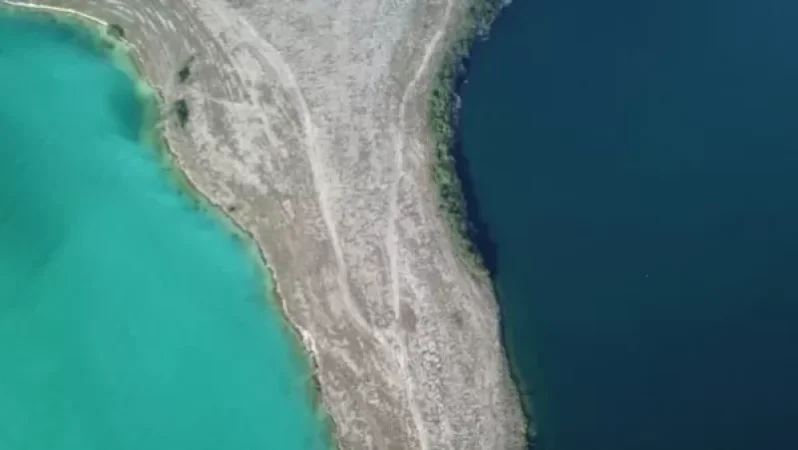
Facebook user Aiser Ghazaryan writes: "For non-specialists… Regarding the color of Lake Sevan and the causal relationship of its various shades, let me first briefly touch on why and for what reasons we observe the lake's different 'colors', and ultimately what causes these color changes:
When Lake Sevan is observed, for example, with the help of a drone (thanks to Arman Suleymanyan), one likely concludes that the water is indeed 'blue' or 'turquoise'  : Blue Sevan. Certain wavelengths of sunlight are absorbed, while others are reflected from the water molecules. Green, red, yellow, and other 'colors' are absorbed, while short-wavelength blue and violet are reflected, resulting in the lake appearing blue.
When the lake has a greenish hue, it indicates the presence of plankton, particularly cyanobacteria in this case. These organisms absorb the red and blue 'colors' of sunlight with their chlorophyll, reflecting a green 'color'. As NASA succinctly puts it: the more plankton/algae in the water, the greener it is; the less there is, the bluer it is.
Turquoise or milky hues of Sevan. The color of Lake Sevan observed in recent days has become the subject of numerous questions about its causes. Such coloration in lakes can be attributed to both natural (volcanic, hydrothermal, glacial, etc.) and anthropogenic (mostly due to blooms of certain types of algae, and not excluding the concentrations of sulfates, chlorides, and various other compounds). Considering the environmental issues of Lake Sevan, one can assert that the turquoise or milky shades are caused by human factors.
According to several international sources, there are unicellular (for example, the coccolithophore type) and multicellular species of algae that are covered with small plates of calcium carbonate or silicon compounds. As a result of algal blooming, these plates can detach during a certain period creating a layer in the water that, due to the scattering of light rays, gives off milky or turquoise shades  .
.
Regarding negative processes occurring in Lake Sevan: After the excessive bloom of algae in Sevan, hypoxia or oxygen depletion processes must have begun in the lower layers of the lake, severely harming its biodiversity. Organisms living in deeper layers and near the bottom, which cannot move to oxygen-rich layers, are likely to perish.
A schematic representation of the causal relationship of algal blooming is provided  .
.
Regarding unlawful processes: Is there anything starting from this event? Can we forget about legal enforcement? I urge the National Assembly to not sleep on the legislation regarding Sevan, the laws, and a series of legal acts concerning this… The law is either in effect and is enforced or stop all of this. What do you say, Lena Nazaryan...?"
Նմանատիպ հոդվածներ



Ավելին Society բաժնից
Նոր մանրամասներ Ջրաշենի նախկին ղեկավարի ու նրա ծնողների դանակահարության դեպքից

Դանակահարել են Ջրաշենի նախկին վարչական ղեկավարին ու ծնողներին. նրանք ծանր վիճակում են

Կիևյան կամրջի շուրջ նոր ապատեղեկատվություն է տարածվում. պարզաբանում քաղաքապետարանից