Scandalous Revelation: Russian Secret Operations in Armenia Revealed by Leaked Documents
The Fact-Checking Platform has recently obtained a package of documents that demonstrate systematic political and informational influence operations conducted by Russian entities in European countries, including Armenia. These documents are believed to have leaked as a result of a hacker attack and present materials from the Social Design Agency (SDA), which operates under the de facto supervision of Sergey Kiriyenko, Deputy Chief of Staff of the President of Russia. The materials include documents, correspondence, screenshots, reports, plans, and other items.
The documents outline schematics, planning materials, reports, and summaries of information campaigns already conducted and planned by the agency in Armenia, France, Ukraine, Germany, Moldova, Norway, and other countries. The toolset includes the creation of doppelgänger websites, dissemination of fake news, organizing ground actions, sabotage, and other operations, as well as engaging experts and opinion leaders that spread favorable narratives.
There are materials and plans for influencing societies in these countries. The operations have primarily targeted generating anger against Ukraine, migrants, and at times, Armenia, while also supporting far-right factions and promoting other Russian narratives. Significant efforts have been made to discredit Ukrainian President Zelensky, Armenian Prime Minister Pashinyan, and Moldovan President Sandu. Numerous operations have been planned and conducted under false flags. For instance, certain operations against Armenia were carried out in a way that created the impression they were coordinated from Turkey, while operations against France were conducted under the false flag of Ukrainian and Armenian 'Dashnaktsutyun' party.
Different individuals are engaged in operations at various locations, including a retired U.S. general, a former member of the German Bundestag, a Romanian oligarch, and others. Those visible in the correspondence use pseudonyms, but easily identifiable names such as Sergey Vladlenovich Kiriyenko (referred to as SVK) and Sofia Avraam's Zakharova (pseudonym: Kristin Kiler) from the same staff emerge from the files. The correspondences make it clear that they are taking serious measures to cover their tracks and prevent leaks; however, it appears they are not entirely successful. Additionally, 50 individuals connected to the center have recently appeared on the British sanctions list.
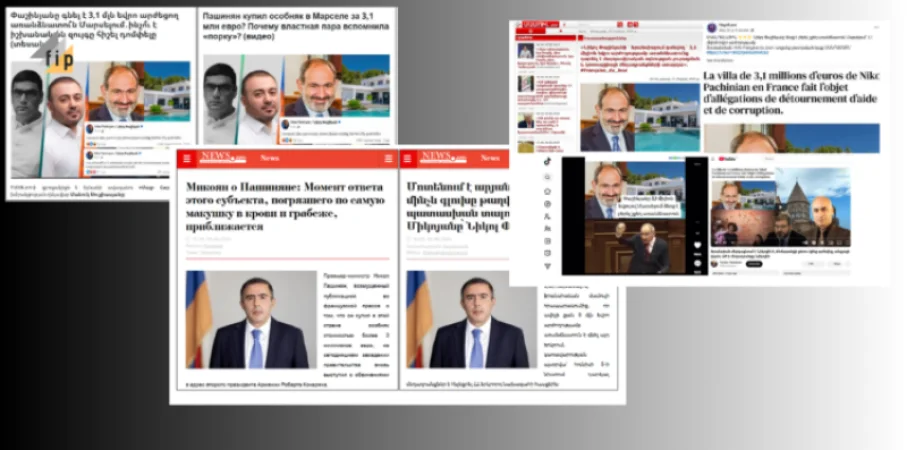
The agency has conducted campaigns aimed at discrediting the Armenian authorities and destabilizing the country's internal life, the most well-known of which among the Armenian public is the so-called 'Marseille' operation. Last year, a newly established French website claimed that Armenian Prime Minister Nikol Pashinyan had purchased a luxurious villa worth several million dollars in Marseille. FIP.am had previously clarified that the source was unreliable, and the information was not based on facts and was false; the website that published the article was later shut down.
According to the leaked documents, the Russian-language 'Yerevan1' website belongs to the agency; the main purpose of the online resource is to shape negative attitudes towards Prime Minister Nikol Pashinyan within the Armenian community in Russia. The agency's ownership is evident from several leaked documents.
This resource regularly publishes articles targeting the Armenian authorities; for instance, one of the leaked files contains a text predicting Nikol Pashinyan's political future based on astrology, which was published on the site in May 2026. One of the leaked files reveals how much and what format of articles should be published on the website each month.
The agency has also developed a project targeting Armenia called 'Self-Replenishing Knowledge Base – Armenia,' aimed at creating more than 50,000 clone sites on Wikipedia. These sites are optimized for SEO (Search Engine Optimization), ensuring that the site, page, or content ranks higher in search engines, such as Google. The goal is to manipulate artificial intelligence models like ChatGBT to report what benefits the Kremlin when asked questions about political figures.
The agency has launched a so-called 'Pan-Armenian Media Platform,' although the leaked files do not explicitly name the media outlet. From its description, it becomes clear that it targets Armenian communities in the United States, Lebanon, Iran, France, and other countries—advocating for allied relations with Russia, portraying threats from the West, as well as aiming to regulate relations with Turkey.
The document describes the structure of the website, which is supposed to publish news from the Diaspora, particularly covering the activities of the Armenian Apostolic Church, emphasizing its role in the life of the people, as well as publishing series on Great Armenians. Another document outlines another project targeting Armenia; it mentions that X political figure should be discredited by disseminating defamatory content, as well as supporting an opposition figure under 'political persecution.'
Նմանատիպ հոդվածներ


Ավելին Politics բաժնից

Իրանը հայտարարում է ԱՄՆ-ի երկու ռազմական անօդաչուի ոչնչացման մասին
Իրանն ու Ռուսաստանը կարող են արգելակել TRIPP-ի իրականացումը․ Սուրենյանց
Իրանը կշարունակի վերահսկել Հորմուզի նեղուցը