Fraud Attempt to Claim 1.37 Billion AMD from Insurance Company: Details

The preliminary investigation into a fraud attempt through document forgery has been completed at the RA National Security Service's investigative department. The case has subsequently been forwarded to the Investigative Committee of the Republic of Armenia.
According to the Investigative Committee, evidence has been received regarding the activities of a company founded in 1999, engaged in beekeeping and dietary food production, where the director, G.M. (deceased in November 2021), lacked the means and capability to produce large quantities of honey and necessary royal jelly. Under the name of the company he managed, G.M. entered into a formal agreement through an acquaintance, a Belgian citizen, with R.K., the director of a company registered in Suriname but reportedly engaged in manufacturing interior doors in Belgium. Between May and June 2021, they agreed on the supply of 19,170 kg of natural honey containing 2% royal jelly, valued at approximately 2,938,622 USD (equivalent to 1,370,000,000 AMD).
With the intent to commit fraud on the insurance company, G.M. prepared a substitute substance weighing 19 tons and 170 kg for honey. Based on the mentioned agreement, G.M. applied to the insurance company to supposedly insure the honey containing 2% royal jelly at the stated value. To substantiate the presence of royal jelly in the honey, the insurance company, among other requirements, requested documentation proving this fact.
G.M. approached R.A., the director of a licensed certification company, and entered into a formal agreement with him. G.M. provided R.A. with a sample of the substance resembling natural honey, which was subsequently documented as 'natural honey with 2% royal jelly' in the official report prepared by R.A. for G.M. The sample and the aforementioned document were then submitted to the laboratory head of a research company for product certification testing.
In the report issued by the research company, without conducting necessary parameter tests, it was fraudulently stated that the presented sample met the necessary requirements. Following this, the false testing report was sent to the certification company, where, under the directive of R.A., expert A.M. issued a fake compliance certificate without checking the testing report against required standards and without conducting any research to verify the 2% royal jelly's presence in the sample.
At G.M.'s request, R.A. also prepared a sanitary certificate for the allegedly natural honey, stating that it consisted of natural products and was ready for direct consumption, conforming to technical requirements for physicochemical and safety parameters. G.M. provided these forged compliance and sanitary certificates to the insurance company, which led to the conclusion of an insurance contract.
The investigation also revealed that G.M. ordered 710 jars not designed for transporting honey, sealed hermetically and with thicknesses thinner than specified for honey containers. Additionally, he ordered a non-temperature-controlled container for transporting honey, knowing well that the maximum storage temperature for natural honey is +20°C and the relative humidity should not exceed 80%. These jars were arranged without secure fastening, violating standards for transportation.
Subsequently, the necessary documents with forged information were submitted to the RA Food Safety Inspection Body's Kotayk regional center and later to the veterinary control authority in Yeghvard, where certification documents were issued that did not correspond to reality, along with a veterinary certificate for the transport of natural honey. Afterward, the cargo was exported from Armenia and reached Suriname almost two months later under conditions where the temperature exceeded +31°C, leading to the loss of approximately 75% of the cargo, causing the buyer to reject it.
After this, G.M. submitted a fraudulent document to the insurance company indicating the maximum storage temperature of honey as '+28°C' instead of '+20°C' and, fully aware that the delivered product was not honey with 2% royal jelly, demanded compensation amounting to 1,370,000,000 AMD. However, the reinsurer confirmed through ordered examinations that the cargo was improperly secured in violation of transport regulations, and the delivered product was neither 2%-royal jelly honey nor natural honey at all, resulting in the rejection of the compensation claim.
Based on sufficient evidence, G.M. has been charged under Article 34-178, Part 3, Clause 1 of the former Criminal Code of Armenia, and Article 457, Part 1 of the current Criminal Code (3 episodes). R.A. has been charged under Article 38-34-178, Part 3, Clause 1 of the former Criminal Code, and Article 457, Part 2 of the current Criminal Code, while A.M. has been charged under the indicators of Article 457, Part 2. As a preventive measure, a 'prohibition of absence' and 'suspension from office' have been applied to them. Their cases have been separated into a distinct proceeding, with the preliminary investigation concluded, and the case materials have been submitted to the supervising prosecutor with an accusatory conclusion.
The legal representative of the deceased defendant G.M. (his wife) has filed a request to discontinue criminal prosecution due to death, stating that the proceedings should continue generally, as she is convinced that her husband committed no crime. Due to the expiration of limitation periods, public criminal prosecution has not been initiated against the laboratory head of the research company and R.A., the director of the certification company. The investigation is ongoing regarding unidentified persons who participated in the crime with G.M.
Նմանատիպ հոդվածներ
Ավելին Society բաժնից

Էմփայր Սթեյթ Բիլդինգի գագաթին ապօրինի բարձրացած զույգը ազատ է արձակվել
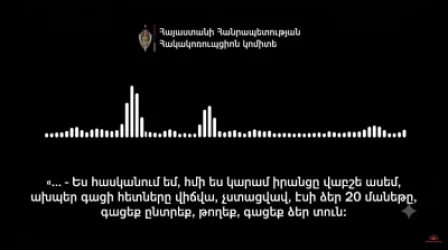
«Էսի ձեր 20 մանեթը, գացեք ընտրեք, թողեք, գացեք ձեր տուն»․ ընտրակաշառքի գործով ձայնագրություն է հրապարակվել

ԵԱՏՄ երկրները մտահոգված են Հայաստանի՝ ԵՄ-ին մերձեցմամբ