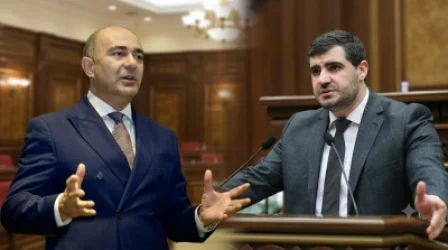
Kyok Shares Details from the 44-Day War
During the 44-day war, when the enemy managed to completely capture the Talish settlement near the military unit, I requested and demanded additional forces and resources from the higher command to protect the two reinforced concrete bridges located over the Tatar River, which connected the military unit to the outside world.
This was stated by the Hero of Artsakh and the legendary commander of the "Yeghnikner" battalion, Karen Jalavyan (Kyok), during an interview with journalists. He elaborated on several details from the war:
“On the third day, a special assignment company from the Yerkrapah Volunteer Corps ‘Tigran the Great’ regiment, about 100 personnel, was deployed to protect the Vahe-1 and Vahe-2 bridges. When on the seventh day of the war the neighboring military unit lost control of the Mataghis settlement, I went down to assess the situation on the right flank of the unit, to ensure that we would not get encircled. At the Vahe-1 checkpoint, where a group from the company was stationed, including Arman Petrosyan and the late Menua Hovhannisyan, who was killed in action and later awarded the title of Hero of Artsakh, I tasked them to designate soldiers for offensive operations.
Menua and I agreed, and they indicated they would coordinate with the company commander Hayk Manukyan, and the response would be conveyed by the evening. It was around 5 PM on the 2nd when the Mataghis military unit was retreating along an unfamiliar route towards a new location. Considering that the route familiar to their unit—from Mataghis to Martakert—had already been taken by the enemy under direct fire, they were forced to retreat along alternate mountainous and wooded paths. The contributions of the soldiers from that company were significant as they organized the retreat for the Mataghis unit, because both the officers and volunteers were getting lost in the unfamiliar terrain, with some arriving at one bank of the lake and others at the opposite side. The soldiers moved in groups, escorting each other.
On the 2nd, those two bridges were blown up to prevent the enemy from advancing in those two directions; however, after the explosion, on the 7th and 8th days, servicemen from the Mataghis unit were coming towards our unit lost in the forests. On the 3rd, when the bridges had been destroyed, we faced a personnel issue. I requested the company commander to position the unit closer to the front line and fortify defenses against any further enemy operations. Of the 100 soldiers in the company, 35 agreed to participate in both defensive and offensive operations. During one of the offensive actions, Menua was killed alongside four others, inflicting significant casualties on the enemy.
Until October 24, Arman, along with the group, followed my orders at every point where the situation became tense, and I was confident they were carrying out the tasks honorably under Arman’s leadership. On the 24th, the enemy broke through our lines to the southwest and advanced towards Shushi, with forward units already in the Avetaranots settlement, just 15 kilometers away from Shushi by air. The higher command ordered us to send one company towards Shushi-Sghnakht. Company commander Hayk Manukyan expressed his readiness and set out with a group of 13. Arman was also among this group. Until November 10, on the day of the shameful trilateral statement, Arman was deployed along that line with various units. Unfortunately, we were unable to ultimately stop and defeat the enemy, and they took Shushi.
After the war, Arman remained in Artsakh, serving in another structure, passing on his experience and knowledge to the personnel of the unit. He would regularly visit us after the war, creating a friendly bond between me and them. He was brave, confident, and this should always be the first companion of a soldier.
Նմանատիպ հոդվածներ
VIDEO. Levon Kocharian's Assistant Arthur Sukoyan Explains Why He Hit a Journalist
VIDEO: Security Services, I Don’t Know Which Agencies, Are Listening to Our Phones – Bishop Bagrat
VIDEO. "It's an elementary nostril poke. Do asphalt workers have internet access or not?" Avinyan
VIDEO. How Many People Should Gather for You to Resign? Auroranews Asks Pashinyan
Ավելին Politics բաժնից
Սերժ Սարսգսյանը խոսել է հետընտրական զարգացումների տարբերակների մասին
Պուտինը ստորագրեց աղմկահարույց օրենքը
Եթե բացատրեն, որ մանդատները չվերցնելու դեպքում Նիկոլը գնու՞մ է, հարց չկա. Շարմազանով