We Cannot Constantly Undermine the State's Rating: Nikol Pashinyan
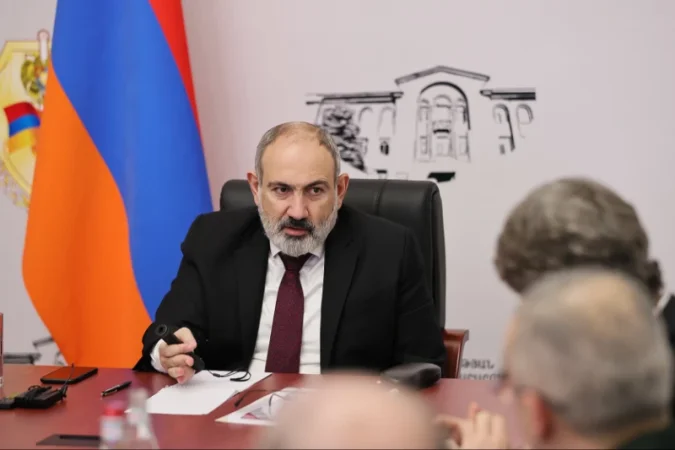
The Prime Minister of Armenia, Nikol Pashinyan, visited the Ministry of Justice’s Penitentiary Service on February 14 to discuss its report on activities for 2023, as reported by the press service of the Prime Minister's office.
The head of the Penitentiary Service, Colonel of Justice Ambakum Grigoryan, along with deputies, presented the work carried out in their coordination sectors, the achievements recorded, and a comparative analysis of the figures during the reporting period and previous years.
Deputy Minister of Justice LeVon Balayan addressed the digitalization efforts in the penitentiary sector. It was reported that the Service's budget execution reached 99.79%.
In the context of the fight against crime, the central body of the Service and the operational divisions of penitentiary institutions submitted 1122 reports of criminal acts, out of which 489 initiated criminal proceedings, including three involving corruption and 146 related to drug trafficking. Operational staff arrested 36 individuals, including three employees of the Penitentiary Service and 32 civilians.
During 2023, the penitentiaries discovered 1496 mobile phones, approximately 912 grams and 607 units of narcotics, nearly 1600 liters of homemade alcoholic beverages, and other prohibited items.
149 internal investigations were conducted, resulting in various penalties against 137 employees.
Following the Prime Minister's directive, from July 1, 2023, escorts for sentenced individuals during procedural actions have been conducted by the Penitentiary Service itself. For this purpose, the fleet of the Penitentiary Service was supplemented with new transport vehicles meeting international standards.
During the reporting period, 35 out of 36 points of the Penitentiary and Probation Sector Strategy were fully implemented, while one was partially completed.
Prime Minister Pashinyan noted that a scandalous incident occurred when penitentiary staff escorted a detainee home. In this regard, he inquired, “Are we now confident that measures have been taken against everyone responsible for this incident?”
In response, Minister of Justice Grigor Minasyan stated, “Yes, Mr. Prime Minister. The specific head of the penitentiary institution is no longer working in the Penitentiary Service, and the escorts themselves have also been removed from the system. We also faced an issue with the content of the permission granted by the judge, which is also subject to investigation, as there was a very strange two-hour period that was overlooked by the court, which we are examining to understand whether it was a common practice or not, because our monitoring of the Penitentiary Service has shown that it was a unique case.”
Nikol Pashinyan asked how many such incidents occurred in 2023. The minister reported that the mentioned case was the only exceptional case.
“The important nuance is as follows: I want us to assess the situation correctly. If such a practice exists, it must be halted very strictly, because it primarily shapes people's attitude toward the state and the rule of law. That is, in essence, our legislation provides for the conditional release of a detainee if there are such needs since objective necessities may arise for the detainee to go home for visits, etc., of course with some legally defined restrictions. This is provided for if there are objective necessities for such cases. Therefore, it is very important that this shapes the attitude towards the law and legality in general, and this is not at all about personalized approaches. Ultimately, we must be able to form an attitude towards the rule of law that the law must work, especially since the legislation gives such opportunities. It is unacceptable to undermine the state's credibility and rating at every possible opportunity, even with the motivation of doing a favor.”
It was reported to the Prime Minister that the package for constructing a new prison based on the German model has been transferred to the Urban Development Committee, a competition has been announced, and a winning organization exists that will present project documentation by November 2024. Soil layer testing is being conducted to assess the feasibility of the construction.
Within the framework of ensuring education for deprived individuals, the right to mandatory education has been guaranteed for 10 minors. Under the new law, a general education program has been implemented in prisons regardless of age, with 138 participants (a significant increase compared to 2022, which had 92 participants). Higher and postgraduate education has been provided for 8 deprived individuals.
Non-formal education programs have also seen growth in participation compared to 2022 (185 individuals in 2023, compared to 140 in 2022).
During 2023, 382 sentenced individuals, or 34% of the total number of convicted persons, were engaged in employment, with 117 in technical service jobs, 137 in unpaid community service, 15 under contractual terms with other employers, and 113 involved in creative work in workshops.
The Prime Minister inquired about the number of women and minors in penitentiary institutions. It was reported that only women and minors are held in the “Abovyan” penitentiary, where there are presently two minors, 40 incarcerated, and 21 female convicts.
It was reported that in collaboration with international organizations, tools for assessing the needs and risks of convicts have been developed and piloted. In cooperation with the U.S. Embassy and the “International Organization for the Development of Law” office in Armenia, a pilot program for public defender-client communication via video call has been implemented in Armenia’s “Armavir” penitentiary for the first time.
The report included mentions of efforts to improve facility conditions throughout 2023, alongside planned construction works anticipated for 2024. Among other initiatives, a new extension is set to be built in the “Sevan” penitentiary, designed for 216 deprived individuals, and the project package has already been secured.
The “Sevan” penitentiary is also set to pilot a program for developing staff competencies, wherein instead of two current divisions, a new security management section will be created to ensure more effective implementation of both external protection and internal security of penitentiaries.
There was a discussion about the revision of handover procedures. According to EU standards, deprived individuals only have the right to receive handover items in strictly limited cases. In light of this, an assessment of needs is planned, and based on EU experience, a revision will take place regarding the types, quantities, and quality of food and hygiene items provided to deprived individuals.
In this context, improvements will be made to the online purchasing system (kiosk) for deprived individuals and the process for accepting handover items will be aligned with EU standards.
It was also reported that the security system of penitentiaries will be modernized. For this purpose, contactless micromillimeter instantaneous scanning devices will be acquired, as well as small-dose X-ray systems. In addition, scanners will be introduced that scan personal belongings and carts filled with food. With new equipment, detection of weapons, drugs, mobile phones, liquids, powders, and more will be possible.
A unified digital domain is also planned to be established, where comprehensive information about individuals will exist—from arrest to the final location of serving their sentence in the corresponding cell of the penitentiary. In this domain, all information regarding the deprived individual will be collected in the Penitentiary Service's information database, ensuring the exchange of information with other relevant bodies, for instance, courts, penitentiaries, healthcare authorities, and so on.
It was reported that the introduction of a “Personal Office for Deprived Individuals” module is planned, where all information regarding the ongoing detention or serving of the sentence will be collected. For example, assessments on risks and needs, individual resocialization plans, penalties, rewards, medical interventions, information related to food, participation in resocialization measures, negative tendencies, and similar other details will be included.
To ensure effective use of the Personal Office module, it is proposed to integrate the Penitentiary Service's information database with those of all interested authorities, for example, an electronic medical platform, criminal court, Ministry of Internal Affairs, Prosecutor’s Office, Probation Service, etc.
Regarding the digitalization process, the Prime Minister stated, “The main directive here is that in general, our digital modules, whatever we create, should consider that new needs may arise along the way, and there may be a need to add new modules. That is, today we have inventoryed this idea, we have documented these processes, tomorrow a new necessity may arise. We must order all our programs in this context. By the way, this is a directive formulated to the Digitalization Council. Imagine, let’s say we have inventoryed this, that these processes need to be digitized, now we have done various analyses—we don’t even know to what extent we have done well, to what extent poorly, or a next moment a new action may be needed. At that moment, we should not say, ‘This is not in the program; now we need to write a new program,’ but create the opportunity to add another functionality to that program.”
The Prime Minister also inquired whether the traceability of the escorts for detained or convicted individuals is anticipated in this process. The Minister of Justice reported that the issue of traceability, for instance, in the Compulsory Enforcement Service, has been resolved through the introduction of GPS equipment. The same can also be done here.
Nikol Pashinyan stated, “This way, we are also addressing the problem that a detained or convicted individual is in this cell, then was transferred to another cell, then went for a visit, then for interrogation, and so on, went to court and came back. That is, I think, this traceability is not a great complexity; it is solvable.”
In accordance with the Prime Minister's directive, a certification system has been developed within the Penitentiary Service. Currently, work is underway on formulating the certification procedure, which is expected to commence in April 2024.
Ways to modernize the fight against criminal subculture were presented: plans to draft amendments to the Criminal Code of Armenia and establish criminal liability for transferring any means of communication to deprived individuals, as well as for obtaining and keeping such means by deprived individuals.
Նմանատիպ հոդվածներ
The legislation of the Republic of Armenia is an internal matter, and no external force has the right to intervene: Nazeli Baghdasaryan
Azerbaijan Initiates Local Yet Extensive Gunfire with UAVs; Unfortunately, 4 Soldiers Killed - Pashinyan

In Armenia, I Do Not Decide Who Gets Arrested and Who Doesn’t: Pashinyan on the Likelihood of Putin's Arrest in Armenia

New Minefield Reference Manuals Transferred to Baku on January 26, Says Foreign Ministry Spokesperson
Ավելին Politics բաժնից

Կարևոր ուղերձ՝ ՌԴ–ՀՀ հարաբերությունների ֆոնին

ՌԴ-ն պնդում է` ամերիկյան միջուկային զենքը պետք է դուրս բերվի Եվրոպայից

Վերահաշվարկից հետո կուսակցությունների ձայների հաշվեկշռում փոփոխություններ են արձանագրվել