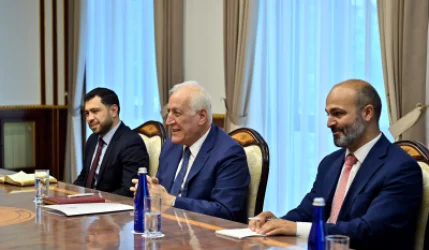
150 square kilometers of RA territory occupied, which falls under CSTO responsibility: Simonyan spoke in Minsk
The Speaker of the National Assembly of Armenia, Alen Simonyan, participated in the Council meeting of the Parliamentary Assembly of the Collective Security Treaty Organization (CSTO) on May 18 in Minsk. Before the council meeting, he met with the delegation heads of member countries and Belarusian President Alexander Lukashenko.
President Lukashenko spoke about the necessity of forming a new system of international relations based on universally recognized norms and principles of international law.
“Minsk intends to work towards enhancing the cohesion of the CSTO countries. Strengthening the organization and ensuring security in its responsibility zone is only possible after resolving existing conflicts,” he said.
After the meeting, the heads of parliaments laid wreaths and flowers at Victory Square in memory of those who fell in the Great Patriotic War. Below is the full text of Alen Simonyan's speech at the CSTO PA Council meeting:
“Dear Vyacheslav Volodin, dear Vladimir Andreichenko, participants of the Council meeting, I welcome everyone to the Council meeting of the Parliamentary Assembly of the Collective Security Treaty Organization. I thank Vladimir Pavlovich and our Belarusian colleagues for the warm hospitality and organization of the Assembly's events.
I also welcome the new Secretary General of the organization, Mr. Tasmagambetov, and wish him effective work in this responsible position.
Colleagues, I would like to note with satisfaction that the Parliamentary Assembly continues its work on supporting the legal framework for the activities of the Collective Security Treaty Organization and on developing proposals for coordinating the legislative activities of national parliaments aimed at the realization of the organization’s objectives and tasks. There is no need to list all the developed proposals, model laws, and statements regarding all aspects of the CSTO’s activities.
It is also important to understand how receptive we are to common problems. When we talk about our successful experiences, we must clearly remember that mutual respect, the desire to take each other’s interests into account, the development of consensus approaches, and the support of allies in complex situations to achieve concrete results are the foundations upon which our organization is built.
Colleagues, the Council meeting of the Parliamentary Assembly is taking place at a time when we are facing serious threats and challenges to security. The world is at a crossroads of complex geopolitical events and transformations that can have irreversible consequences for many countries. The zone of collective security responsibility is no exception.
It is known what events took place last year, and now I would like to provide information about the security situation in the South Caucasus. The situation is quite tense. Despite all agreements, Azerbaijan continues its policy of threatening the territorial integrity of the Republic of Armenia, escalating the situation at the border with Armenia, in Nagorno-Karabakh, and in the Lachin corridor.
After five months of illegal false environmental blockade of the Lachin corridor, at the end of April, Azerbaijan resorted to an official blockade of Nagorno-Karabakh. The decision to establish a checkpoint in the Lachin corridor in the area of responsibility of the Russian peacekeeping forces is a gross violation of the trilateral statement of November 9, 2020, and the legally binding ruling of the International Court of Justice in February of this year.
For almost half a year, the 120,000 Armenians in Nagorno-Karabakh have been living under complete blockade, facing acute shortages of essential goods and medicines. Azerbaijani authorities periodically restrict the movement of vehicles of the International Committee of the Red Cross and the transfer of patients through the corridor.
In this context, the real statements and actions from allies and partners are crucial for us to restore the operational regime of the Lachin corridor in line with the obligations of the trilateral statement and to regulate life in Nagorno-Karabakh under the principles of international law, ensuring safety and protection against illegal actions.
Colleagues, we are monitoring Azerbaijan's attempts to destroy the rich Armenian culture and erase traces of Armenian identity. It is important to note that the International Court of Justice has also confirmed the existence of a threat of irreparable harm to the rights of Armenians within the framework of the International Convention on the Elimination of All Forms of Racial Discrimination.
To this day, Baku refuses to return Armenian prisoners of war and civilian persons held hostage, subjecting them to fabricated trials.
Colleagues, let me turn to the process of normalization of relations between Armenia and Azerbaijan. We have repeatedly expressed our willingness to sign a peace treaty and mutually recognize territorial integrity. Azerbaijan, however, continues to pursue an aggressive stance. Just days ago, Azerbaijani armed forces once again opened fire toward the sovereign territory of the Republic of Armenia using mortars and artillery, resulting in casualties and injuries.
This escalation of the situation demonstrates the systematic provocations instigated by the Azerbaijani side aimed at disrupting the active negotiation processes and exerting pressure on Armenia. A similar incident occurred just yesterday.
Due to the large-scale military operations carried out as a result of the tactics of creeping military occupation by Azerbaijan over the past three years, approximately 150 square kilometers of the sovereign territory of the Republic of Armenia have been illegally occupied, which falls under the responsibility zone of the CSTO.
We regret that there is still no common assessment of the fact of Azerbaijani aggression against the sovereign territory of the Republic of Armenia within our organization, that the illegal presence of Azerbaijani armed forces remains in internationally recognized territories of Armenia. In the context of the CSTO observer mission at the border with Azerbaijan, it was emphasized that for the mission to be effective for the country and the entire region, it is necessary to clarify the CSTO responsibility zone.
The uncertainty of partners’ positions is puzzling, given the undeniable facts of aggression and violations of the internationally recognized borders of Armenia.
At our last meeting, I warned my partners about the destabilizing prospects of Azerbaijan's policy. Baku shows contempt for international partners, under whose presence and mediation official Baku recognized the territorial integrity of the Republic of Armenia and undertook obligations based on the Alma-Ata Declaration regarding border delimitation between the Republic of Armenia and the Republic of Azerbaijan.
Dear colleagues, the establishment of peace in the region is the goal pursued by the Republic of Armenia. However, the foundation for sustainable peace, security, and sustainable development in the region can only be open and constructive dialogue. Since last year, Armenia and Turkey have begun the process of normalizing relations, during which certain agreements have been reached; however, tangible results have not yet emerged, and many issues remain unresolved. We believe that the normalization process should be without preconditions.
In concluding my speech, I would like to once again emphasize the importance of making diplomatic efforts. I call on all partners present in this room who are interested in the peace and stability of the region and who have close relations with Azerbaijan to take effective steps toward eliminating violations of international law and excluding the use of force.
All these challenges require all CSTO member states to resolve the existing issues using the entire framework of the organization, and most importantly, to express clear positions on them without bias or political preferences and priorities. If we fail to do this together, similar challenges may arise for each of the CSTO member states in the future.
There is no alternative to the peaceful development of the region.
Thank you for your attention.”
Նմանատիպ հոդվածներ
Ավելին Politics բաժնից
Զելենսկի․ Այսօր ուկրաինական բանակը Եվրոպայի գլխավոր բանակն է
Իրանը 60 օրով չեղարկում է Հորմուզի նեղուցով անցման բոլոր վճարները
Ուկրաինան շարքից դուրս է հանել Մոսկվայի նավթավերամշակման գործարանի կայանքները