Araik Harutyunyan on Aliyev's Statements and the Overall Situation
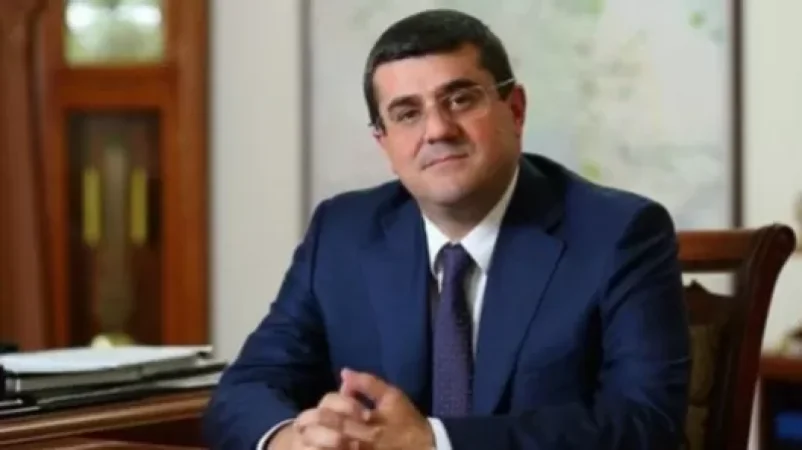
The President of the Republic of Artsakh, Araik Harutyunyan, states that there has been no agreement to close the topic of Artsakh's international status with the trilateral statement of November 9, 2020.
In an interview with Armenpress, the President emphasizes that no one should forget that the conflict arose as a result of a dispute over the status of Artsakh, which has been recognized by the entire civilized world from the very beginning.
In the interview, the President of Artsakh addressed the illegal blockade of the Lachin corridor by Azerbaijan, the recent aggressive statements by the President of Azerbaijan, threats directed at the people of Artsakh, and Azerbaijan's claims that the Lachin corridor is strictly for transporting humanitarian cargo.
- Mr. President, how do you assess Azerbaijan's installation of a checkpoint in the Lachin corridor?
First of all, it is important to clarify that there are already two illegal Azerbaijani checkpoints operating on the Artsakh-Armenia road—one near the Hakari bridge since April 23, and the other near Shushi, where Azerbaijani police replaced agents in civilian clothes on April 28 who had been blocking the road since December 12, labeled as “eco-terrorists.” Therefore, regardless of the fact that the Azerbaijani side pretends to show 'border control' at the illegal checkpoint near the Hakari bridge, the blockade of Artsakh continues and, over time, security risks and humanitarian issues are exacerbated due to Azerbaijan's aggressive behavior.
- My assessment is reflected in the statement of the Security Council of the Republic of Artsakh on April 23, which categorically deemed the blockade of the internationally recognized Lachin (Kashatagh) corridor and the installation of a checkpoint there to be absolutely unacceptable. With this step, Azerbaijan has effectively taken the people of Artsakh hostage, with an increasing risk of ethnic cleansing, endangering the further implementation of the trilateral statement of November 9, 2020. We have also appealed to the parties of the trilateral statement, especially the Russian Federation, demanding immediate discussions to remove the blockade of Artsakh, eliminate the Azerbaijani checkpoint, and ensure real guarantees for the security of the people of Artsakh. We still expect effective steps towards solving the security and humanitarian issues facing the people of Artsakh.
It is unacceptable and painful that Azerbaijan not only grossly violates the provisions of the trilateral statement but also does not comply with the binding rulings of the International Court of Justice and the European Court of Human Rights. Therefore, our justified expectation from all responsible actors in the international community is to exert proper pressure on Azerbaijan for the immediate and complete fulfillment of these obligations.
- Recently, in an interview with Azerbaijani television, Ilham Aliyev issued another ultimatum to the Armenians of Artsakh, stating, “The Armenians living in Karabakh either must accept Azerbaijani citizenship or they must find another place to live.” The continued use of ultimatum language clearly testifies to the uncivilized value system adhered to by the leadership of that country; however, it interestingly exposes a serious contradiction in the rhetoric of the neighboring country's leader. The point is that since the 44-day war, Aliyev has persistently insisted that the issue of Nagorno-Karabakh is resolved. Perhaps his aggressiveness and ultimatum style are justified by the fact that no one else in the world makes such claims, and that the issue is by no means resolved. Otherwise, if it is resolved, why does he get so agitated?
- First, regarding integration, it is much more required and desirable for the political leadership of Azerbaijan to integrate into the civilized world, the political culture, the values of human rights, and democracy. I believe that resolving many issues in relations with neighboring countries would stem from this.
As for the Azerbaijani-Artsakh conflict, indeed, the President of Azerbaijan has been trying for the third year to convince the world that the Nagorno-Karabakh problem is resolved, claiming that the notion of “Nagorno-Karabakh” no longer exists. However, the issue is that he does not have the broad support of the international community on this. The question of the status of Nagorno-Karabakh remains unresolved in international terms, and this must be taken into account.
Sometimes, it is important to look for answers in the history of the conflict. Due to the annulment of the USSR Constitution, the legal bases for the formation and territorial division of the Soviet republics have ceased to exist. States were declared on the basis of the right of self-determination of separate titular peoples living in these territories. In practice, the former Armenian SSR, the NKAO, and the Azerbaijani SSR simultaneously declared their independence in accordance with international law and Soviet legislation. The self-determined Nagorno-Karabakh had no participation in the formation of the Constitution of the Republic of Azerbaijan. However, the newly established Republic of Azerbaijan has made unfounded claims over Nagorno-Karabakh.
Moreover, the international community has initially registered the existence of disagreements over the status of Nagorno-Karabakh. There is an extremely important point here. On January 30, 1992, Azerbaijan, recognized by only a few states, participated alongside Armenia in signing up for the CSCE on the same day. The sovereignty of those states was recognized by the CSCE on the condition that they, in turn, recognize the existence of disagreements over the belonging of Nagorno-Karabakh and agree that the future status of Nagorno-Karabakh would be determined at a peace conference held under the auspices of the CSCE. Both states provided such consent, thereby accepting the international status of Nagorno-Karabakh as a disputed territory and taking on the obligation to resolve the issue peacefully.
However, after joining the CSCE, Azerbaijan immediately violated its international obligations. By turning Azerbaijani-populated settlements in NKR into military bases, Azerbaijan unleashed large-scale military aggression against Nagorno-Karabakh. The people of Nagorno-Karabakh also exercised their right to self-defense. Azerbaijan's aggression was crowned with defeat for it. The Republic of Artsakh (NKR) has been de facto established as a result of the victory gained during the first war from 1992 to 1994. The contact line of the armed forces of the NKR and Azerbaijan has been recognized internationally. In international negotiations, to this day, there is no agreement on either the status of NKR nor on the delimitation line between NKR and Azerbaijan. There is also no agreement on the status issue in the trilateral statement of November 9, 2020, which means that Nagorno-Karabakh continues to have an international status of a conflicted or disputed territory, but never as part of Azerbaijan.
Moreover, it must be noted that by the Declaration on the Restoration of State Independence of Azerbaijan adopted by the Supreme Council of Azerbaijan in August 1991 and the constitutional act on the Restoration of State Independence adopted in October of the same year, Azerbaijan renounced the legacy of Soviet Azerbaijan and proclaimed itself the successor of the Azerbaijan Democratic Republic, which existed from 1918 to 1920. During that pre-Soviet period, Nagorno-Karabakh was also internationally recognized as a disputed territory, officially acknowledged by the League of Nations. It is also noteworthy that during that time, Nagorno-Karabakh had much broader borders and, in the early years of the USSR, even had a common border with the Armenian Soviet Socialist Republic. From these facts arises a very important question: whether the fundamental documents declared by Azerbaijan's independence recognize the existence of disputes over the status of Nagorno-Karabakh and its territories.
For the full interview, visit the original source.
Նմանատիպ հոդվածներ
Armenian Foreign Ministry on Negotiations Held in the US
Yerevan Not Interested in Normalizing Relations with Ankara, Says Erdogan's Administration
Direct Negotiations Are the Best Way to Reach Agreement Between Azerbaijan and Armenia: Aliyev
Both Armenia and Azerbaijan Principally Agree on Certain Conditions: Blinken
Ավելին Politics բաժնից
Իրենք ոչ ընտրվել են, ոչ էլ՝ հաղթել. Իշխան Սաղաթելյան
Ավելի լավ կլինի, եթե ընդդիմությունը չգա խորհրդարան. Ռուբինյան
Մոսկվան պահանջում է Եվրոպայից հեռացնել ամերիկյան միջուկային զինանոցը