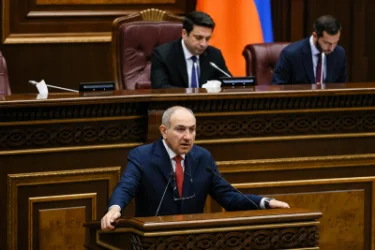
«Azerbaijan has unlawfully occupied about 150 square kilometers of territory»: Speech by Alen Simonyan
The President of the National Assembly of Armenia, Alen Simonyan, is leading a delegation in Bahrain to participate in the Inter-Parliamentary Union (IPU) assembly dedicated to issues of peace and security. Over 1,700 delegates from 136 countries are present in the capital city of Manama, with more than sixty parliamentary leaders delivering speeches. The assembly includes all statutory bodies of the Inter-Parliamentary Union, including the Governing Council, standing committees, the committees on human rights and Middle Eastern affairs, as well as forums for women parliamentarians and young lawmakers.
President Simonyan addressed the situation in Armenia and Nagorno-Karabakh, particularly highlighting issues stemming from the Azerbaijani aggression that has led to the crisis in Lachin. “Mr. President, dear parliamentary colleagues, ladies and gentlemen, I would like to thank our Bahraini partners for their warm hospitality and for organizing such an excellent assembly. Climate change, wars, and natural disasters; humanity must be resilient in facing these adversities. Allow me to express my condolences to the peoples of Turkey and Syria over the recent devastating earthquake that caused thousands of deaths.
The fundamental principles of peaceful coexistence—respect for sovereignty and territorial integrity, equality, self-determination, and non-interference in internal affairs—should regulate relations between states. However, we see these principles being frequently violated. Peaceful coexistence parallels unity, which is essential for social, economic, and political stability. Together, individuals and states can work towards common goals and resolve conflicts peacefully. This is crucial for creating a sustainable and harmonious environment, as well as for universal well-being.
Now, let me turn to our region and my country—Armenia—where national minorities, including Yezidis, Kurds, Russians, Ukrainians, Assyrians, Jews, and Greeks, live side by side as equal members of our society, enjoying all rights. According to Armenian legislation, four representatives of national minorities are members of our parliament.
The cornerstone of our foreign policy is the maintenance of peaceful relations with all countries. Nevertheless, we face numerous threats. Tensions continue in the South Caucasus. Since May 12, 2021, neighboring Azerbaijan has violated Armenia's territorial integrity and unlawfully occupied about 150 square kilometers of territory. Despite the difficulties, our goal is to collaborate in building a stable world. Some say Armenia aims to expand its territory. Allow me to clarify: Armenia has no territorial claims against any of its neighbors.
Let me tell you about the blockade of the Lachin corridor, which is the only route connecting Armenia and the world to Nagorno-Karabakh, a region populated by ethnic Armenians for over a thousand years. The blockade constitutes a gross violation of the trilateral statement of November 9, 2020. The statement provides that “the Republic of Azerbaijan guarantees the safe movement of citizens, vehicles, and freights in both directions along the Lachin corridor.” That road has been inaccessible to civilian and other transport since December 12, 2022, and is blocked by dozens of Azerbaijani agents disguised as “environmental activists.” Approximately 120,000 ethnic Armenians residing in Nagorno-Karabakh have been left without essential goods and services. They are deprived of vital medicines and medical assistance. Interruptions in the supply of electricity and gas have led to severe hardships. For nights on end, the people of Nagorno-Karabakh are subjected to loud religious calls from the Azerbaijani side, while their homes are illuminated by spotlights.
Recently, Azerbaijan released a fake video stating that Armenia is supplying weapons to Nagorno-Karabakh. Unfortunately, Azerbaijan does not limit itself to spreading disinformation and pursuing the aforementioned persecutions. Just a few days ago, on March 5, three officers of the Nagorno-Karabakh police were killed and another was wounded as a result of a pre-planned ambush ordered by Azerbaijan.
Dear colleagues, I ask, are these not ethnic cleansings? Racism and intolerance exhibited towards individuals on racial and religious grounds, the violence should not be justified. According to Nelson Mandela, “No one is born hating another person because of the color of his skin or his background or his religion.” The European Court of Human Rights has taken measures against Azerbaijan concerning the blockade, while the Council of Europe’s Human Rights Commissioner has urgently called for its removal. Organizations such as Amnesty International, the European Union, and the Helsinki Commission have independently called for the immediate cessation of the blockade.
On February 22, 2023, the International Court of Justice ruled that Azerbaijan must ensure “unimpeded movement” along the Lachin corridor. In a separate ruling, the court unanimously rejected Azerbaijan’s false claim that Armenia had planted landmines.
Azerbaijani authorities claim the Lachin corridor is unblocked, but the grim reality tells a different story. In conclusion, I profoundly believe that democracy, the rule of law, respect for human rights, and peaceful coexistence are the cornerstones on which humanity must live in peace and harmony. Thank you,” stated the President of the National Assembly.
Նմանատիպ հոդվածներ
‘An Offer to Assume Office Behind My Back Is Being Made to Another Person’ - Artsakh Minister Resigns

Video: "I Will Hit You, Pay Attention" - Gevorg Petrosyan to Police Officer
VIDEO: "The probability of escalation is very high both along the border of Armenia and in Nagorno-Karabakh," says Pashinyan
VIDEO: CSTO Secretary-General Visits Yerablur
Ավելին Politics բաժնից
ԸԸՀ անդամներն աշխատավարձ չեն ստանա․ «Հրապարակ»
Իրավիճակը տարածաշրջանում շարունակում է լարված մնալ
Ինչի՞ կարող է հանգեցնել ՌԴ–ի կողմից ընտրությունների արդյունքների մերժումը